Nikon Remote
Control & Transmitters
As soon as
Nikon introduced cameras on the global market it produced many accessories,
like cable releases. Modern
times request modern appliances, like infrared remote control units
and data transmitters. Some modern cameras do not take cable releases
but allow a Nikon Modulite remote device or WT wireless transmitter.
Cable releases
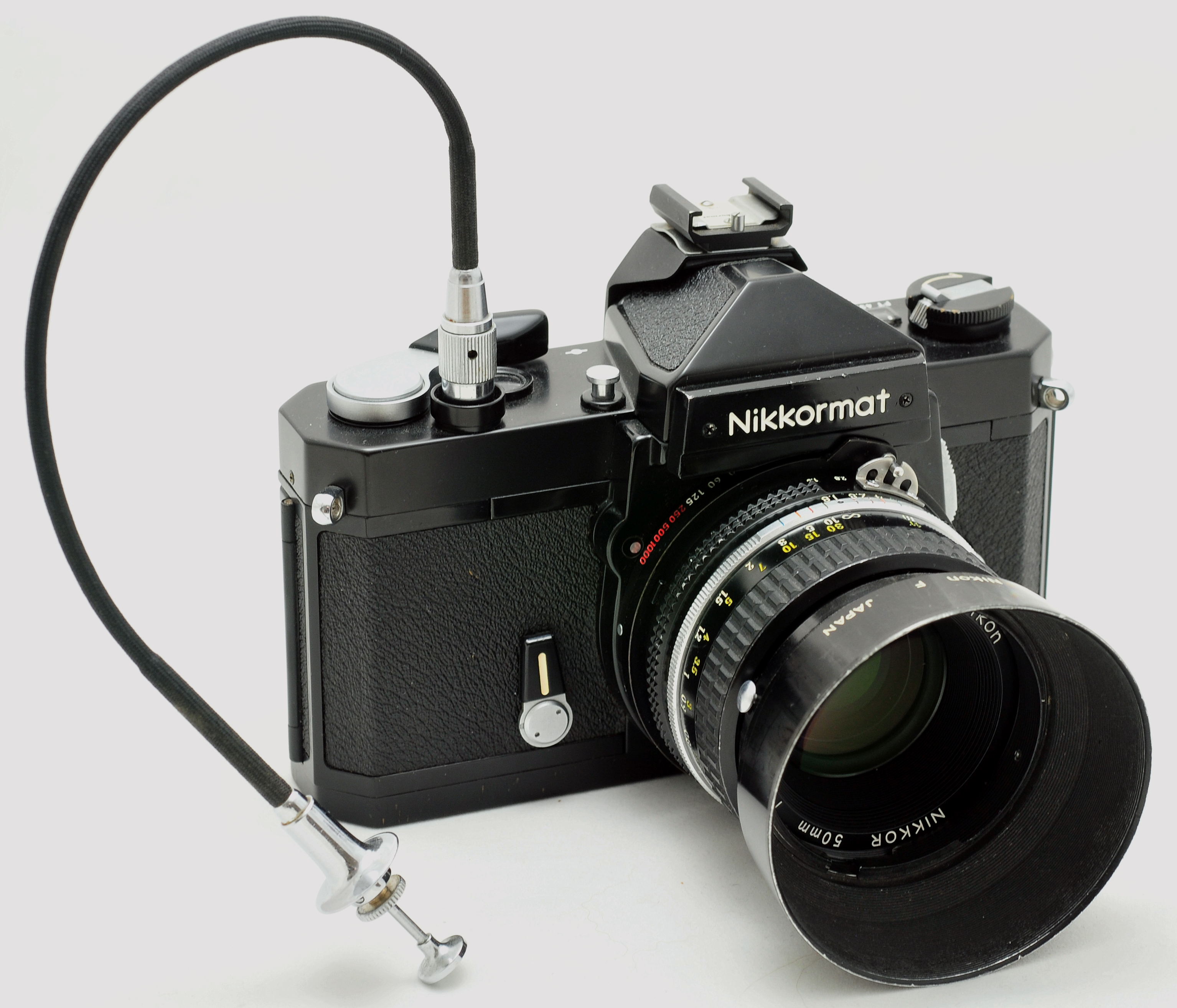
For all rangefinder
cameras and the Nikon F and Nikon F2 series of single reflex cameras
Nikon provided a relatively short but very functional cable to release
the shutter. These Nikon (AR-2, AR-5)
cable releases has a so-called 'Leica-clock' (introduced by Leitz) which
has to be screwed over the shutter release button. For longer exposures
the trigger can be locked. Later many other cable releases were introduced,
also those with regular (ISO approved) thread (AR-3, AR-6)
for shutter release button with a thread in its middle. The AR-4
and AR-7 are double cable releases with a Leica-clock,
to be used on bellows or macro rings, while the AR-8
is an adapter to use the Leica-clock cable releases on a camera with
ISO thread. The AR-9 is a tiny 'cap' to be screwed
in any shutter release button with a thread. Finally the AR-10
is a double cable release where one cable will fit the electronic connector
of motor drives like MD-4, MD-11, MD-12, MD-14 and MD-15 and some modern
AF cameras (F-501, F-801, F4 and others). If you are missing the AR-1
in this listing, don't worry.
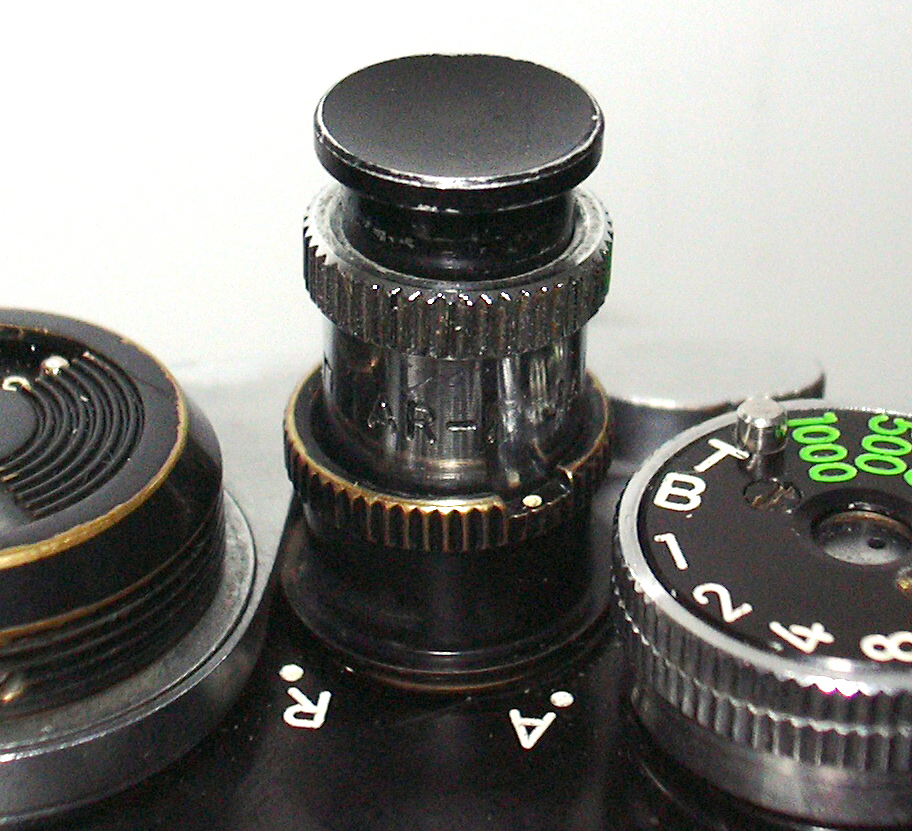
The AR-1
(see above) is a release button to be screwed on top of the shutter
release button, for softer release.
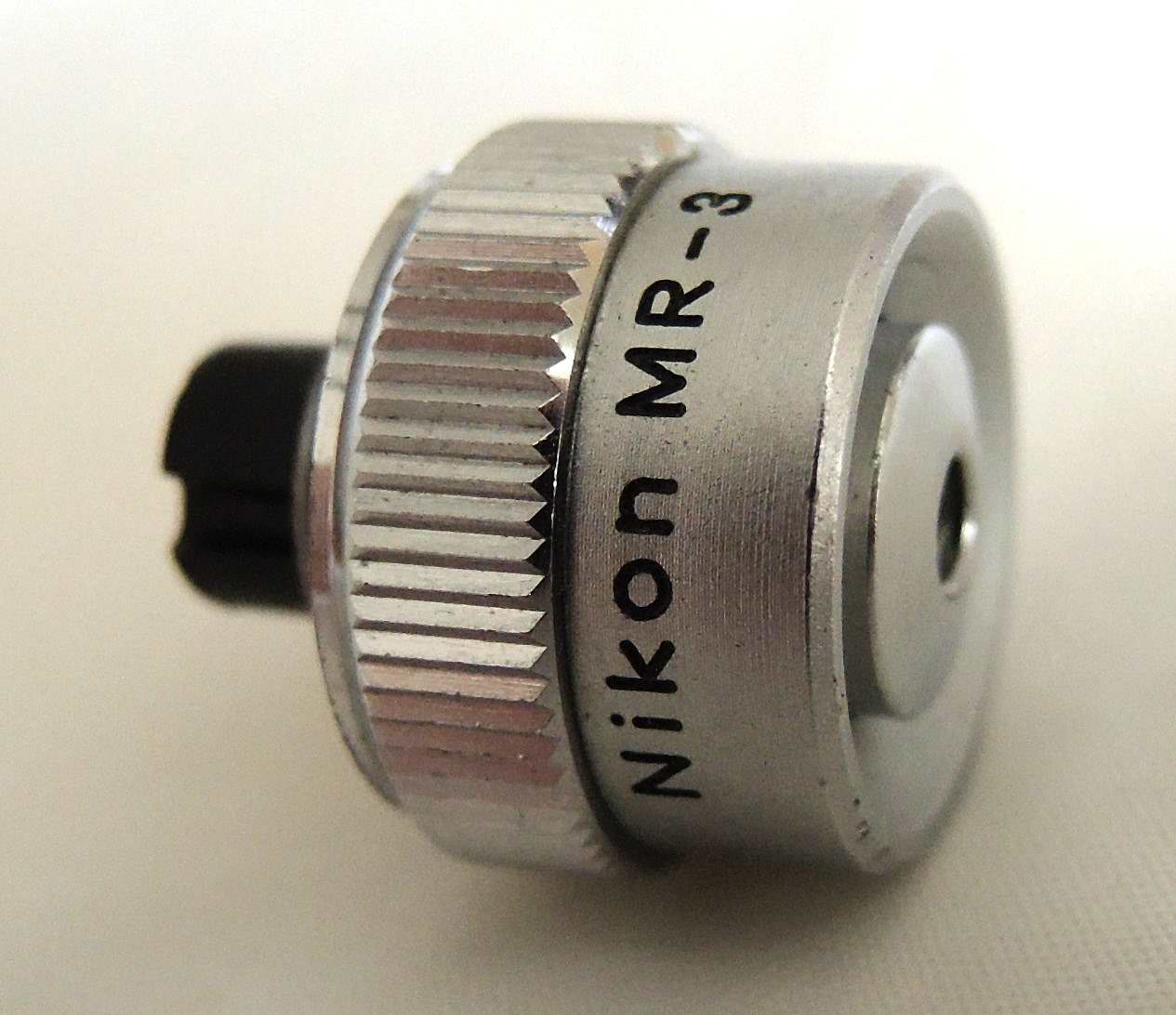
There three
more release adapters, called MR: MR-1 to be screwed
into the connector on the front of the motor drives MD-1, MD-2, MD-3,
MD-4, MD-11 and MD-12. The MR-2 can be mounted into
the MD-4, MD-11 and MD-12. The MR-3 (see above) is
similar to the MR-2 but has a thread for connecting a cable release.
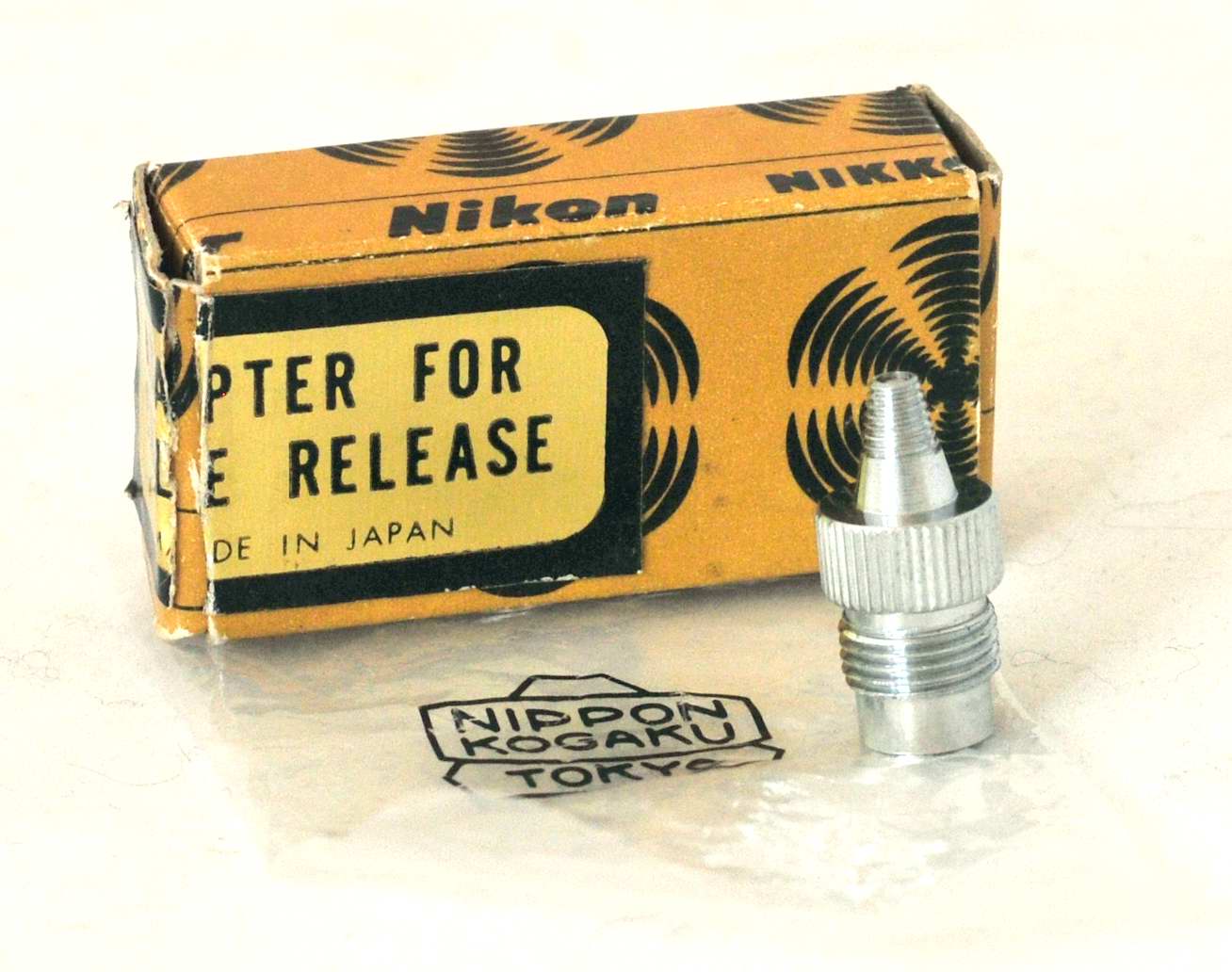
Adapter (no
code - but later AR-8) for Nikon AR-2 and Nikon AR-4 cable releases.
Remote control
units
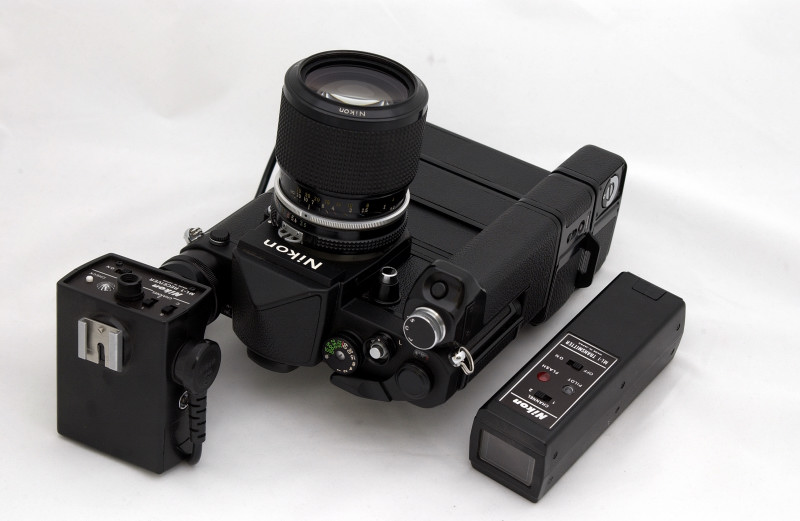
Nikon ML-1
set (transmitter & receiver) mounted on a Nikon F2HighSpeed &
Zoom-Nikkor 3.5/43-86 mm.
ML-1 / ML-2
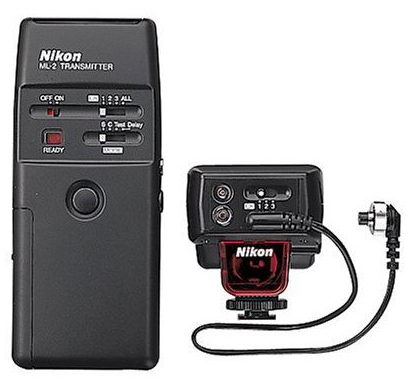
The Nikon
ML-1 Modulite is a wireless infrared remote controller with a 200/60
feet/meters line-of-sight range. It is a two part device: a handheld
transmitter plus a camera mounted receiver. The receiver can be connected
to various Nikon MD motor drives like the MD-2, MD-11, MD-12, MD-4,
MD 15 or - via cable MC-25 - even with modern cameras like the Nikon
D1X and Nikon D1H. The ML-2 is able to control up to three cameras.
ML-3
For cameras
with ten-pin remote terminal, the ML-3 offers remote control for two
separate channels via an infrared LED beam, enabling automatic camera
operation from a distance of up to about 8m. Auto triggering, delayed
shutter release, single and continuous shooting are all possible. Also
modern digital SLR's, like D200, D300, D700 and the D2 and D3 series
may accept the ML-3
ML-L3
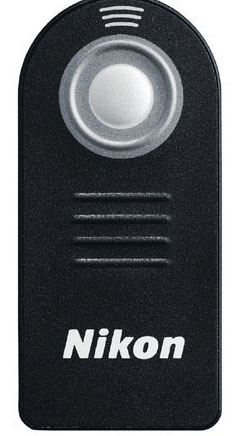
This little
device - wireless infrared remote control - can be used together with
some Coolpix cameras (8400, 8800 and P7000), compact film cameras (Lite
Touch 100W, 110s, 130ED, 140ED and 150ED), APS cameras (NuvisS and Pronea
S), film SLR's (F-55, F-65, F-75) and digital SLR's (D40, D40X, D50,
D60, D70/S, D80, D90, D3000, D5000 and D7000) and all other cameras
with a built-in infrared receiver.
ML-L4
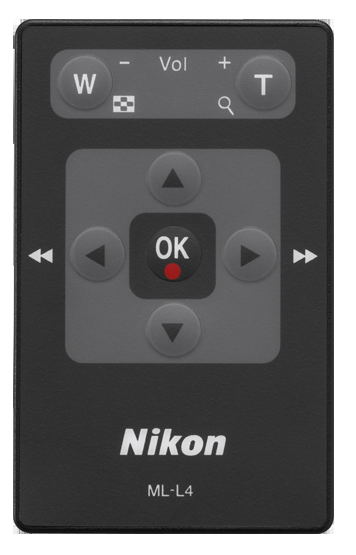
This remote
control device can be used with the Coolpix S1000pj. It will trigger
the camera shutter but also control the projector (for changing projected
images).
ML-L5
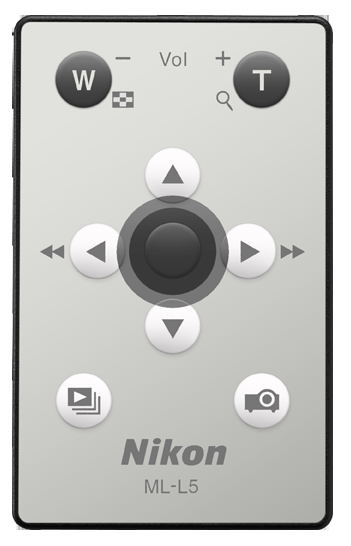
This remote
control - almost identical to the ML-L4 - can be used with the Coolpix
S1100pj.
ML-L6
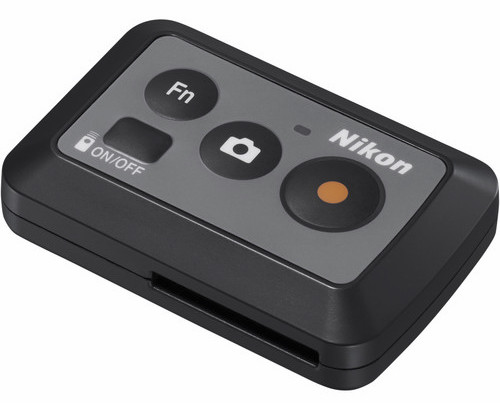
The ML-L6
is a sophisticated remote control for the Nikon Keymission 170 and the
Keymission 360.
ML-L7
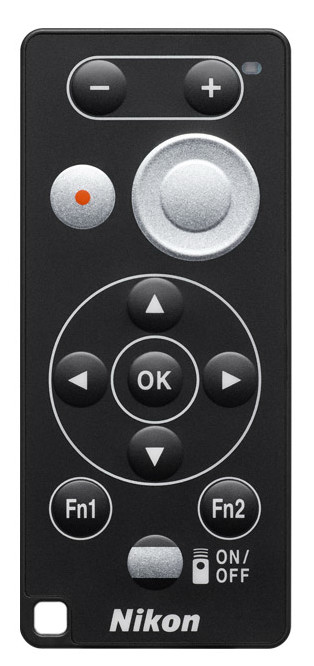
This bluetooth
remote control is made for use with the Nikon Coolpix P1000 camera.
It is not just a remote shutter release button, but it enables you to
change various camera settings remotely.
ML-CW-1
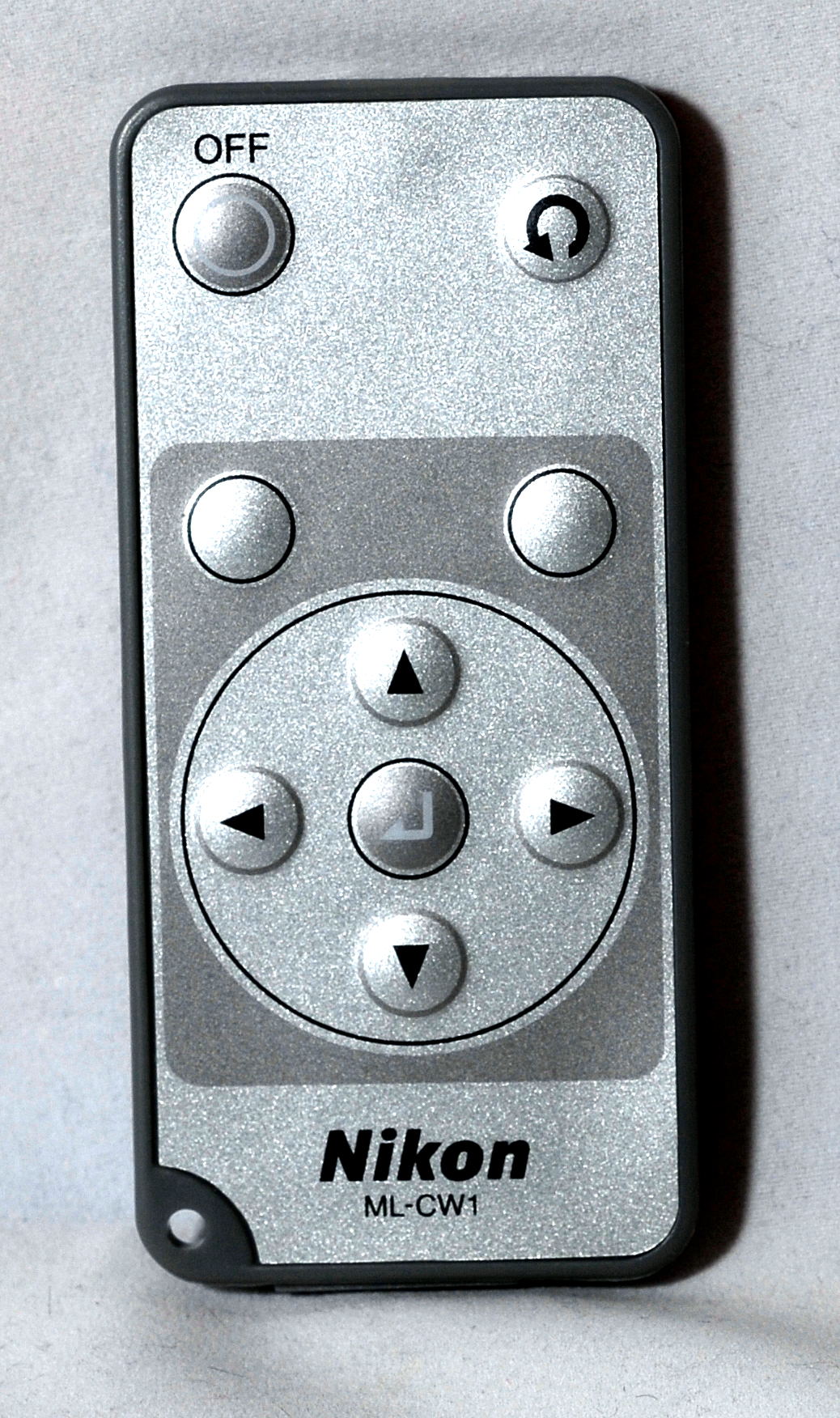
This IR remote
control came with a Nikon Coolwalker MSV 01 image bank only. See for
more details this chapter.
MW-1
The Nikon
MW-1 is a large and powerful remote control device using radio signals
for a longer 2300/700 feet/meters obstructed view range. The MW-1 could
also control three separate F2s by broadcasting three different codes.
It has one receiver, that has to be connected to a camera or motor drive
(via a MC-5 cable). The transmitter is a handheld device. Both have
an antenna and are powered by 8 AA-batteries each!.
Note:
Not in all countries radio controlled devices are allowed! Ask your
dealer or police department first!
MW-2
This remote
control is slightly smaller than the MW-1 and both the receiver and
transmitter need 4 AA-batteries only. It can be used with most cameras
like Nikon F3 and younger. The reach of this set is about 1600 feet/500
meters, but via cable MC-18 it fires up to 3 cameras simultaneously.
Note:
This device is radio controlled too, so get permission first!
Wireless
Transmitters
Important
note: most transmitters listed below may have an appendix like
A/B/C/D/E etc. referring to the number of channels supported. Not all
channels (read: radio frequencies) are accepted and/or allowed in various
countries. Thus: ask your local Nikon representation which version of
the transmitter is allowed in your country or state.
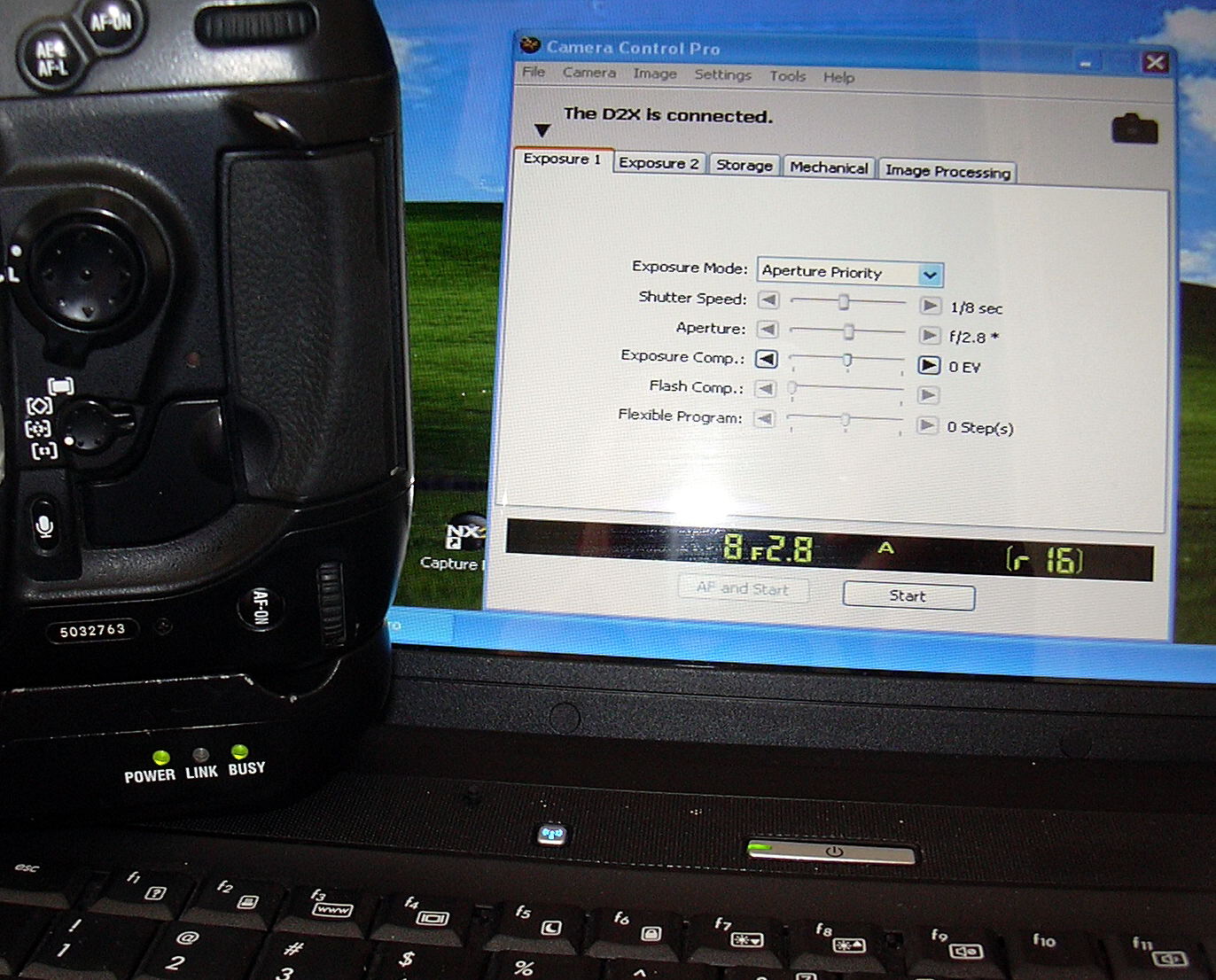
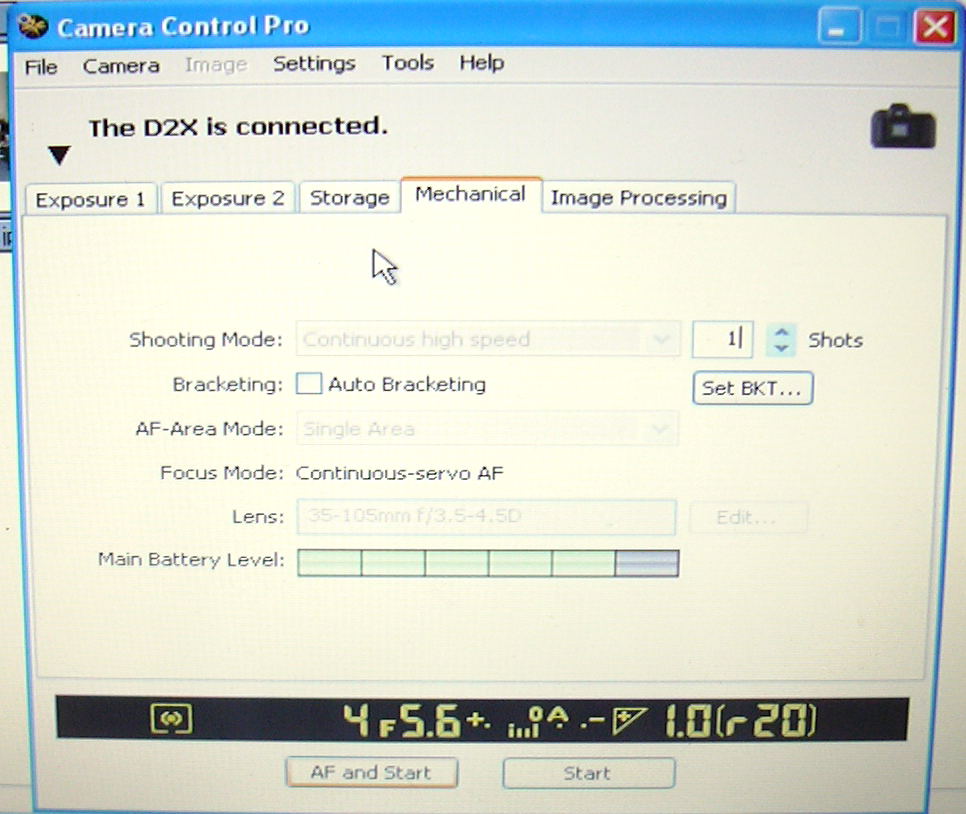
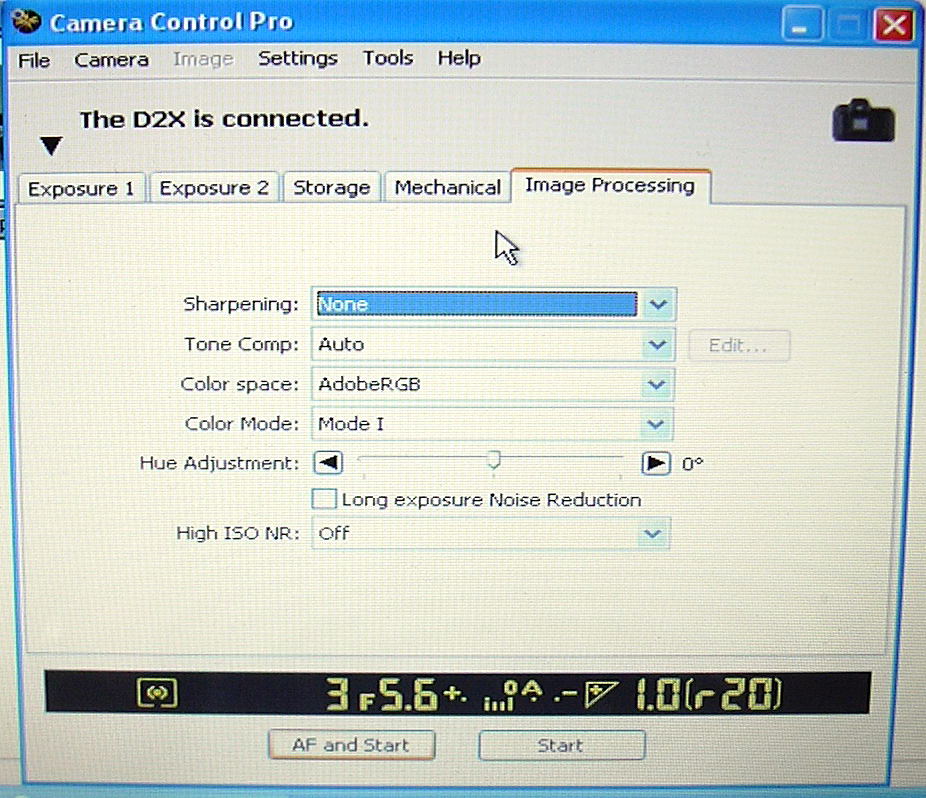
You also
have to install at least Nikon Camera Control software and/or Wireless
Connecting Utility software on your PC to be able to make wirelessly
contact with your camera. In addition to that Nikon Capture can be helpful
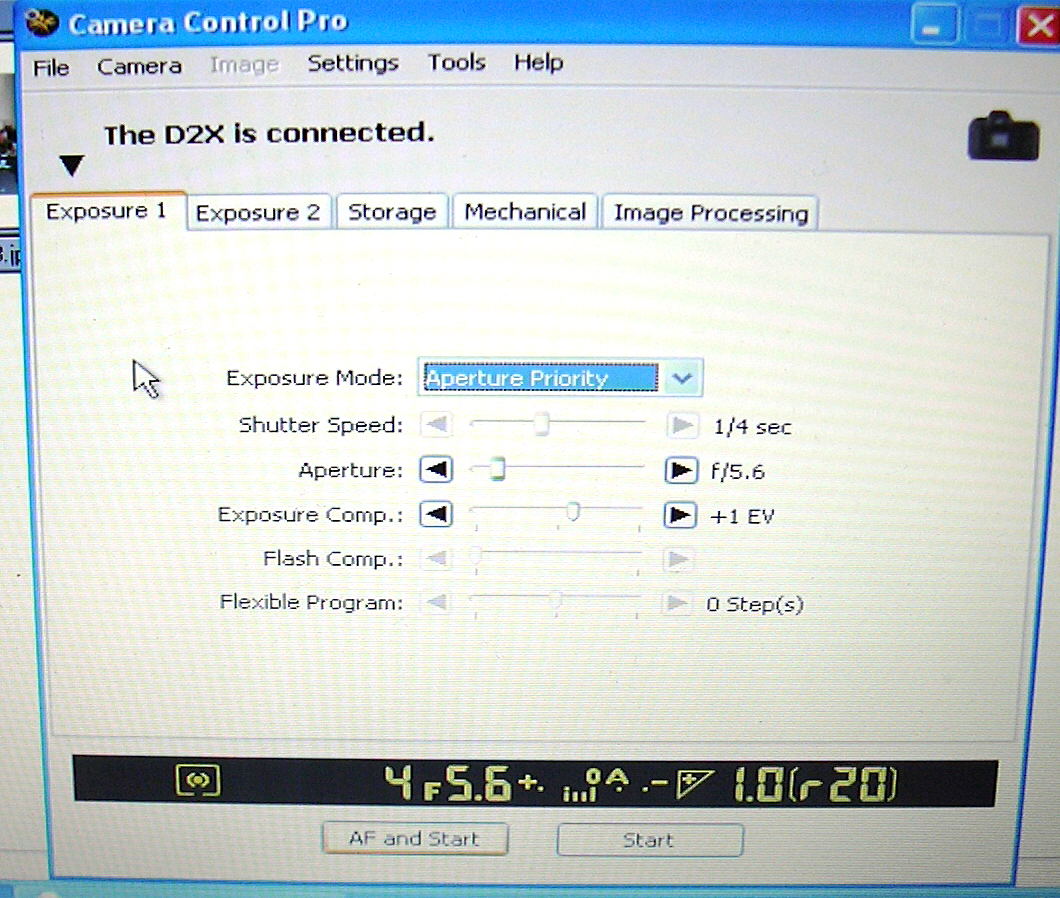
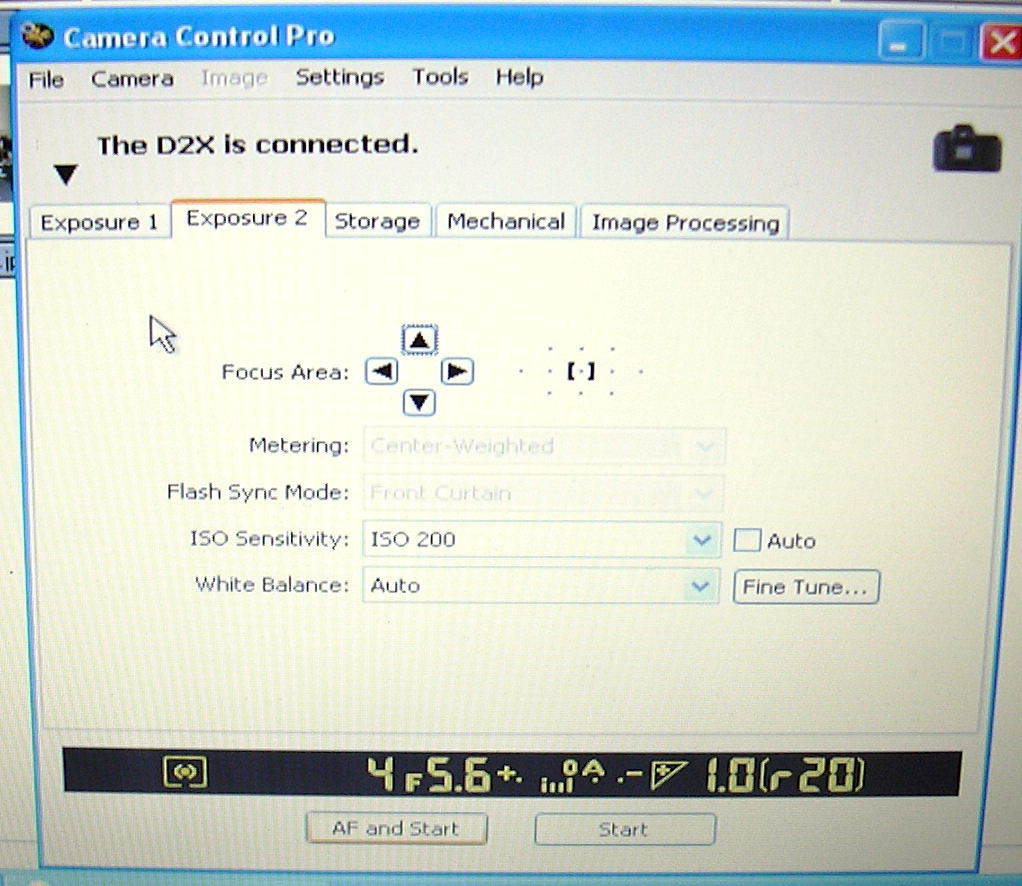
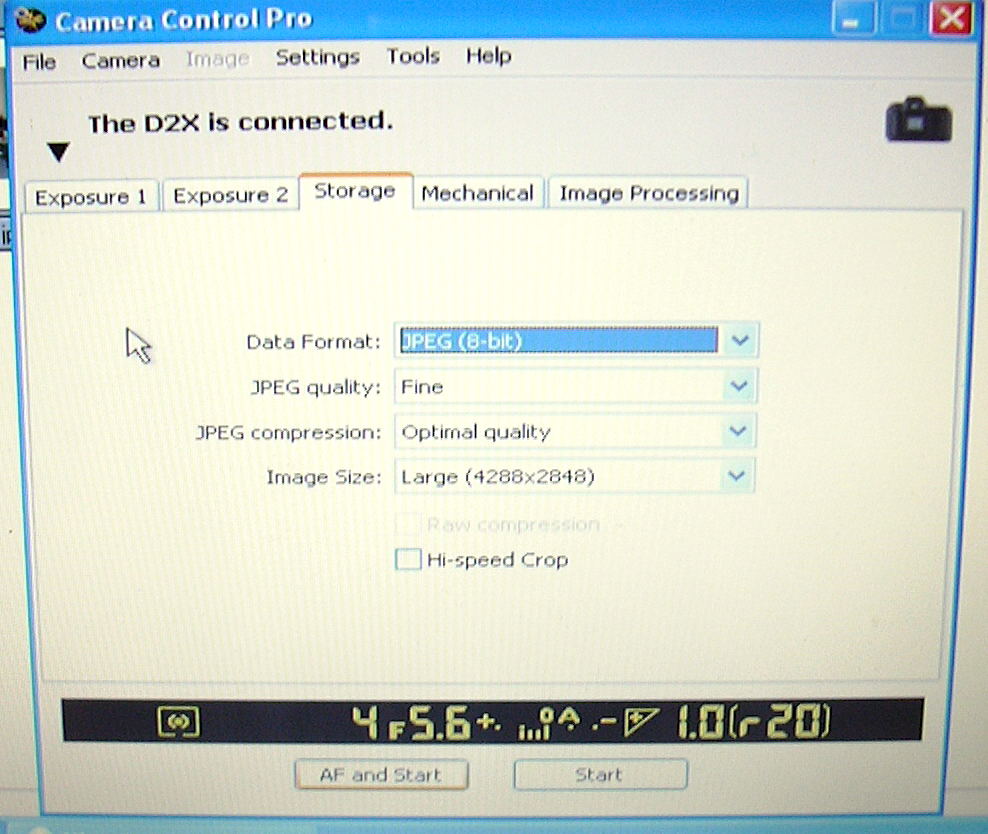
as well. You may transmit images from your camera to your PC but you
can also change camera and lens settings wirelessly. The size of the
image to be sent may influence the transmission speed. See the screen
shots below what you may adjust or manage wirelessly.
The WT-transmitters
will use power of the camera battery. That battery may run empty before
you notice it. So have some spare batteries around!
WT-1 / 1A
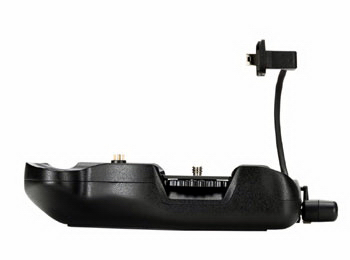
This wireless
transmitter was introduced in July 2003 as the world's first WiFi transmitter!
It can be used with Nikon D2H cameras only. Standard wireless LAN protocol
IEEE 802.11b. Frequency range of the WT-1 is 2412-2472 Mhz. (for Austria,
Belgium, Denmark, Finland, France, Germany, Greece, Italy, Japan, the
Netherlands, Portugal, Spain, Sweden, Switzerland and the United Kingdom),
of the WT-1A is 2412-2462 Mhz. (for USA and Canada).
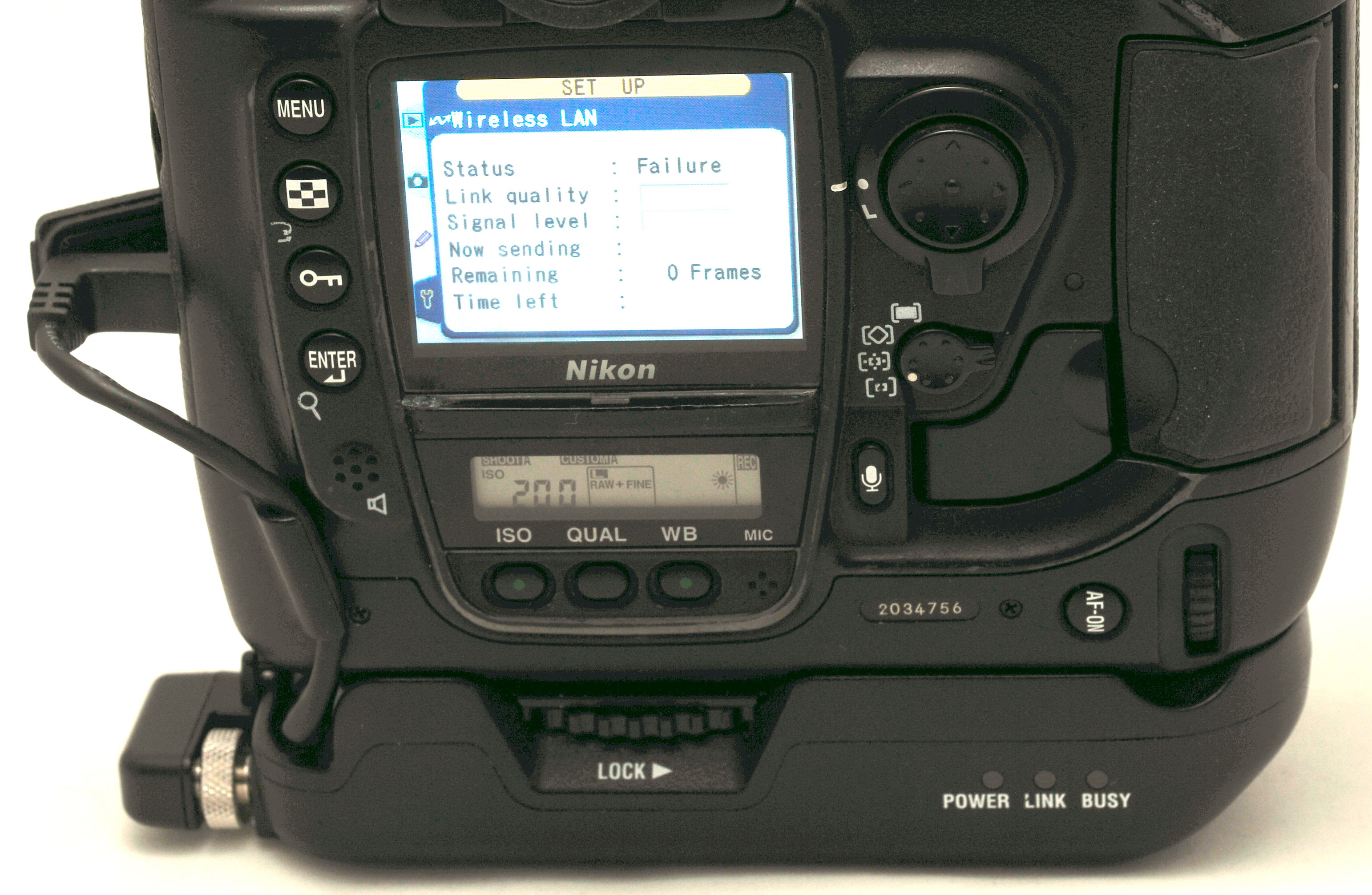
The transmitter
is mounted via the tripod adapter onto the bottom of the camera (after
removing the little rubber stop), where it will get its power from the
camera batteries. On the left side of the camera body you have to connect
the cable of the WT transmitter into the USB connector. A pity is that
you can not remove the rubber connector cover. If you do it by force,
it will be damaged for ever! The battery chamber door can be exchanged
for a door with a cable holder. As mentioned above you have to install
FTP-software. Most Windows OS have built-in FTP programs. Read
the manual carefully before installing this device. With upgrade of
WT-1 firmware to version 1.1, the WT-1 can be used with the Nikon D2X
and D2Hs cameras.
WT-2 / 2A
This device,
similar to the WT-1, and introduced in September 2004 is for transmitting
images and or data from the Nikon D2X to any laptop/notebook using Nikon
Camera Control Pro 2 and Nikon Capture 4. This device is not compatible
to the Nikon D2H !
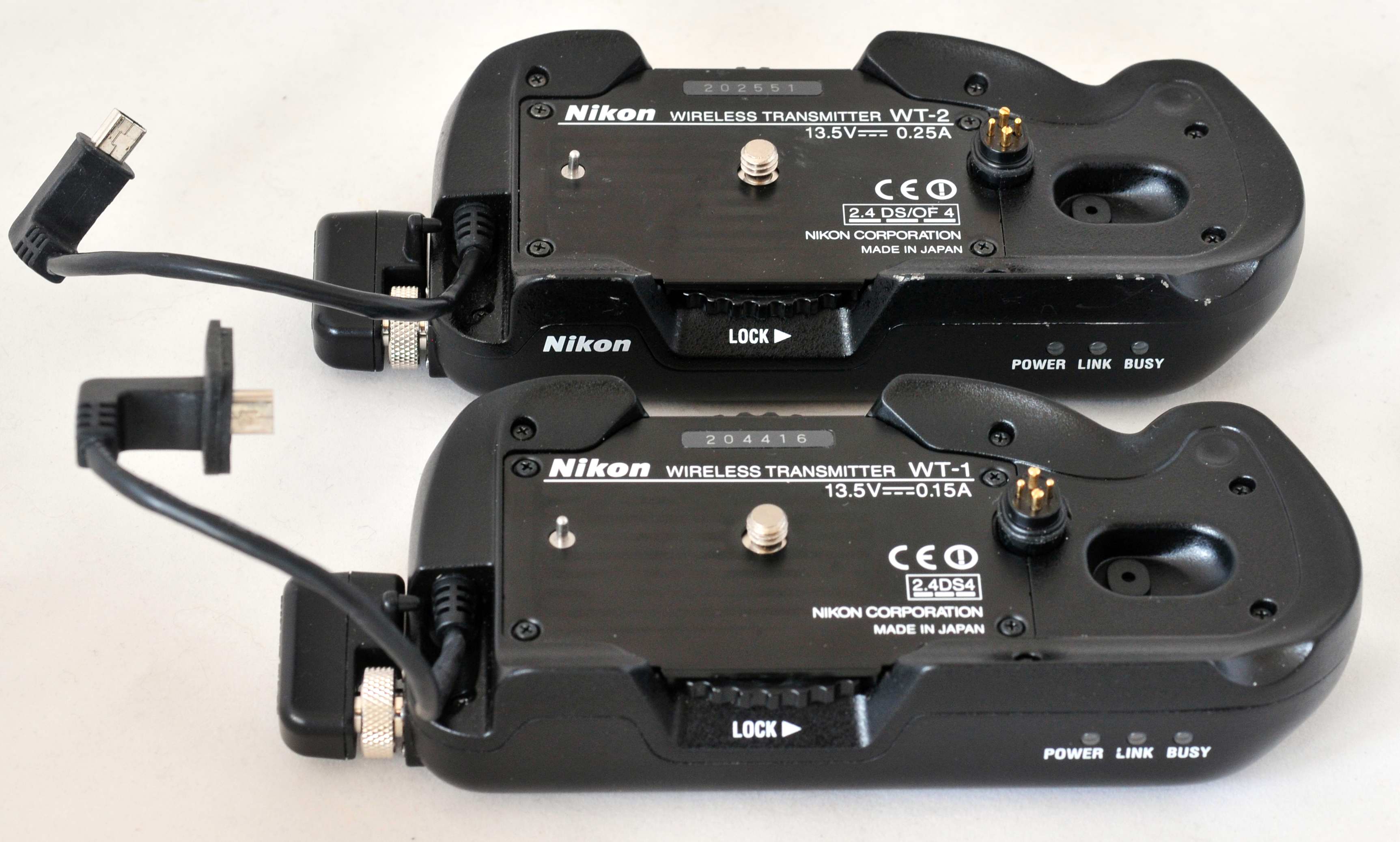
Do you see
the differences?
WT-3
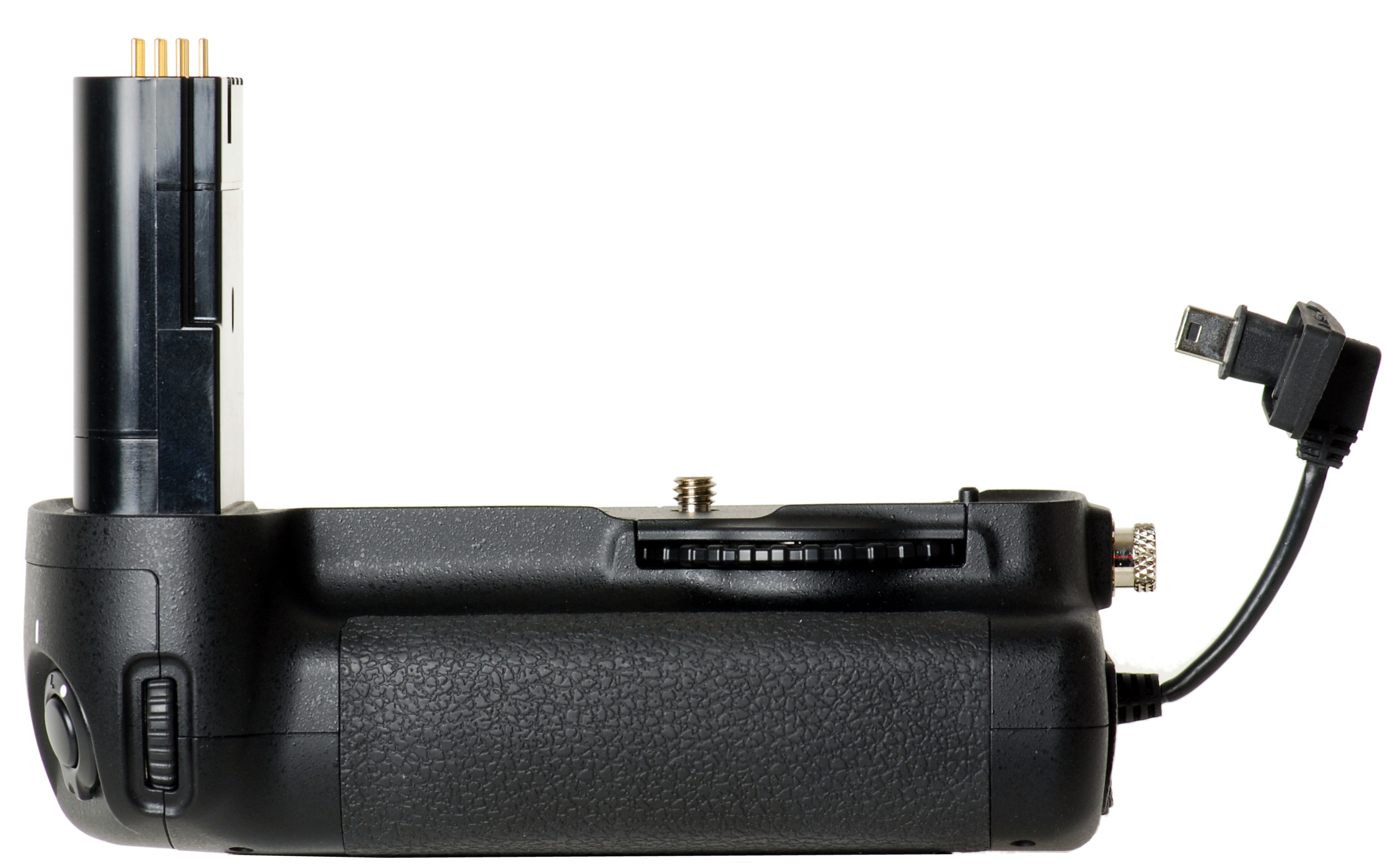
In January
2007 Nikon introduced this wireless transmitter to be used with the
Nikon D200 digital reflex camera. Any laptop/notebook should be installed
with Nikon Camera Control Pro 2 and Nikon Capture 4 (4.02) or later.
See for more info above at the intro.
WT-4
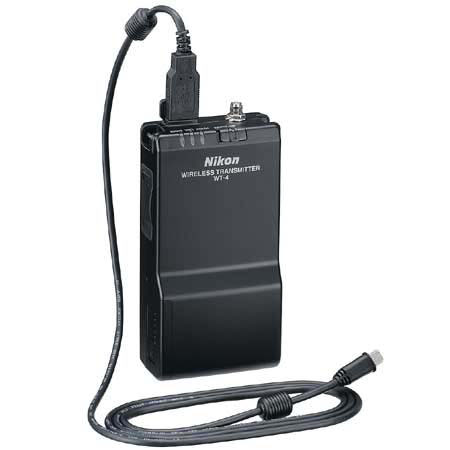
This bulky
wireless transmitter can be used with cabled LAN or wireless LAN connections
with Nikon D300, D300s, D700, D3000 and D3-series digital SLR's. It
was introduced in August 2007. One year later (July 2008) Nikon issued
a firmware upgrade (1.1) for Windows users. When buying a second hand
transmitter, check the firmware! Its transmission speed is limited to
54 Mbit/s which is a bit slow. Nevertheless it enables thumbnail display
of images on a PC, taken by up to 5 wirelessly connected cameras, and
transfer of selected images to the PC.
WT-5
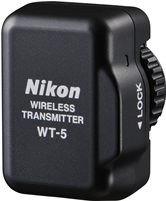
Early January
2012 Nikon introduced an improved wireless transmitter. The new WT-5
is powered by the camera, making a more compact size possible. In addition
to IEEE 802.11a/b/g standards, the WT-5 also supports the new IEEE 802.11n
(1 x 1) standard, enabling data transfer at more than twice the speed
possible with the WT-4. The camera's HTTP server mode can be used to
display a list of images stored on the memory card, and also enables
basic camera control, live view, movie recording, etc. using the Web
browser on a computer or smart phone. Synchronized release (WT-5 only)
mode enables synchronized shutter release of up to 10 D4 cameras, (each
with its own WT-5) with the D4 used as the controlling "master".
To use this transmitter on certain cameras, like the D800 you have to
use the Nikon UT-1 adapter.
WT-6
Nikon Corporation
announced on November 18, 2015 the development of a Wireless Transmitter
WT-6. The now available transmitter (looks like the WT-5) is powered
by its camera (Nikon D5) and is able to transmit 130 Mb/sec. via LAN
IEEE802.11AC protocol at a maximum distance of 200 meters. Up to 10
cameras can be contacted via a laptop with installed Nikon Camera Control
Pro 2.
WT-7
A special
transmitter for the Nikon D500 has been introduced, which is powered
by the camera. This transmitter - to be mounted under the camera - can
transmit data with a top speed of 866,6 Mb/sec.! It has nearly the same
features as the WT-6. It also can function as a HTTP and FTP access
point.
WR-1
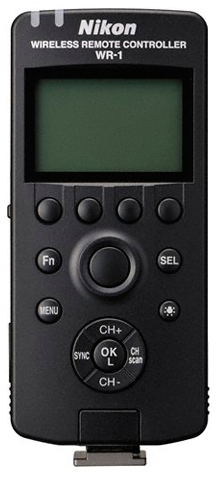
Late February
2013 this wireless remote unit was introduced, together with the Nikon
D7100. With this unit you can control remote shooting as well as verifying
and adjusting certain camera settings. Multiple WR-1 units can be configured
to control operation over more cameras, even when using WR-R10/WR-T10
combinations. In open field a maximum distance of 120 meters can be
covered.
WR-R10 /
WR-T10 / WR-A10
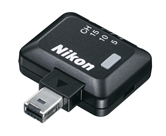 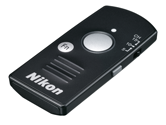
Early November
2012 Nikon introduced - together with the Nikon D5200 - this set of
remote trigger. The WR-R10 and WR-T10 enable remote control over the
camera from greater distances and broader angles than are possible with
infrared remote controls, and obstacles such as trees between the transceiver
and transmitter do not impede communications. Not only autofocus is
possible with the shutter-release button pressed halfway, but also control
over operations such as continuous shooting, movie recording and quiet
release mode is possible. The WR-T10 can be used to remotely control
a single camera to which the WR-R10 is connected, but it can also control
multiple cameras to which WR-R10s have been connected.
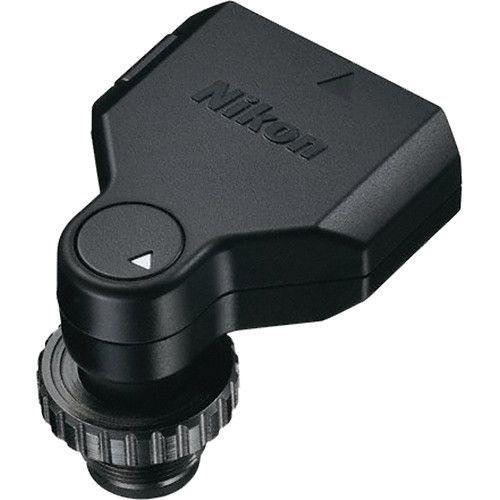
The Nikon
WR-A10 is an adapter to connect the Nikon WR-R10 to a 10-pin connector
on modern Nikon cameras.
Nikon WR-R
11a / WR-R 11b / WR-T 10
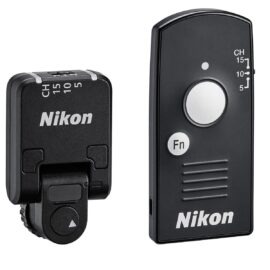 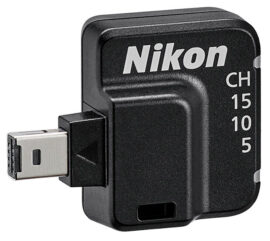
From left:
WR-R 11a, WR-T 10 and WR-R 11b
In October
2020 Nikon introduced two upgraded wireless remote controllers for the
latest Nikon D- and Z-Series cameras. The WR-R 11a wirelessly triggers
camera shutters of many Nikon cameras with a 10-pin connector (NOT Nikon
D1-Series, D100 and D200) and also for radio-controlled flash units.
The WR-R 11b is for cameras with an accessory terminal (NOT Nikon D90,
Coolpix A, Coolpix P7700/7800 and Coolpix P950/P1000).
Nikon UT-1
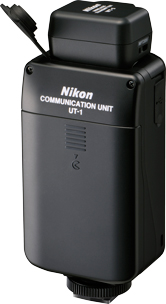
Mid September
2012 Nikon introduced the Nikon UT-1 'Communication Unit'. When connected
to a digital-SLR camera, an Ethernet (wired) network can be used to
transfer images from the camera to a computer or FTP server, or to control
the camera remotely from a computer. When used with the Wireless Transmitter
WT-5 (see above), the same functions can be performed over a wireless
network.The UT-1 is compatible with the Nikon D4, D800, D800E as well
as the D7000. With an Ethernet network connection, still images can
be automatically transferred as they are captured, and still images
and movies already stored on a memory card can be transferred and saved
to a computer or FTP server. In addition, when the WT-5 is connected
to the UT-1, smooth image transfer over a wireless network is possible.
Nikon plans to market an UT-1/WT-5 bundle, Communication Unit Wireless
Kit UT-1WK. The Wireless Mobile Adapter WU-1a and WU-1b can be used
to easily transfer images captured with cameras such as the D3200 and
D600 to a smart device, or to control the camera remotely. Wireless
connection to the Internet using operations similar to those to which
smart phone users are accustomed is also possible with the COOLPIX S800c.
WA-E1
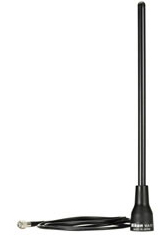
extended antenna
for WT-1/2 with maximum reach of 150 meters
WA-S1
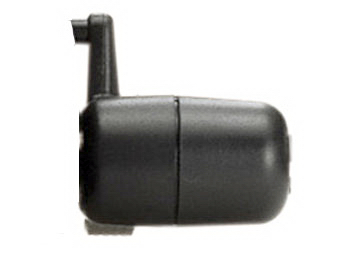
standard antenna
for WT-1 and WT-2 with a reach of 30 meters
Nikon WU-1a/b
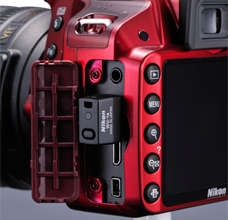
Mid April
2012 Nikon introduced - together with the Nikon D3200 camera - the 'Wireless
Mobile Adapter' WU-1a, which can be plugged into the Nikon D3200 (left
side of the body), enabling the photographer to transmit images from
that camera to a smart device, like tablets etc., running under Android
OS version 2.3 (Gingerbread) or Android OS version 3.x (Honeycomb).
Before using this device an app should be downloaded (free of charge!)
from Google Play. It is also possible to display the camera's live view
in the smart device as well as basic info like battery condition, AC-connector,
number of remaining pictures and camera settings, like shutter speed
and aperture.
The WU-1b
is specially made for the use on the Nikon 1V2 camera; it was introduced
at the end of October 2012.
Nikon PD-10
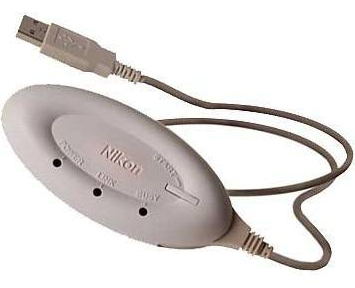
To connect
a Coolpix P1 or P2 to a printer without fighting with long cables Nikon
introduced this wireless transmitter. You have to have a printer with
a WiFi connection to be able to print from a distance of a few meters.
Back to top
|