The Nikonos Story
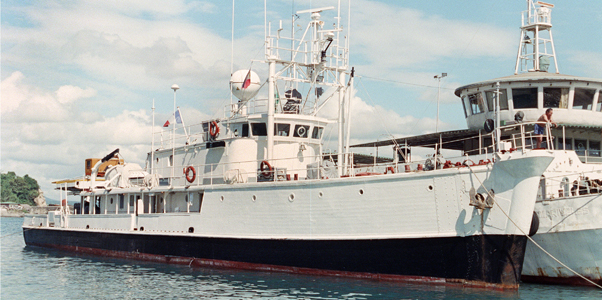
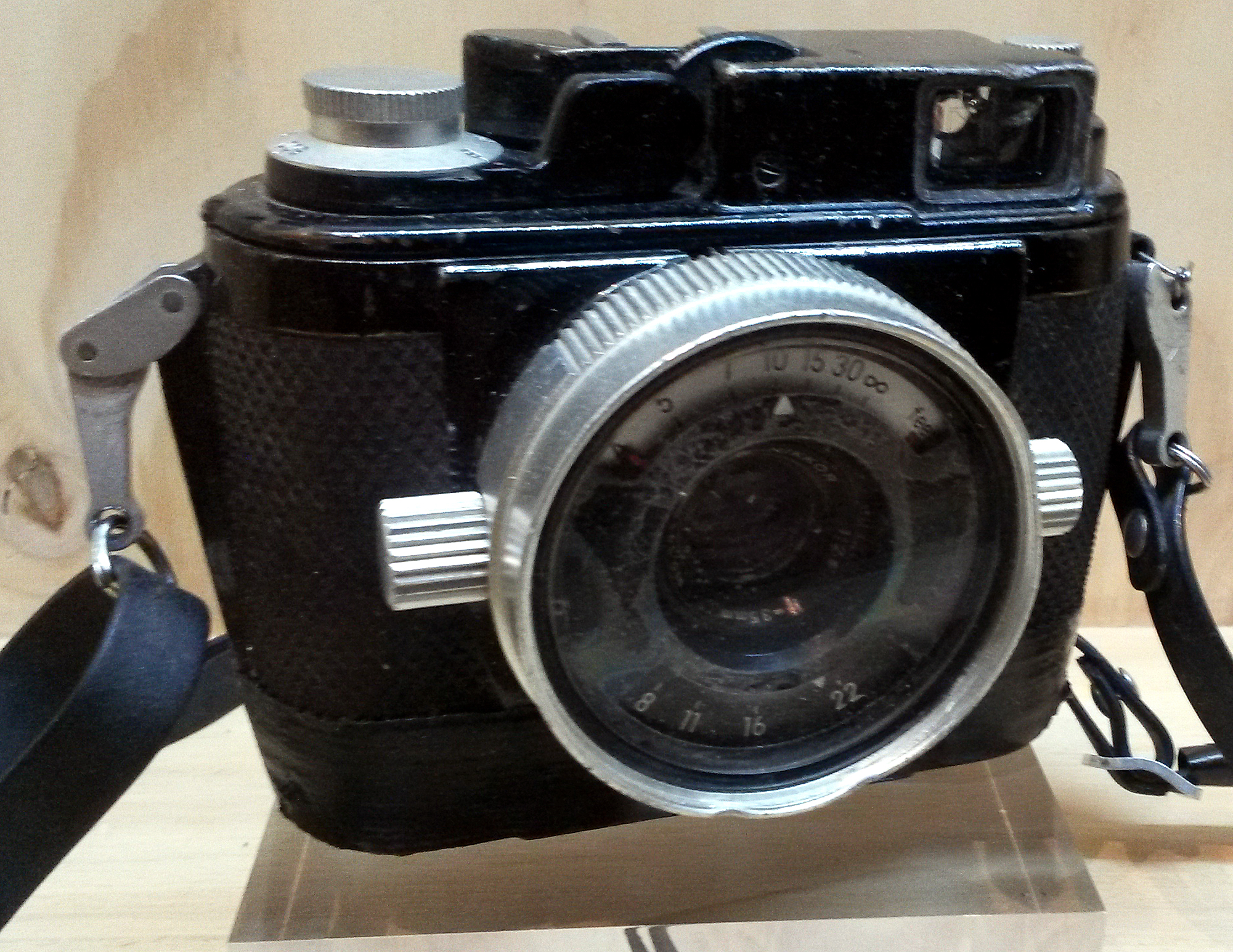
The famous French deep-sea diver, film maker and ex-French Navy captain Jean-Yves Cousteau failed several times to construct a satisfying underwater camera. The Belgian - but born in France - aviation engineer (and member of an old Belgian noble family) Jean de Wouters d´Oplinter*, however, succeeded in a camera construction that could stand the water pressure at a depth of at least 60 meter. He gave that camera the name of the research vessel of Cousteau: Calypso. The production of the camera was taken over by a French company named Spiro-technique in Levallois-Perret (France). Nikon Corporation takes over the production rights in 1963 and starts the production of a series of underwater cameras, better known as Nikonos. The original Calypso-Phot camera was fitted with lenses of the French lens maker Berthiot; it´s obvious that Nikon designed a nice range of Nikkors for the Nikonos series. Mr. De Wouters d'Oplinter stayed some 15 months (1964/1965) in Tokyo to assist the Nikon engineers. See for the results of his efforts below. *Jean Guy Marie Josef de Wouters d'Oplinter (1905 - 1973) has patented more than 30 inventions of which nearly 20 are inventions related to photo-cameras. Back in 1957 he designed the Calypso; that design was patented in 1960. He often was a crew member on the Calypso, a research vessel captained by Jacques Yves Cousteau (1910 - 1997) aka Commander Cousteau, who produced dozens of movies of underwater life.
Research vessel Calypso As one can see below most Nikonos bodies are identical outside, inside is a different story. Please read.
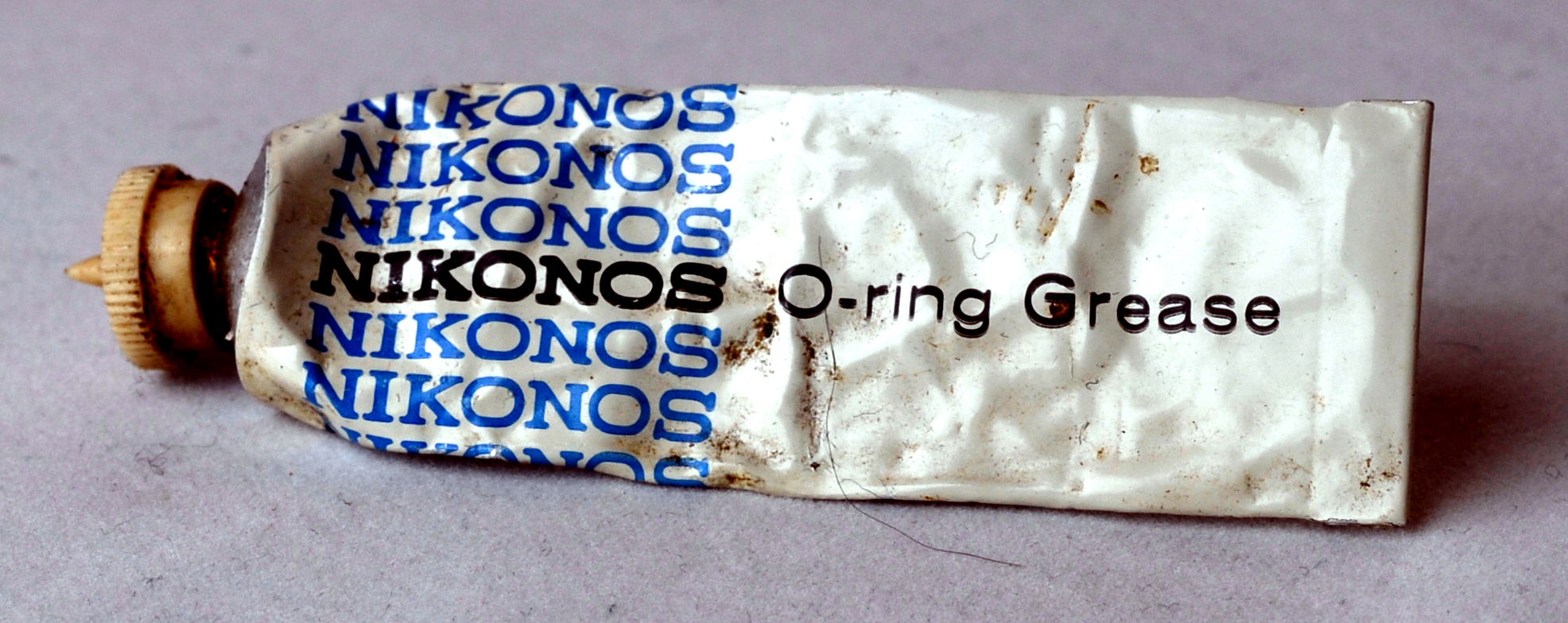
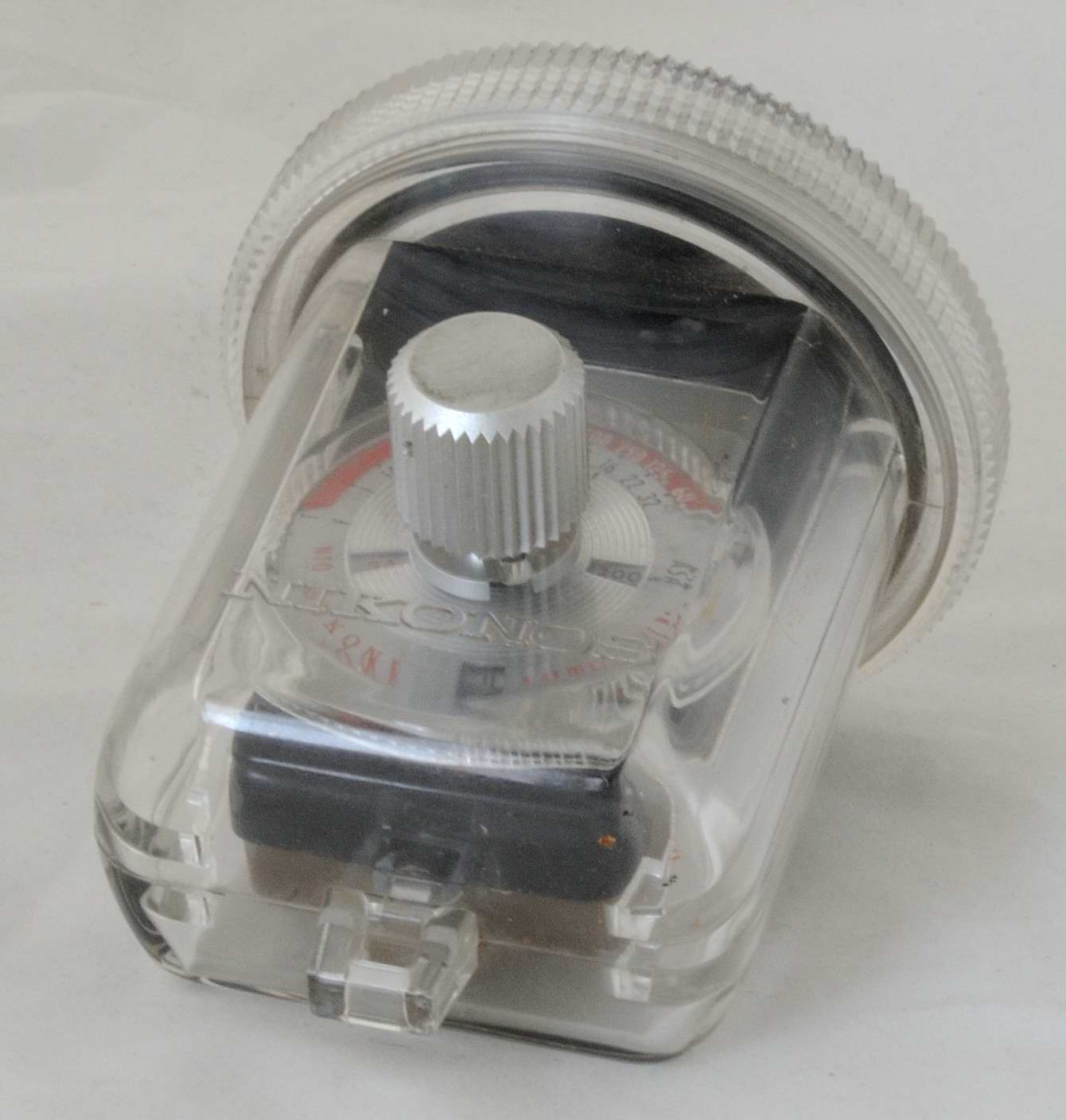
Note 1: all cameras, lenses and other accessories mentioned in this chapter are primarily for underwater use, although they can be used on land, too. Beware of the fact that all those equipment will sink like a stone!! Nikonos cameras don't swim!! So tie them up before diving! After each dive check and clean all O-rings and grease them. Note 2: although Nikon did not produce exposure meters for the Nikonos cameras, it offered a Nikonos marked underwater housing for various exposuremeters of the Sekonic-Lumi-Series.
Note 3: See for how to open a body under Nikonos III.
Nikonos underwater rangefinder cameras
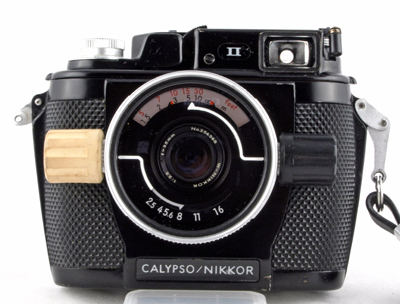
The Nikonos I (introduced in August 1963) is in fact an improved version of the Calypso with - of course - a Nikkor lens, the W-Nikkor 2.5/3.5 cm. The camera is a camera which is put in a separate aluminum body. It has a metal shutter with a limited number of exposure times (1/30, 1/125, 1/250 and 1/500 sec.), a viewfinder with parallax correction and a mechanical film advance system. No internal flash nor light meter. This version was build until 1968. The serial number is engraved on the flash shoe, starting at #900001.
Above the famous Calypso/Nikkor #908470 with W-Nikkor 35mm/2.5 #191076 used by James Bond in 'Operation Thunderball'.
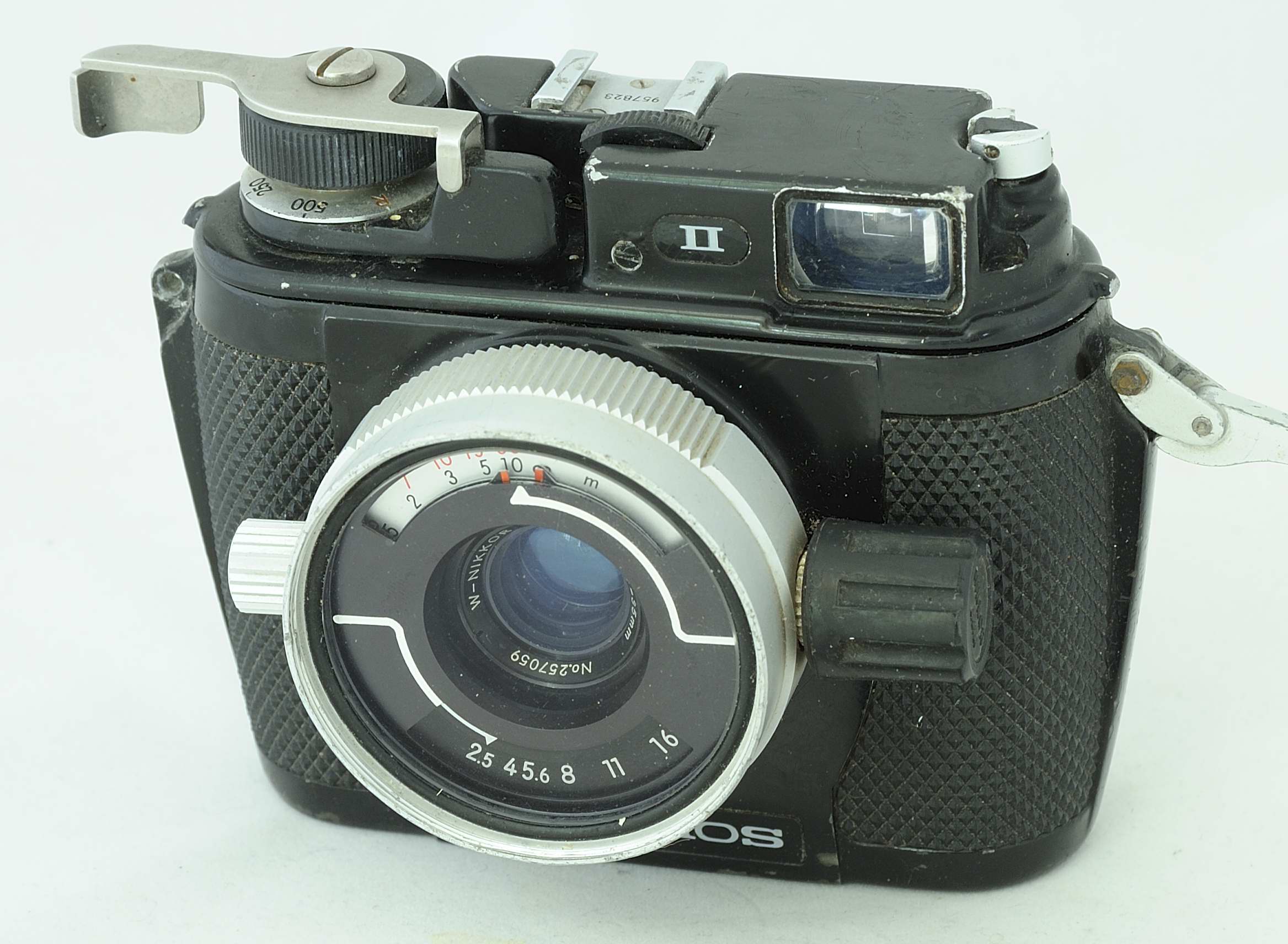
The Nikonos II, which was introduced in May 1968, is technically identical to the Nikonos I but the whole finish is much better. It has a rewind crank and a DOF scale on the lens. This camera was in production until 1975. For the German market a Nikkor-version (see above) exists as the German Zeiss-Ikon company made objections against the use of the almost identical Nikon name on the German market. Serial numbering starts at 960001.
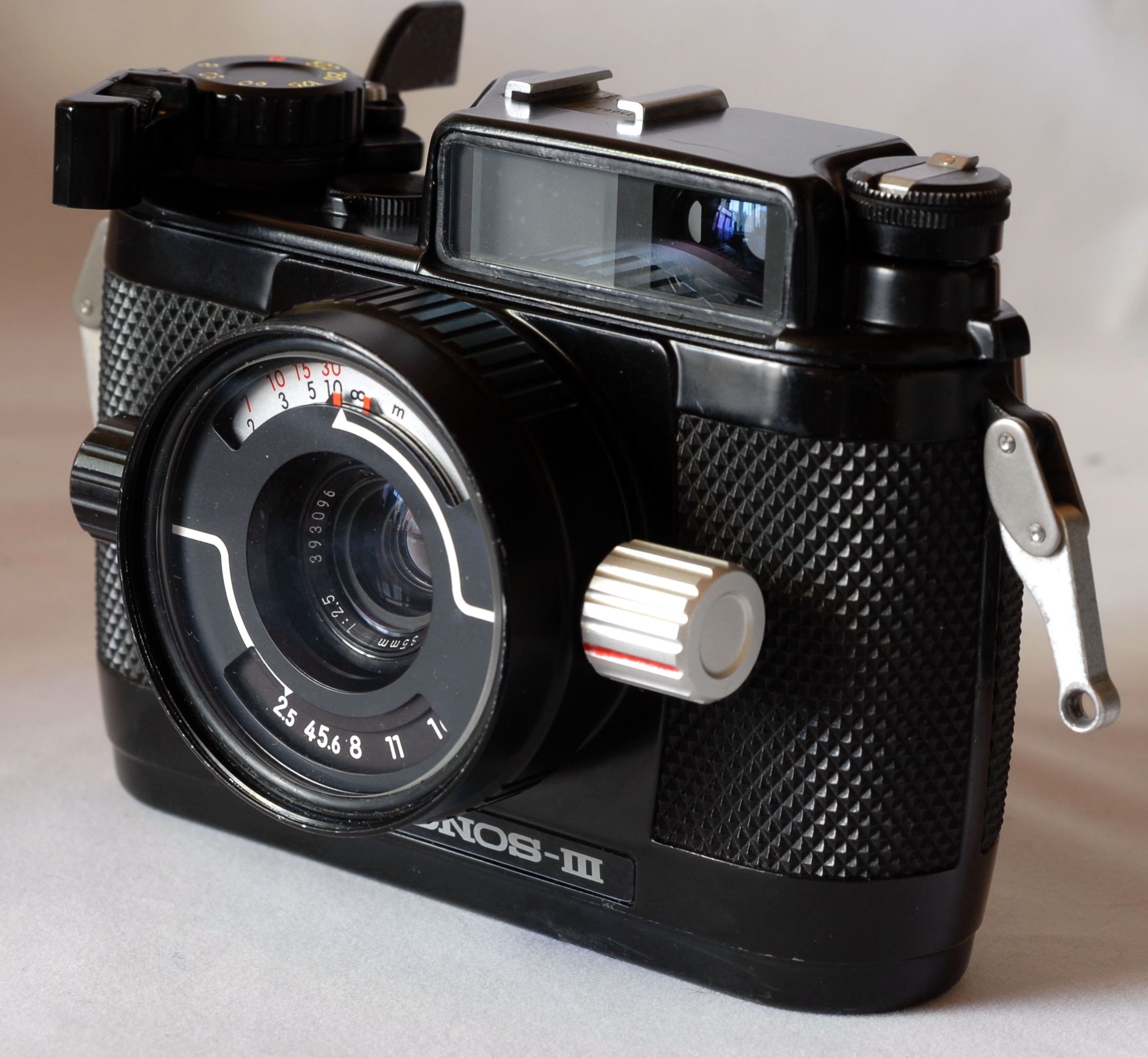
The Nikonos III is known as one of the best Nikonos of the whole series. Ergonomics, finish and viewfinder (with 35 and 80mm frames) are improved. It is also the first Nikonos with a sprocket for film advancing. This camera was build between June 1975 and July 1980. Serial numbering starts at 3100001.
Nikonos III
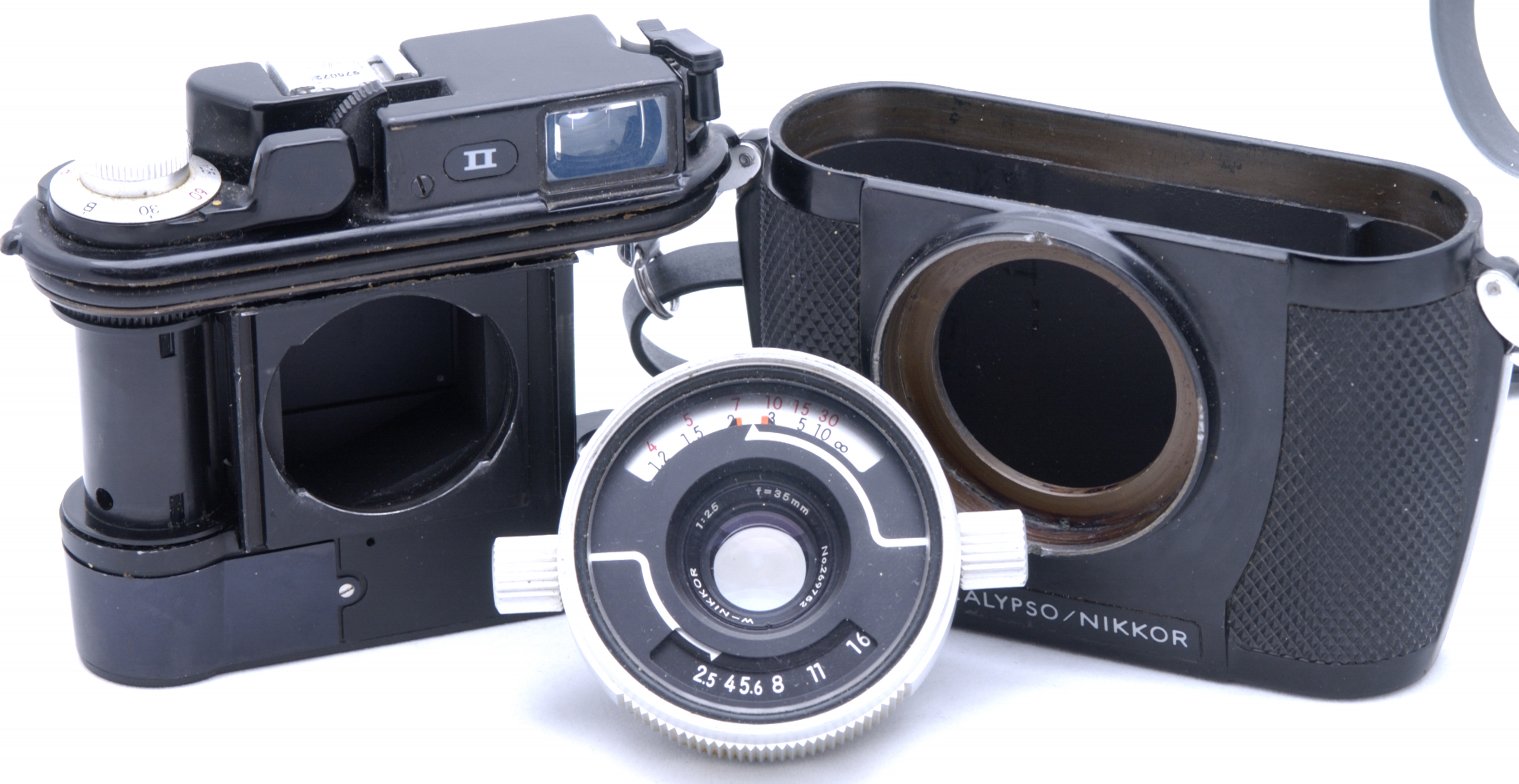
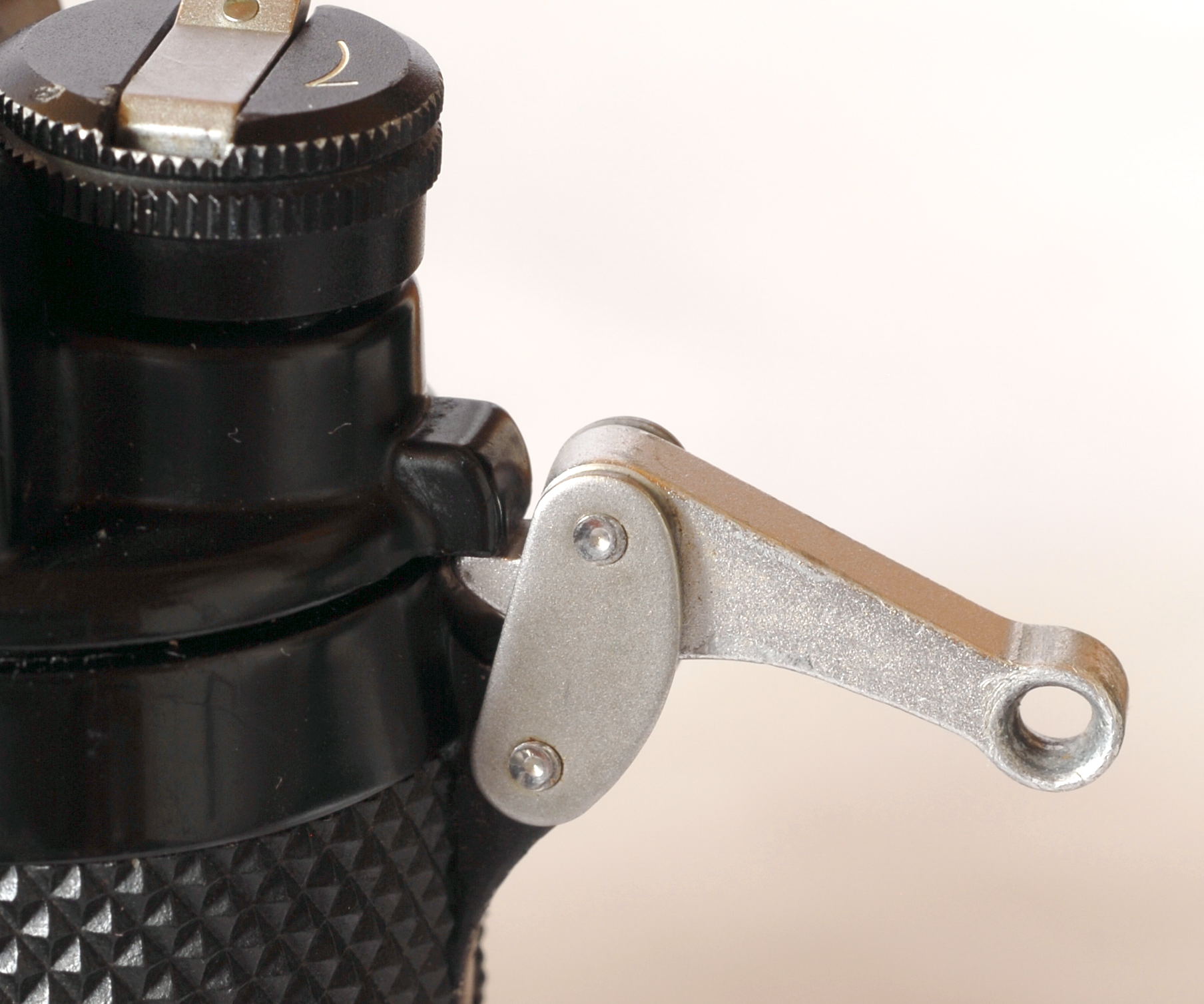
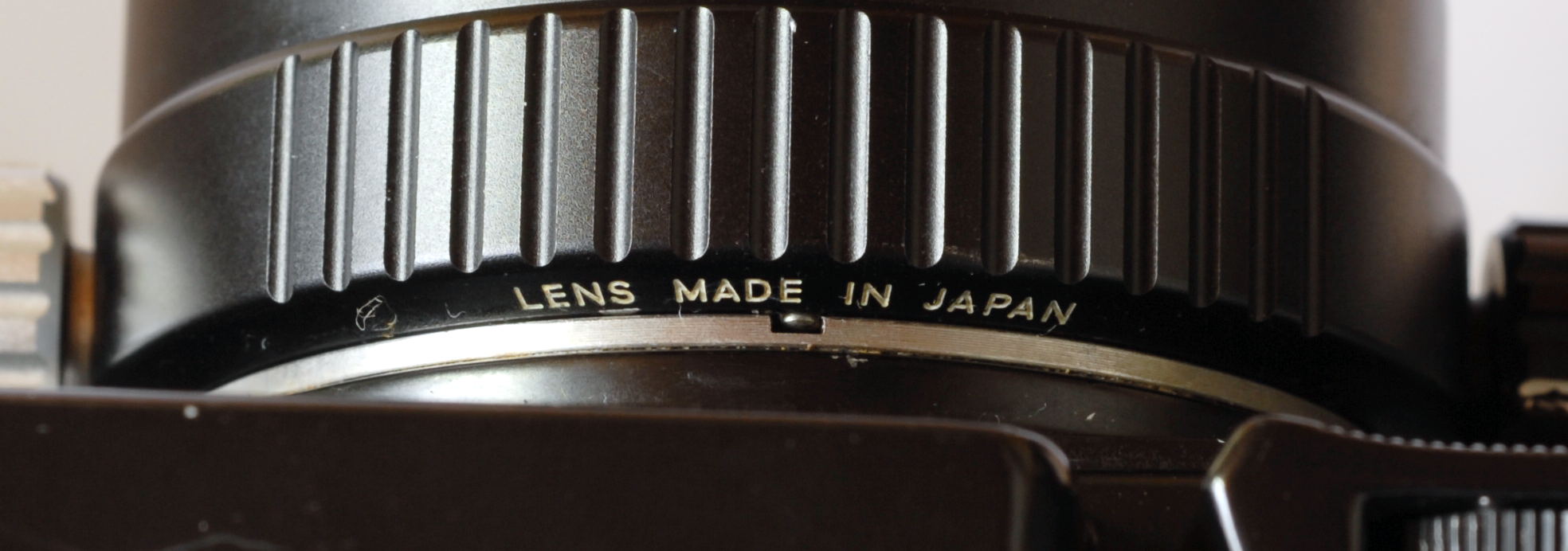
By lifting/pushing on both sides of the body the strap lug lever just under the knob (see above), the entire inner body compartment can be taken out of the outer body. But before that you have to remove the lens, by lifting the lens a few millimeters (grabbing the ribbed ring) and turn it 90°, either clockwise or counterclockwise (see below). In fact the lens locks the whole camera body.
under the e you'll see a little pin; lift the ribbed ring just a little and the lock pin will release the lens. It is possible to mount the lens upside down, too, for better readability.
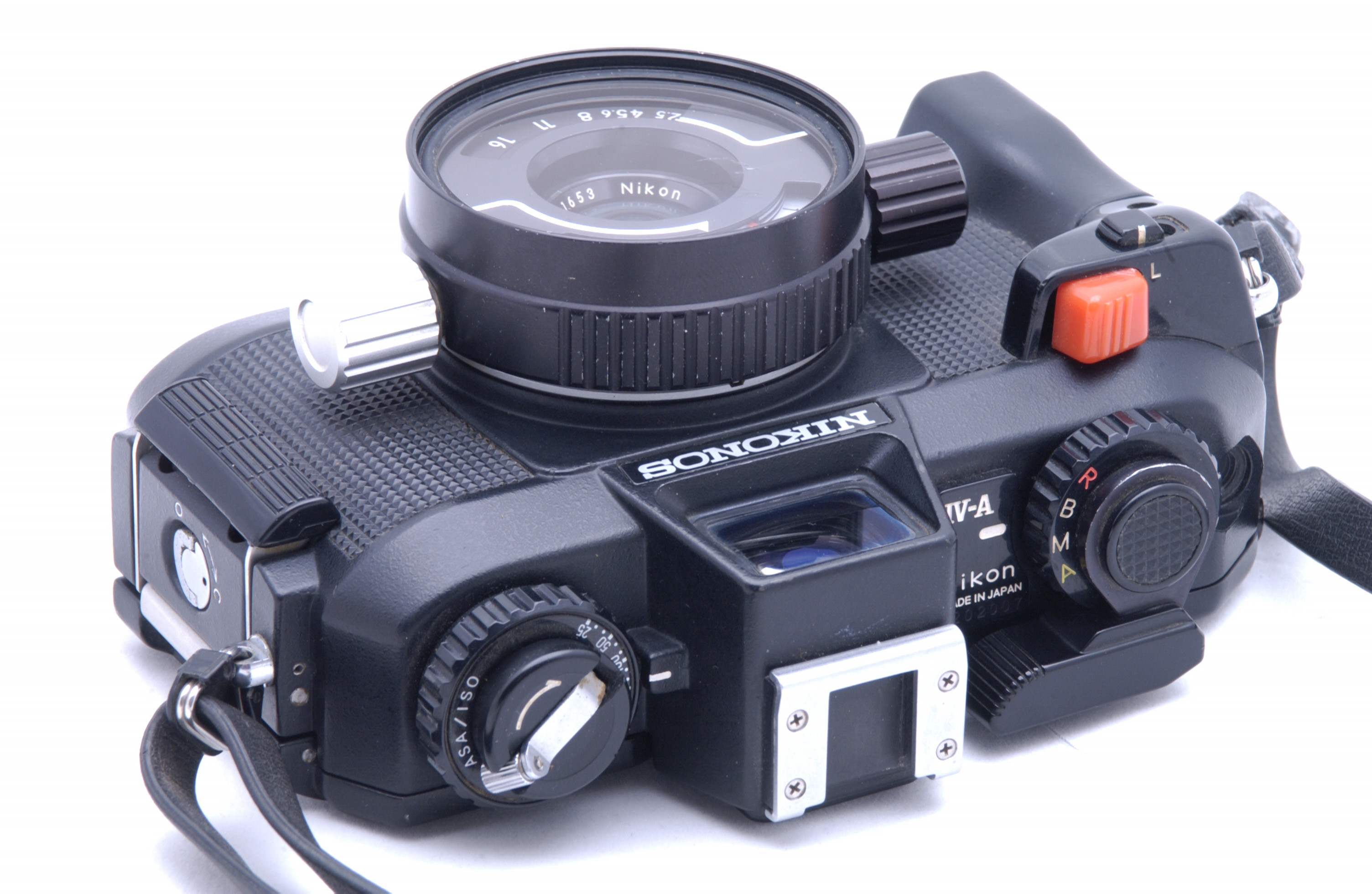
The Nikonos IVa - introduced in July 1980 - is a total new camera. There is no Nikonos IV; the 'a' is referring to an electronic shutter (1/30 - 1/1000 sec.) with aperture priority, thus having a built-in exposure meter. It also has a synchro-contact for electronic flashes at an increased synchro-time of 1/90 sec. (older cameras have 1/60 sec.). The most outstanding feature is the back of the camera which opens like all other modern Nikon SLR cameras. This camera was build until 1984. First #4100001.
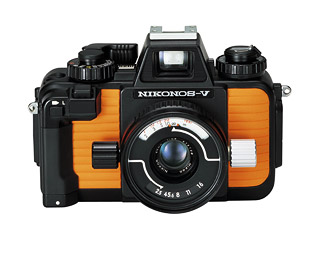
The Nikonos V, being the last of the Nikonos viewfinder cameras was introduced in April 1984. The internal integrated circuit was improved (probably lent from the Nikon EM) with a electronic shutter with aperture priority and an automatic flash program (with external flashes like SB-102). It´s the first camera which was supplied in two colors: orange and green. The production of this very sturdy camera has been ended in 2001. Serial numbers start - probably - at 2000001 (according to Bob Warkentin) for the orange versions and at 3070001 (according to Brian Long) for the green versions. Cameras with #9100001 (according to Peter Braczko) has never (yet) been spotted.
Nikonos V
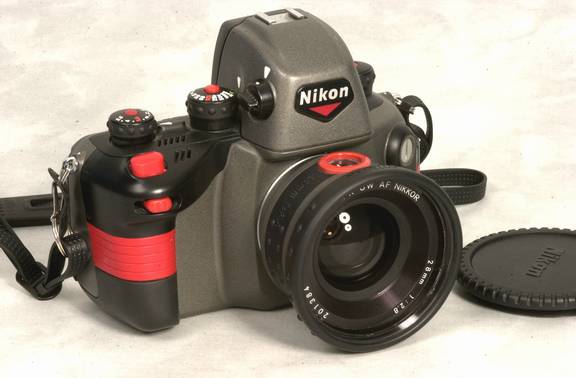
The Nikonos RS is probably the most beautiful underwater camera ever made. Not only its design but also its features are unique. Based on the ´organs´ of the Nikon F-601AF, it was and still is the world's first underwater single lens reflex camera with auto focus and 4 different programs. Built-in winder, DX-film reading, AF-lock and many more! It can be used at a depth of 100 meters! It was, however, not a bargain. The body was listed at a staggering 3400 Euro, a standard lens was more than 1000 Euro and for a simple flash (SB-104) one had to fork out another 1500 Euro. It´s actually almost a pain to jump into the sea with a set of nearly 6000 Euro! It may be that this high price finished the camera. The camera was introduced in June 1992, only 4 years later Nikon packed it in. Probably only a few thousand cameras were made. Serial numbers start at 0000001.
Nikonos RS It is a pity that Nikon didn´t continue to produce a sturdy underwater camera for amateur and professional use. Although there are some underwater housings on the market for several Nikon SLR and Coolpix cameras, the Nikonos RS remains the absolute top! Buying a second hand Nikonos is a tricky business, unless you know where to look (at). Always open a camera entirely to find water and/or dust & rust inside. A good photographer has to clean each camera and lens under a shower as soon as he comes out of any water (also freshwater rivers or lakes). After cleaning it all O-rings should be checked and renewed or greased. It´s redundant to say that lenses (and flashes!) can´t be changed underwater. Nikon produced a nice range of interchangeable lenses for the Nikonos rangefinder series and for the Nikonos RS, among them even a fisheye and AF-Zoom-Nikkor!! Again, not a bargain, but all of them a masterpiece of optical engineering, hardly seen elsewhere. Details of all Nikkors for underwater photography can be found here.
|