Nikomat / Nikkormat(Main technical specifications of all cameras in this chapter in a matrix)
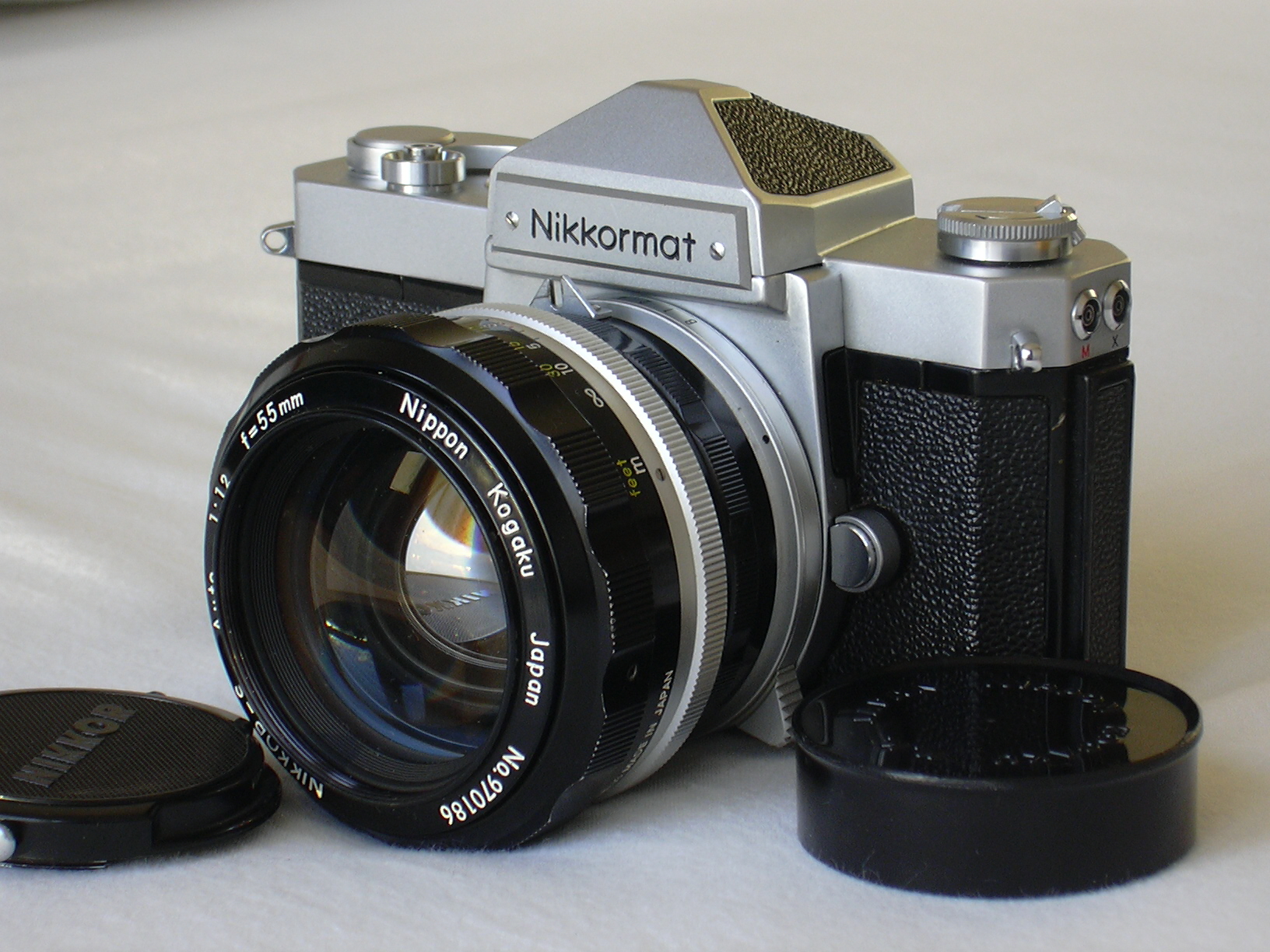
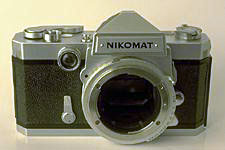
Nikkormat FS with early Nikkor-S 1.2/55mm. In the 1960´s Nikon Corporation introduced a series of cameras, of which most models are still used and working. Cameras in that series sold in Japan carry the name ´Nikomat´, while cameras sold abroad are named ´Nikkormat´. Despite the nameplate both models are 100 % identical.
The compact Asahi Pentax Spotmatic, presented at the 1960 Photokina and released in 1964, was an example for many single lens reflex cameras, including the Nikomat/Nikkormat series. When Nikon introduced the Nikon F in 1959, meant for the professional photographer, Nikon decided to introduce a single lens reflex camera for the amateur photographer, too. In 1960 the Nikkorex series was put on the market. These camera series - fitted with a non-interchangeable lens with a built-in Citizen shutter - were not as reliable as Nikon expected and therefore were not a great success. Fitted with a Seiko shutter a second model (Nikkorex II) wasn´t better either. In 1964 Nikon started to test a successor, the Nikkormat. Several prototypes were made with and without built-in exposure meters and various shutters. In the early 1960´s Nikon had taken over - together with Konica (Sakura) - the Copal Co., producer of camera shutters.
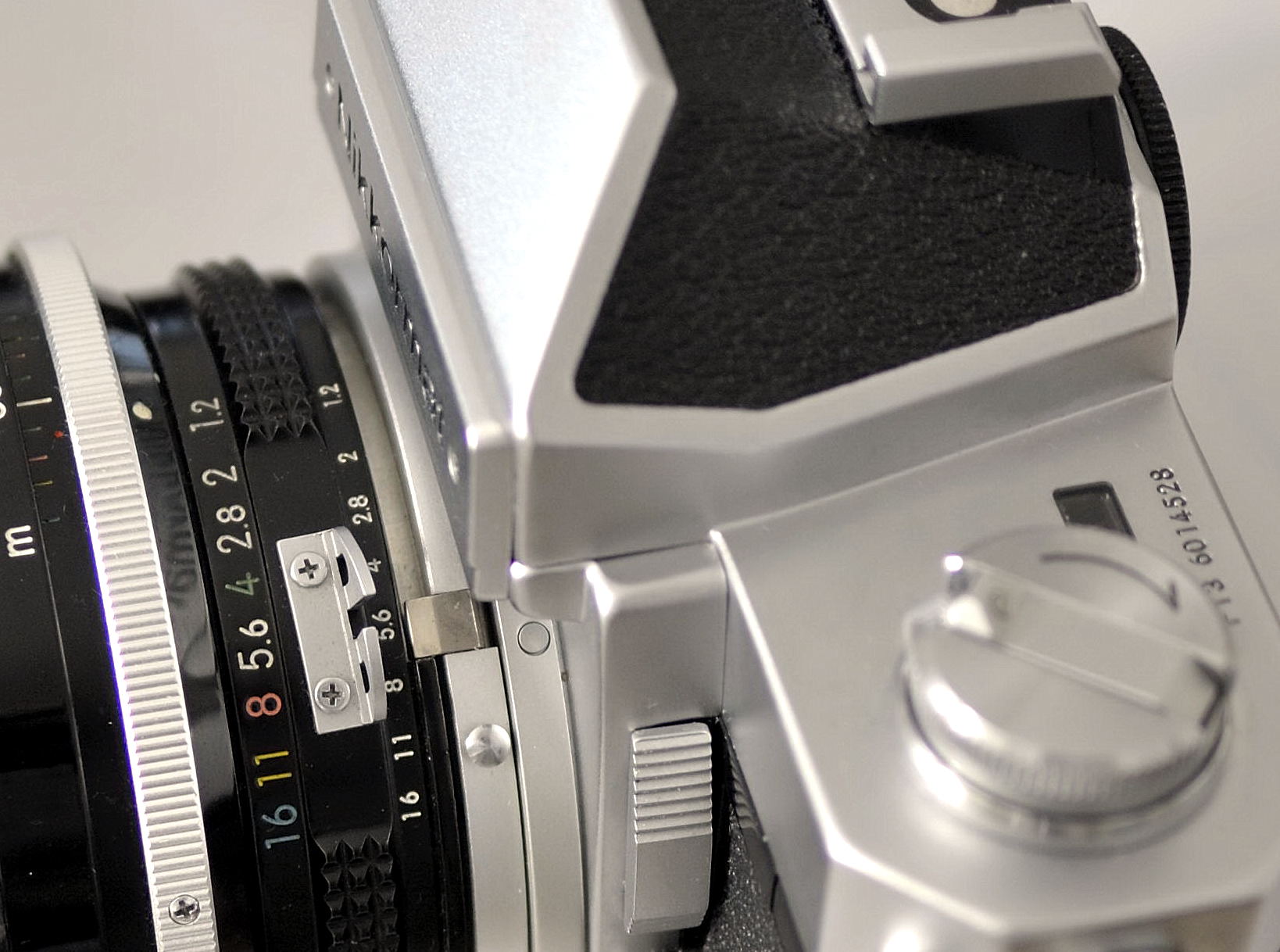
One of the many prototypes with external exposure meter In July 1965 the first Nikkormat (FT) was introduced fitted with a Copal Square shutter, which was more or less a gamble, as that shutter wasn´t fully tested yet. Now we all know that this shutter a good choice as many Nikkormats nowadays are still working. All models are made of strong metal with a swinging back door, glass prism viewfinder, self timer, mirror lock-up facility (not FS), double flash contacts, DOF-preview button, rewind crank, but missing a flash or accessory shoe on top (FT2 and later models do have one). All versions - except the FS - were available in chrome and black. Only the last models could be fitted with a winder. The backs were not interchangeable. In front of the serial numbers on the top plate of all models the model name is engraved. To mount a lens the aperture should be set at f/5.6 as the prong of the lens will fit into exposure meter coupler of the camera. To couple the lens aperture to the exposure meter the aperture ring of the lens should be turned/rotated to the left and right after it was mounted. This system was used by Nikon until the introduction of the AI (aperture indexing) system with the Nikkormat FT3 and the Nikon FM in 1977. Nikkormat FT
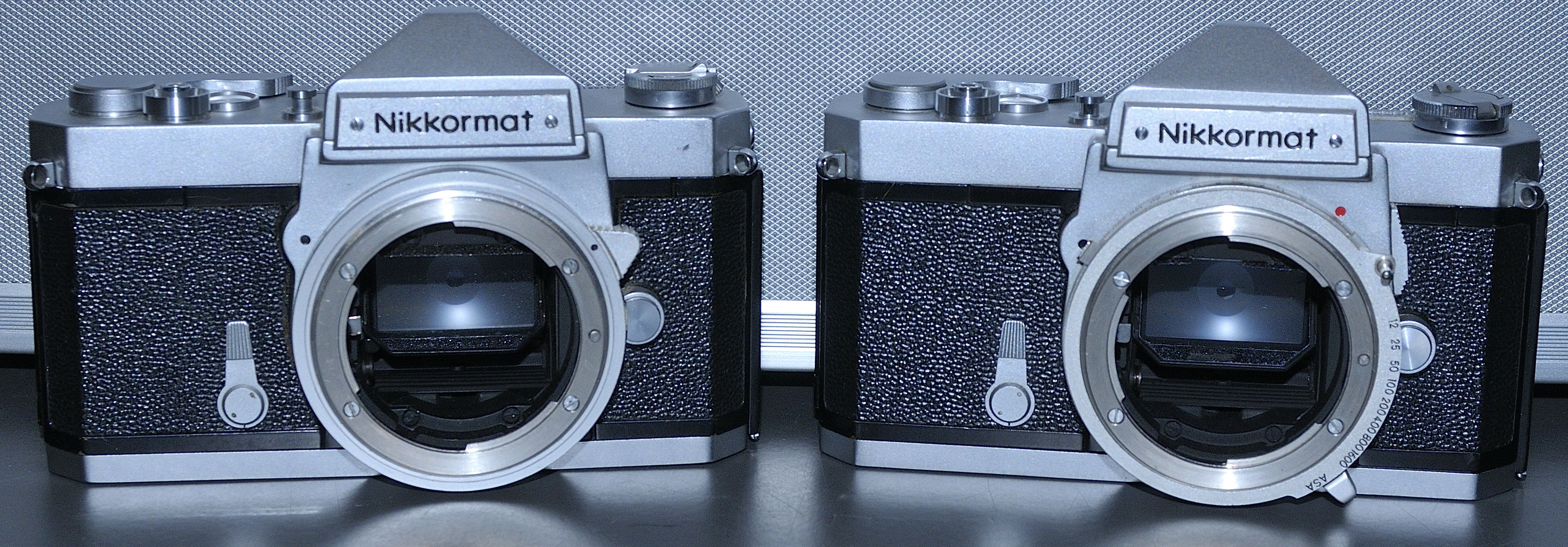
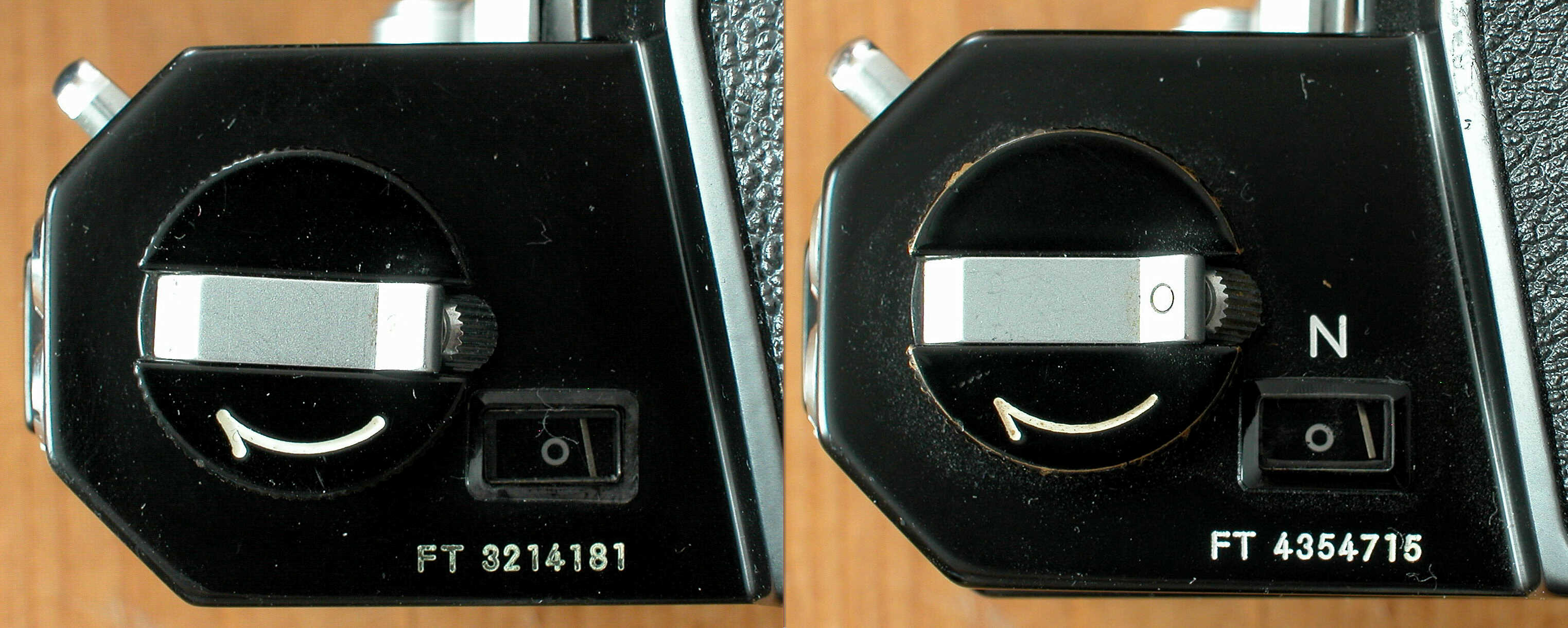
Left Nikkormat FS, right Nikkormat FT This sturdy camera was built until August 1967. The built-in exposure meter is measuring through the interchangeable lens the integral image/frame. The Nikkormat FT is the first Nikon SLR where the film advance lever is also the exposure meter switch! The shutter selector, as well as the ASA/ISO selector are placed around the lens mount. The flash synchronization (1/125 sec.) is even better than that of the Nikon F. Serial numbers start at 3100001. Just over 100,000 bodies were made. Nikkormat FS A variant of the FT, but without a built-in exposure meter and no mirror lock up, this camera was simultaneously introduced with the FT. Black painted versions were not sold. Although this version was a bit (up to 25 %) cheaper, virtually nobody bought this camera, because of missing that exposure meter. This fact makes this camera a rare and thus hard to find model. Serial numbers start at 7400001. Less then some 20,000 bodies were made.
Very early models of the Nikomat/Nikkormat FT and FS have a flat exposure counter window, later models have a chrome ring around it. The removable flash shoes (in black and in chrome) have Nikomat and Nikkormat printed.
Nikkormat FT-N
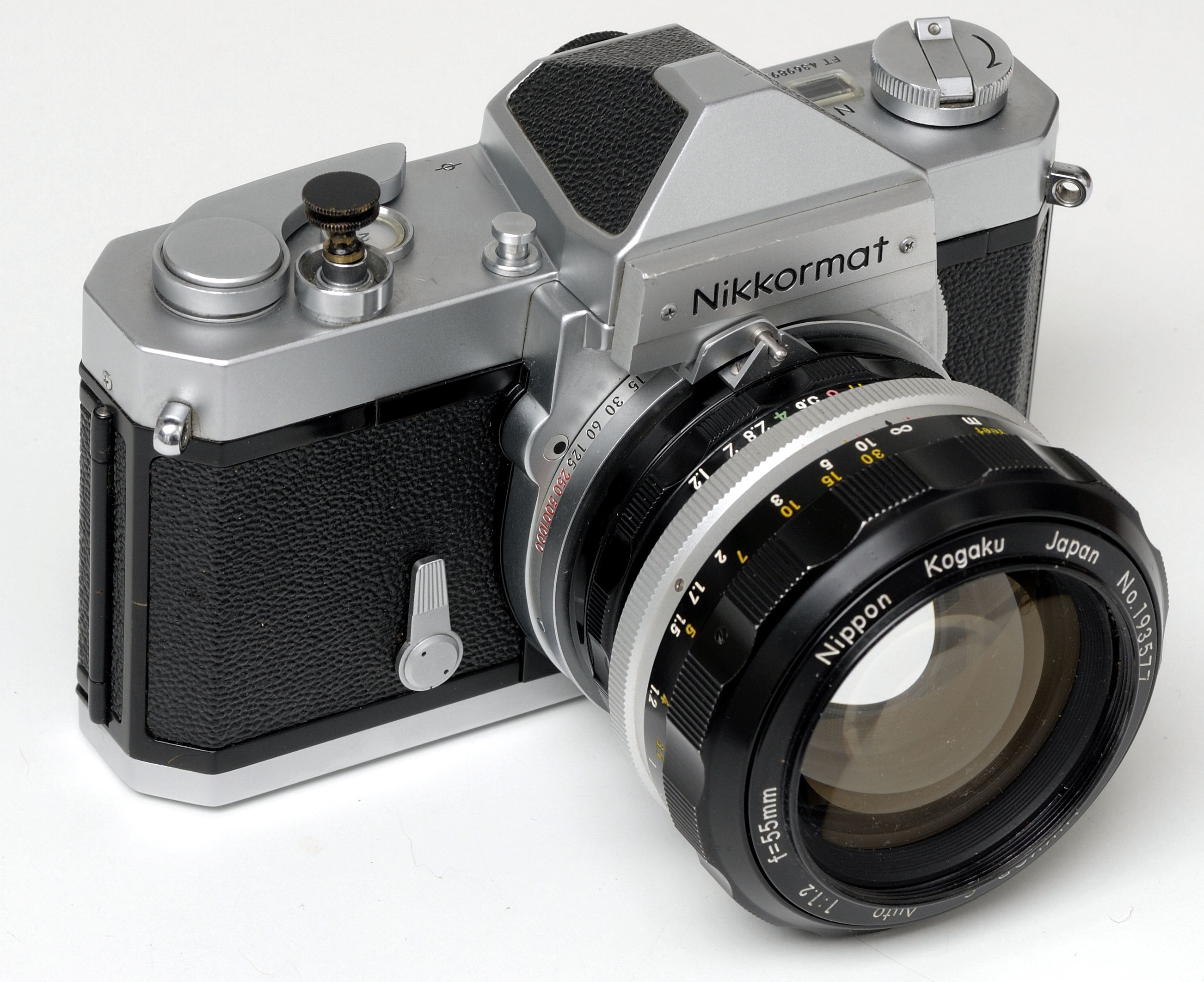
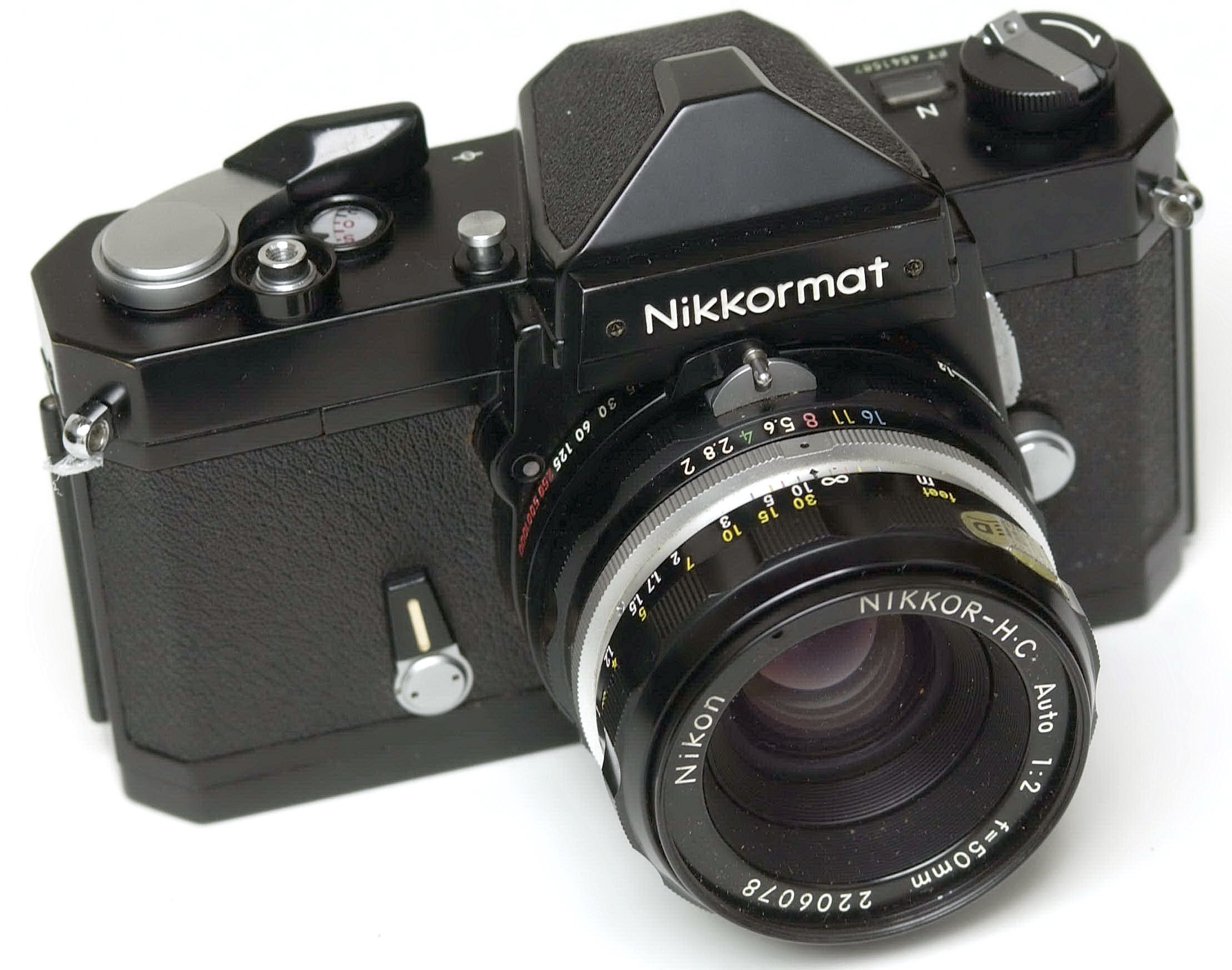
The first version of a chrome Nikkormat FT-N with a contemporary Nikkor-S 1.2/55 mm. This version was introduced in October 1967 and produced until March 1975. An important change was the center-weighted metering (a feature still present in modern Nikon SLR´s) and its semi-automatic meter coupling. The FT-N can be identified at the N in front of the exposure meter window on top of the camera. The very first models had some problems with the swinging mirror, later models the mirror ´cushioning´ was improved. Serial numbers start at 3500001. Over one million cameras were made during 7.5 years of production. Some Nikkormats FT and FT-N for the German market do not have the Nikon Japan inscription on the back of the body. Halfway its production time some minor external and internal details were changed. As you can see from both pictures the film advance lever and the self timer lever of the second version have got a black plastic cover. Internally changes were a new viewfinder screen with a split-level center within a circular fresnel lens. Both versions are weighing in at 750 gram.
The second version (in black) of Nikkormat FT-N with contemporary Nikkor-H.C 2/50mm.
Note: many Nikkormats/Nikomats FT-N are offered as a Nikkormat/Nikomat FT, although at a closer look they are an FT-N. Many sellers forget to mention or show the N in front of the exposure meter window!! So, look carefully or ask!! A nice FT is rare, a FT-N isn't.
Nikkormat FT2
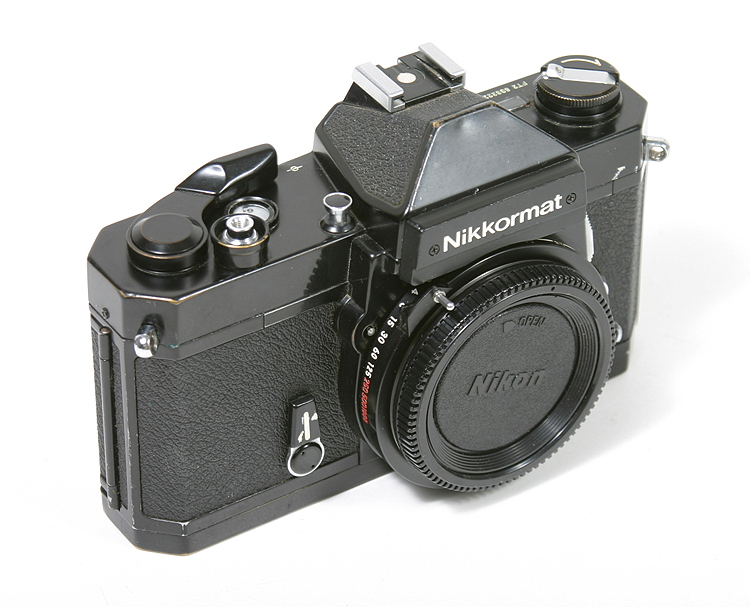
This model - introduced in March 1975 - has an (ISO) accessory shoe on top of the prism, has one flash contact and a view finder screen with an improved focusing indicator. Inside the battery cover 'for FT2' is engraved. The button to unlock a lens and the DOF button have a black plastic cover. Serial numbers start at 5000001. Production of this version was stopped, after nearly half a million bodies, mid 1977. The camera weighs in at 780 gram.
Nikkormat FT3
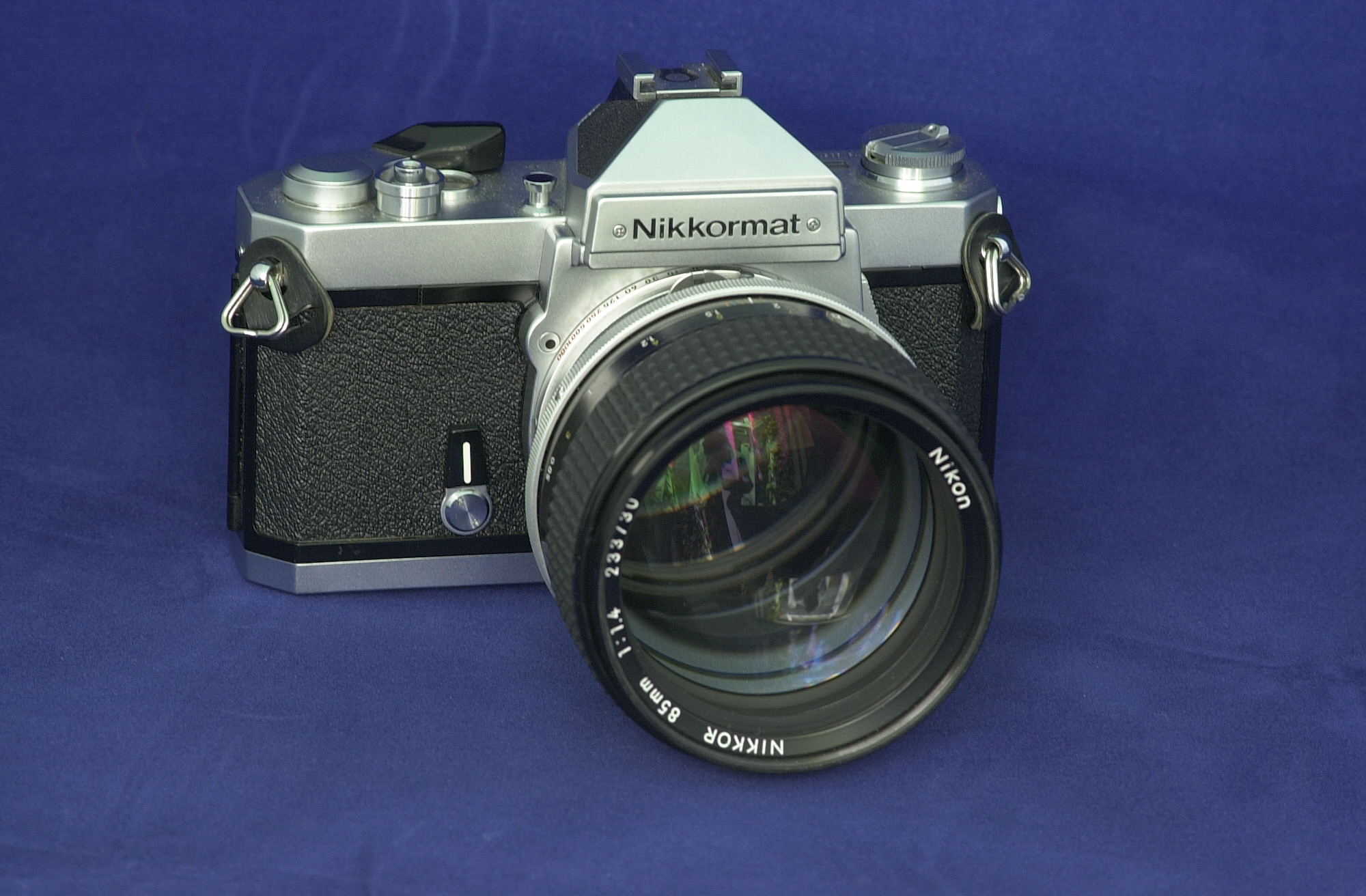
Nikkormat FT3 with the fast Nikkor 1.4/85mm. In March 1977 this improved model was introduced. Main change was the meter coupling system.
It has a notch to couple the modern AI-lenses. Older lenses could be used by lifting the notch (after pressing the chrome button next to it) and using stop-down metering. The FT3 has been produced for just about one year as in that same year his smaller and better brother, the Nikon FM was introduced. This FT3 model is hard to find nowadays. Inside the battery compartment door 'for FT3' has been engraved. Serial numbers start at 6000001. An estimated 140,000 bodies were made. This version weighs in at 740 gram. Hereto all Nikkormat models with mechanical shutter were listed. There were two models introduced with an electronic shutter: Nikkormat EL
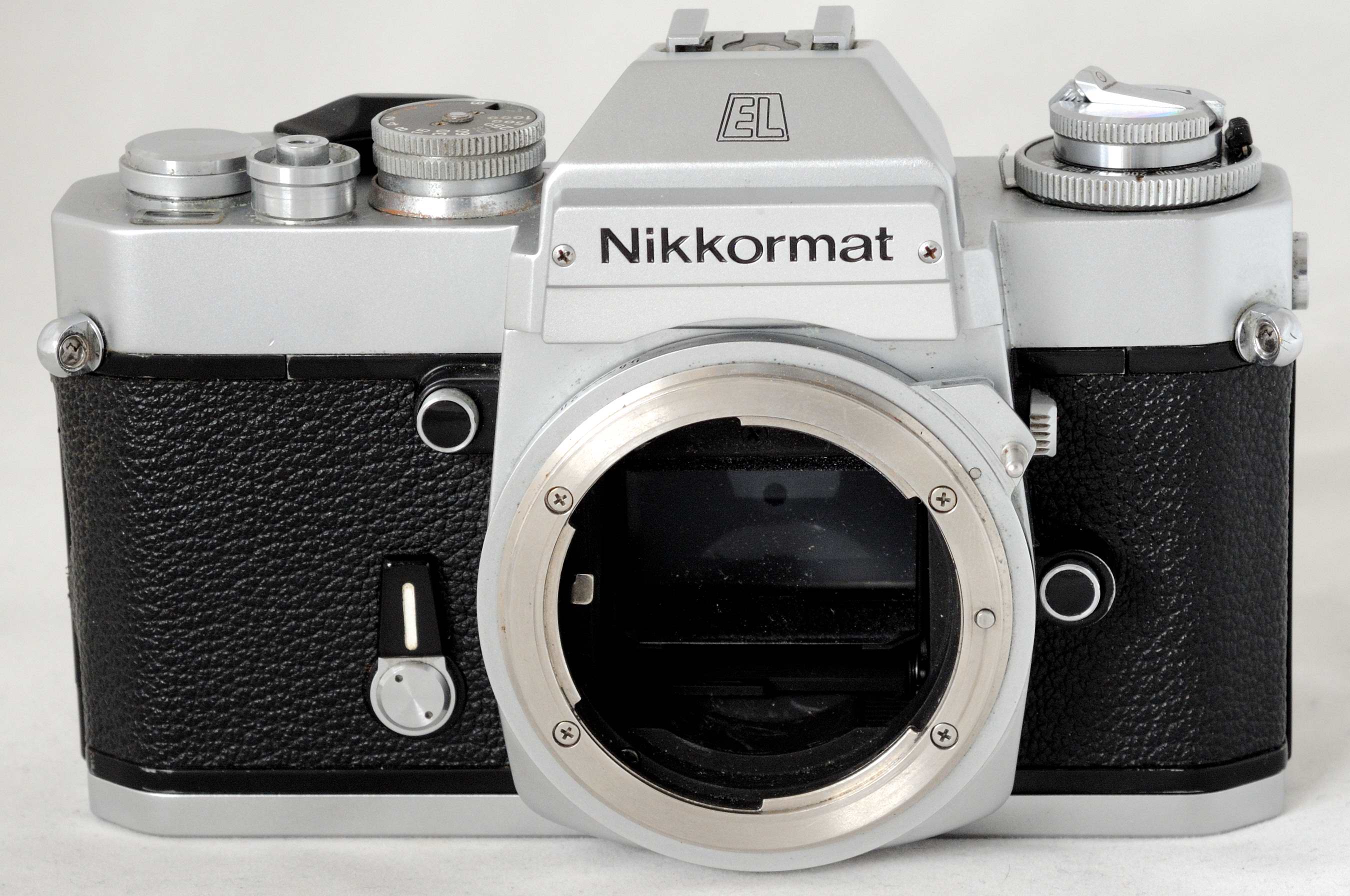
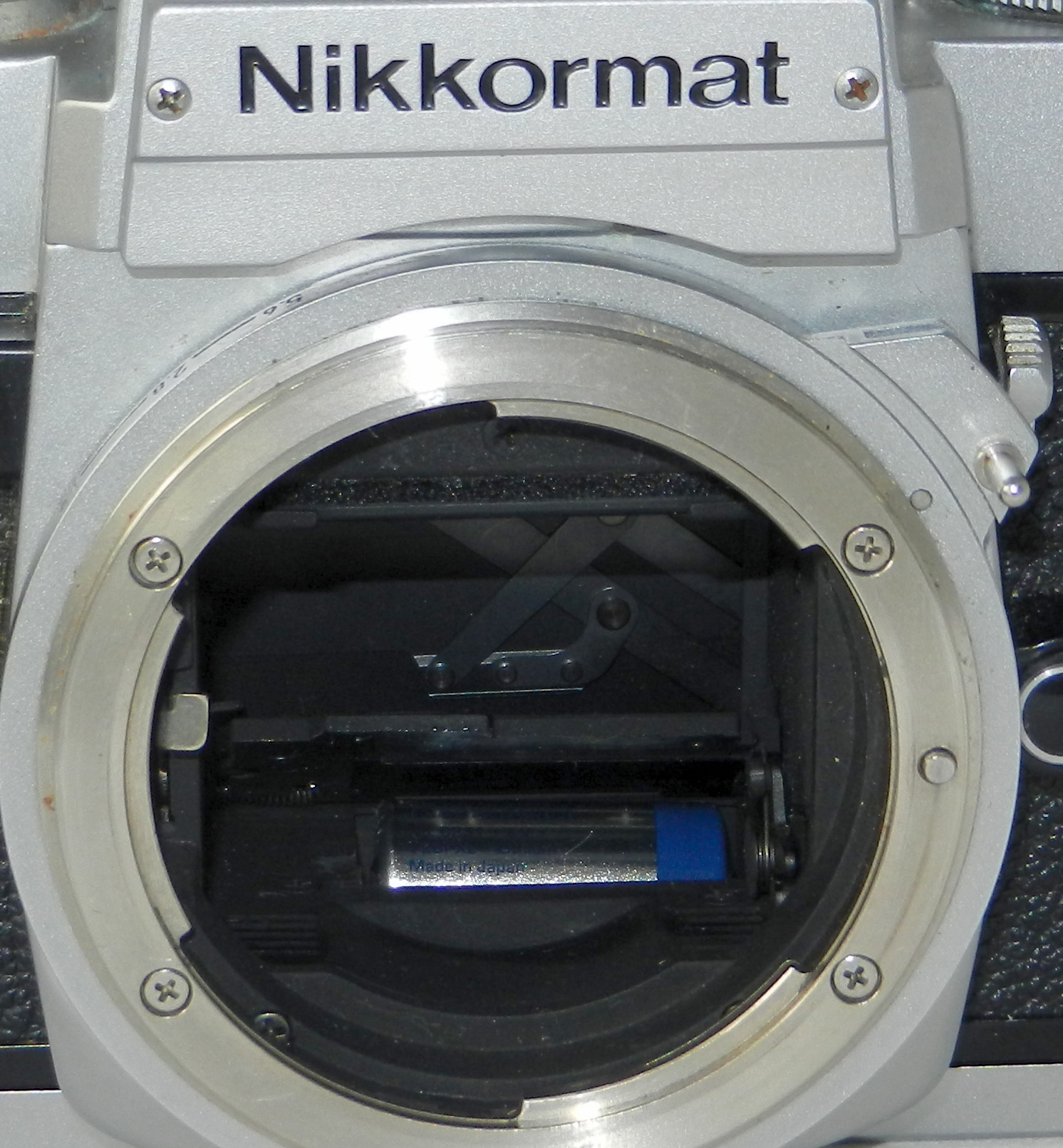
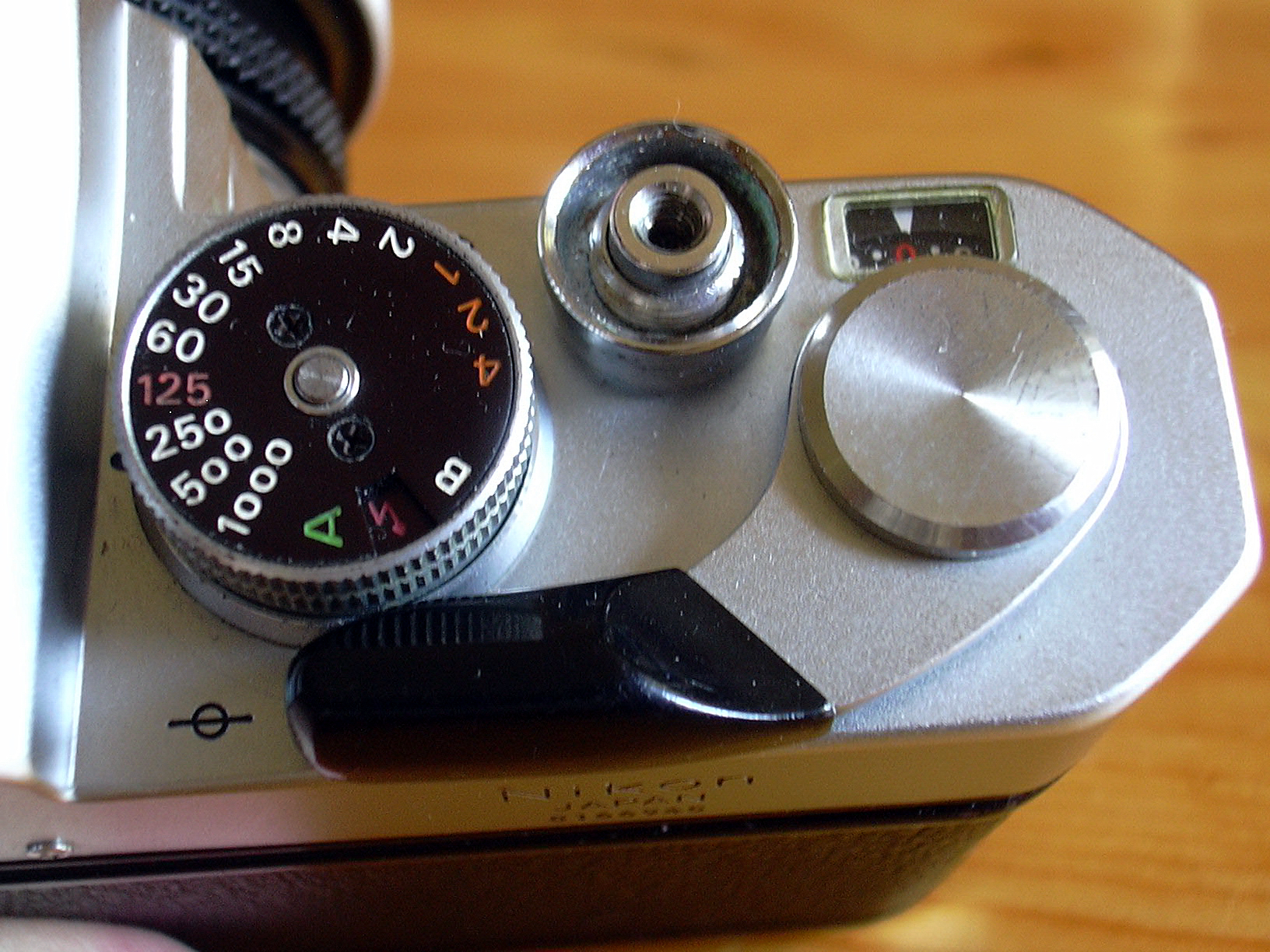
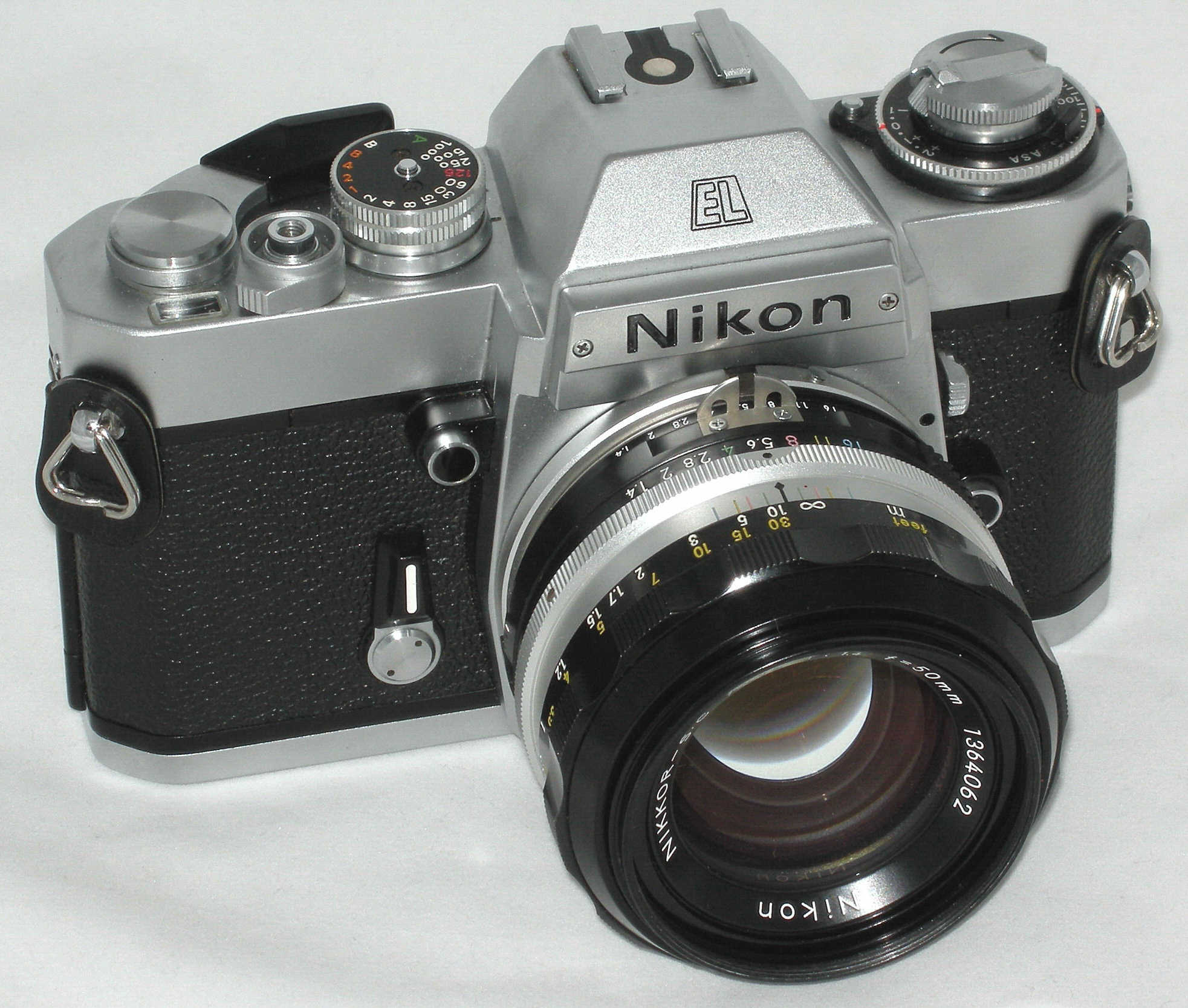
This model - Nikomat EL = Electronics Light - was introduced in November 1972. It has a shutter selector button on top of the camera body, an electronic shutter (4 - 1/1000 sec.), battery test button with diode (under rewind crank), battery compartment under the mirror and a back which can be opened by lifting the rewind crank. This camera was in fact the first camera with an electronic shutter and TTL exposure metering. Nikon started with the development of an electronic shutter in 1969, but there were a few problems to tackle: where to put all those electronic circuits? First the Copal Square S shutter was redesigned (new name: Copal Square SE) and was managed by an Integrated Circuit (IC) of just 2 square mm. (74 transistors and 27 resistors) inside the top plate. In those days it was difficult to produce a soft version of the Printed Circuit Board (PCB). And where to put the battery?
Finally the engineers decided to place it in a battery compartment in the lower section of the mirror house, under the mirror. If you lift the mirror you´ll find a little door behind which you´ll find the battery! If you look at the shutter speed selector button you´ll see a rather large space next to ´4´. In that space an ´8´ should have been placed, but Nikon engineers didn´t trust the accuracy of the electronic Copal shutter, so they left out the 8 for 8 seconds. But if you turn the shutter speed selector on that empty space the camera will fire its shutter for 8 seconds. Don´t tell this secret!
Serial numbers of the Nikkormat EL start at 5100001. Of both the black and chrome versions some 500,000 bodies each were produced.
Nikkormat ELW + Nikon EL2
The Nikkormat ELW is identical to the EL model but it has a possibility to place a winder (AW-1). This winder has a ´top speed´ of 1 frame per second. The ELW, introduced in February 1976, was only available in black. Serial numbers start at 7500001. In front of the serial number a ´W´ is engraved. The EL2 (pictured above), introduced in May 1977 and available in chrome and black, is identical to the ELW, but has the newer AI-coupling system and.......has got the name ´Nikon´. This last version of the Nikkormat series was produced until the summer of 1980. Serial numbers start at 7800001. All models were succeeded by the smaller and more popular Nikon FM/FE-series. Nikkormats were produced and sold by hundreds of thousands in about 15 years all over the world. Many models of this very strong and reliable camera are still working and many are offered nowadays at rather low prices. As stated before the FS and FT3 are relatively rare, the FT2 is the most versatile version as it has a good exposure meter, a modern flash connection and it takes all lenses Nikon ever made for its non-AF SLR´s. Of some models the black Nikomat version is hard to find. The older models do not accept modern batteries and in some cases the exposure meter has to be altered or adjusted, because of the battery voltage.
Note: To see how to open a body top of a mechanical Nikkormat see here
|