|
Nikon compact film cameras(incl. 28 & 35Ti) Introduction
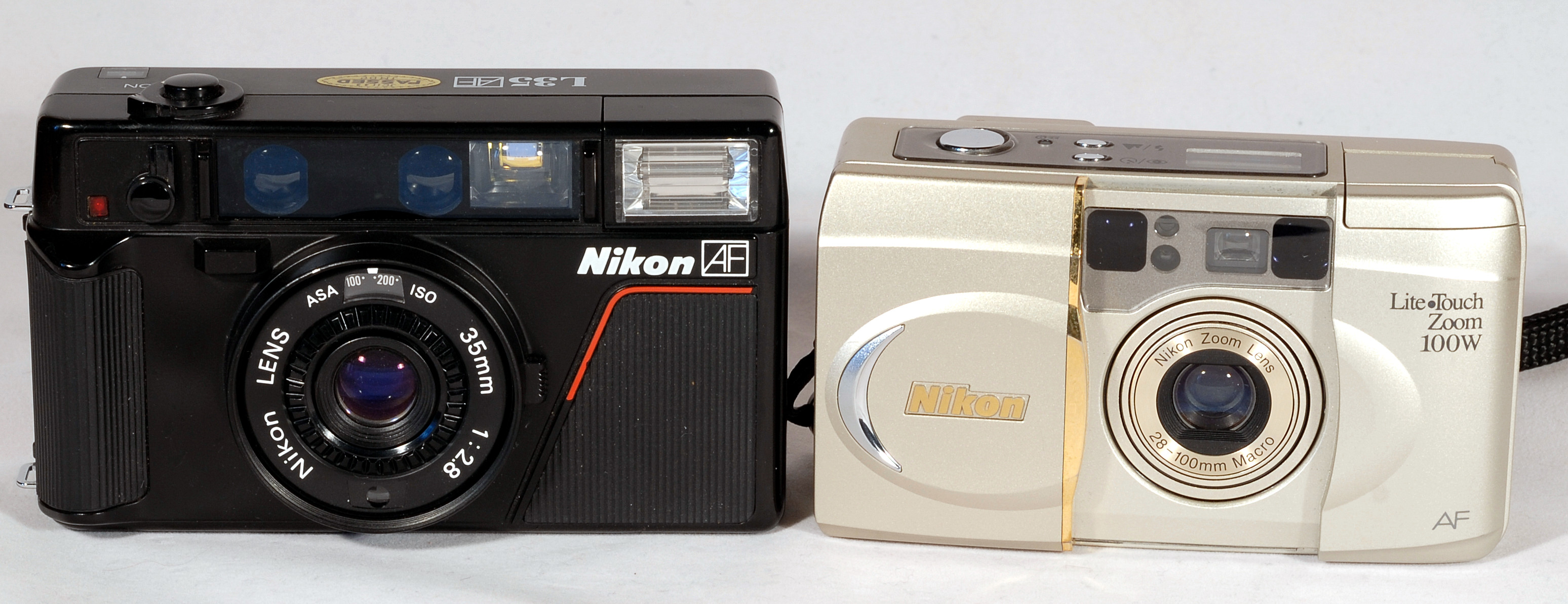
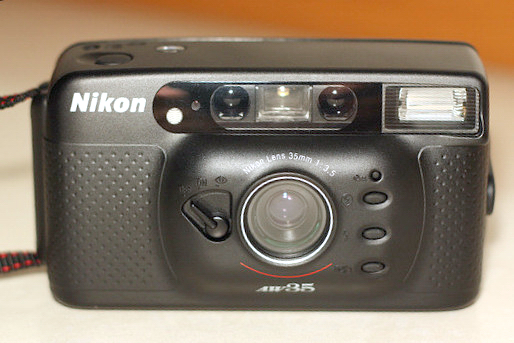
Left: the first Nikon compact camera (1983); right: the last Nikon compact camera (2003)
(All cameras below are listed in a matrix) First: what is a compact film camera? It is difficult to give a description or designation but ´a camera, as small/compact as possible, with built-in features (automatic exposure, flash, auto- or fix focus, easy film loading & film advance) for easy picture taking´ comes close. Before listing all compact cameras Nikon ever made, some information should be given about the enigmatic numbering and naming of cameras by Nikon Corporation. Not all cameras do have the same name or type number, and not all cameras were sold worldwide. Some camera names refer to technical specifications, but many do not refer to sensible features. What to think of ´one touch´, ´nice touch´, ´tele touch´, ´action touch´, ´fun touch´, ´zoom touch´, ´lite touch´ and ´smile taker´? Sometimes combined with numbers from 1 - 700? Or those cameras with a data back: ´quartz date´ or ´world time´? Why a certain camera in Europe is marketed with the name ´Nikon TW-Zoom 35-70´ and in the USA as ´Nikon 400´ doesn´t make sense. But: who really cares? Some compact cameras listed below have a fix-focus lens, but most of the cameras have auto focus feature, though some of them have zone-auto focus, which means that the focusing distance from infinity to close-focus will be step by step in a few stages only. If we look to other camera manufacturers Nikon was relatively late in introducing compact cameras. Its first compact camera was introduced by Nikon in March 1983. In April 2003, after the introduction of the last camera model (see below), Nikon stopped producing compact film cameras. About one hundred different models & versions were produced in those 20 years. Some for the home market, most of them for export. It´s unknown how many were produced, certain models went like hot cakes, others were sold at a loss. However - that the first compact cameras were a success is documented by the total sales after one year of their introduction. By the end of 1984 more compacts (approx. 1.5 million) were sold than SLR (single lens reflex) cameras. It is impossible to give full details and pictures of all cameras Nikon produced. The most sophisticated and collectible cameras will get a bit more attention. Compact cameras for APS films can be found here. Nikon L35AF
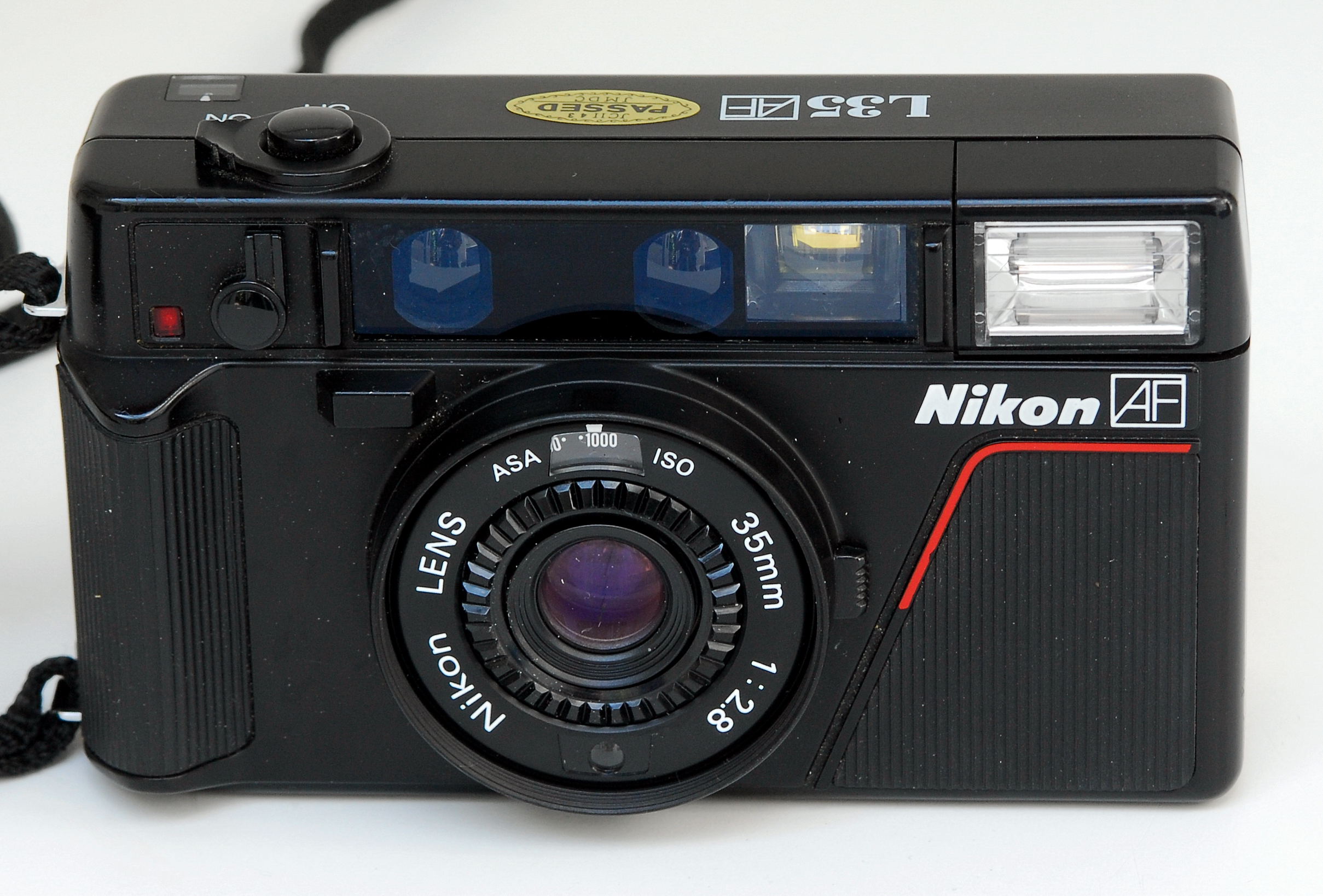
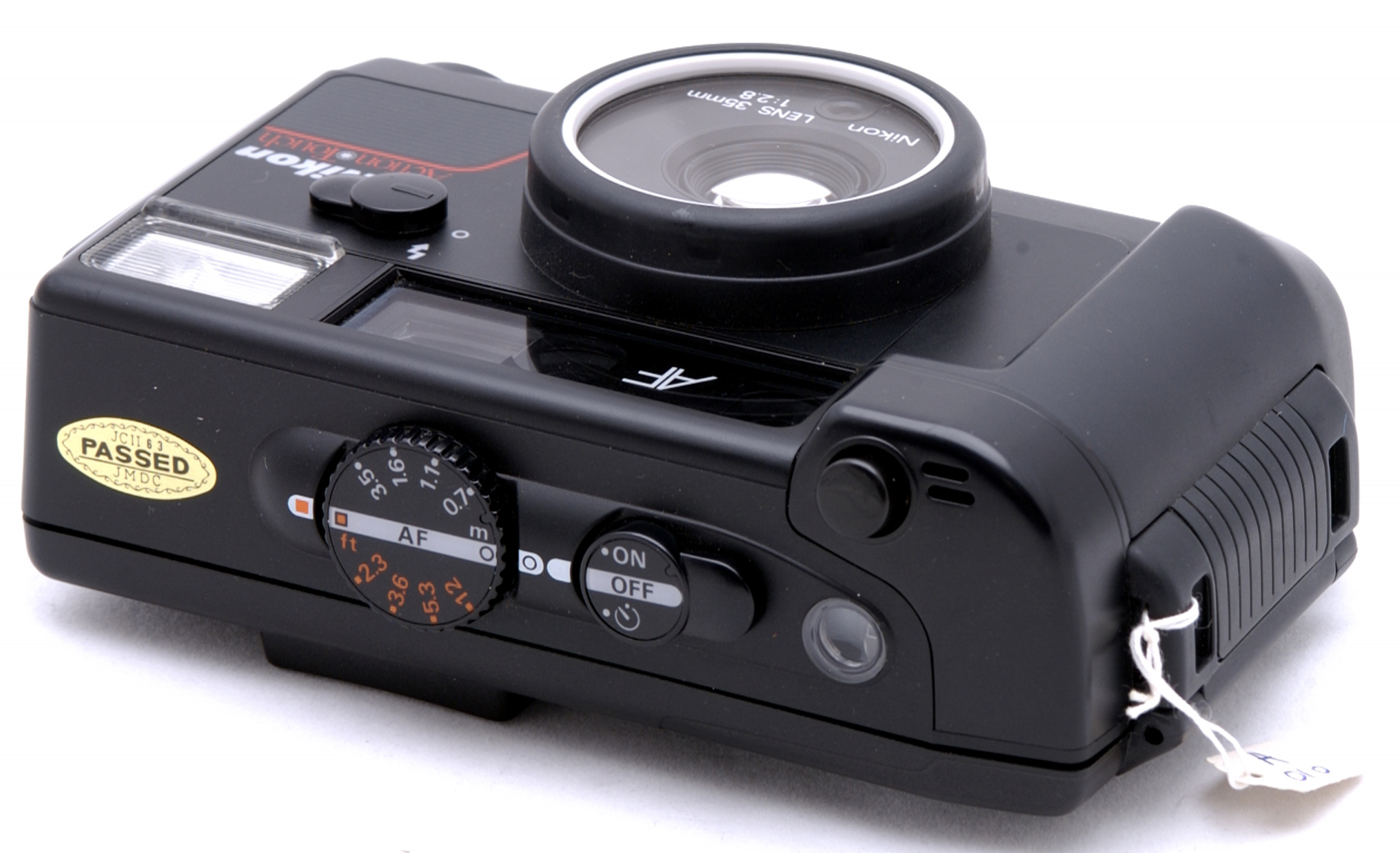
Nikon 35AF (second version) This very first compact camera was introduced in March 1983. It was designed by the famous Italian car designer Giugiario, who also designed cameras like the Nikon EM, F3 and F4. The L35AF has a relatively fast standard lens (2.8/35mm.), which focuses (automatically) down to 80 cm. Like all compact cameras this camera is easy to use featuring auto focus, automatic film loading/advance/rewind, automatic flash and a separate viewfinder/rangefinder. Three versions exist: the first version has an ISO-range (to be set manually) of 25-400; the second version has its ISO-range extended to 50-1000 and the third version - Nikon L35AD - has a data back. Although all cameras can be used the years to come, the calendar in the data back, however, ends on December 31, 2009! Late 1985 the Nikon L35AF2 was put on the market. This version has a DX-film reader with an extended ISO-range of 50-1600. Of this version a data back version (L35AD2) exists as well. As all mentioned cameras in this chapter were relatively expensive, Nikon introduced a cheap version in 1984, the Nikon L135AF with a 3.5/35mm. lens (focusing from infinity - 1.2 meter) and only 3 ISO-settings (100, 400 and 1000). In the four years of production, the cameras mentioned above were a success. Such a success that various manufacturers were producing accessories; a most unusual activity in those days. It is impossible to give exact production figures, but it is clear that Nikon made a good start on the compact camera market.
Nikon L35TW-AF
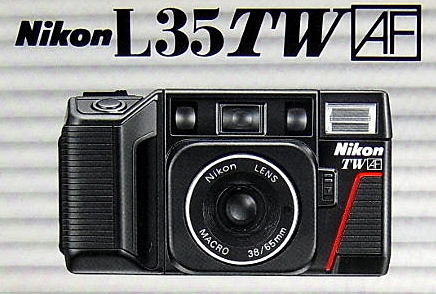
Nikon´s probable hesitation to put a compact camera with a zoom lens on the market can be illustrated by the introduction - early 1986 - of this camera, having a bi-focal lens: 3.5/38mm. + 5.6/65mm. with a minimum focusing distance of 40 cm. The lens has ED-glass, a rare feature in those days. The view finder ´follows´ the two lens angles. Another novelty is the LCD-window. There is also a version with data back (L35TW-AD).
Nikon L35AW-AF
This camera is a bit a drop out in the compact camera range. In 1986 this ´all weather´ (AW) camera may drop out of a boat literally as it is water proof (max. 3 meter). It was available in black, orange and blue, has a 2.8/35mm. lens and built-in flash. There is also a version with a data back (L35AW-AD). Although these cameras were relatively expensive, they were cheaper than the cameras in the Nikonos-series. In the USA this camera was marketed as 'Action Touch' (see above). Don't ask why! Nikon RF2 / RD2
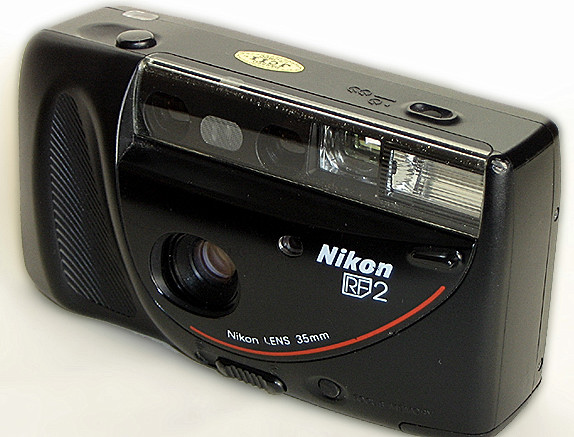
This simple camera with a prime auto focus lens (3.5/35 mm.), built-in flash, automatic film winding, 30 seconds focus memory and 65 cm. close-up, was introduced in early 1987. The version with data back was called RD2. On some markets the camera was known as Nikon One•Touch 100.
Nikon AF-3
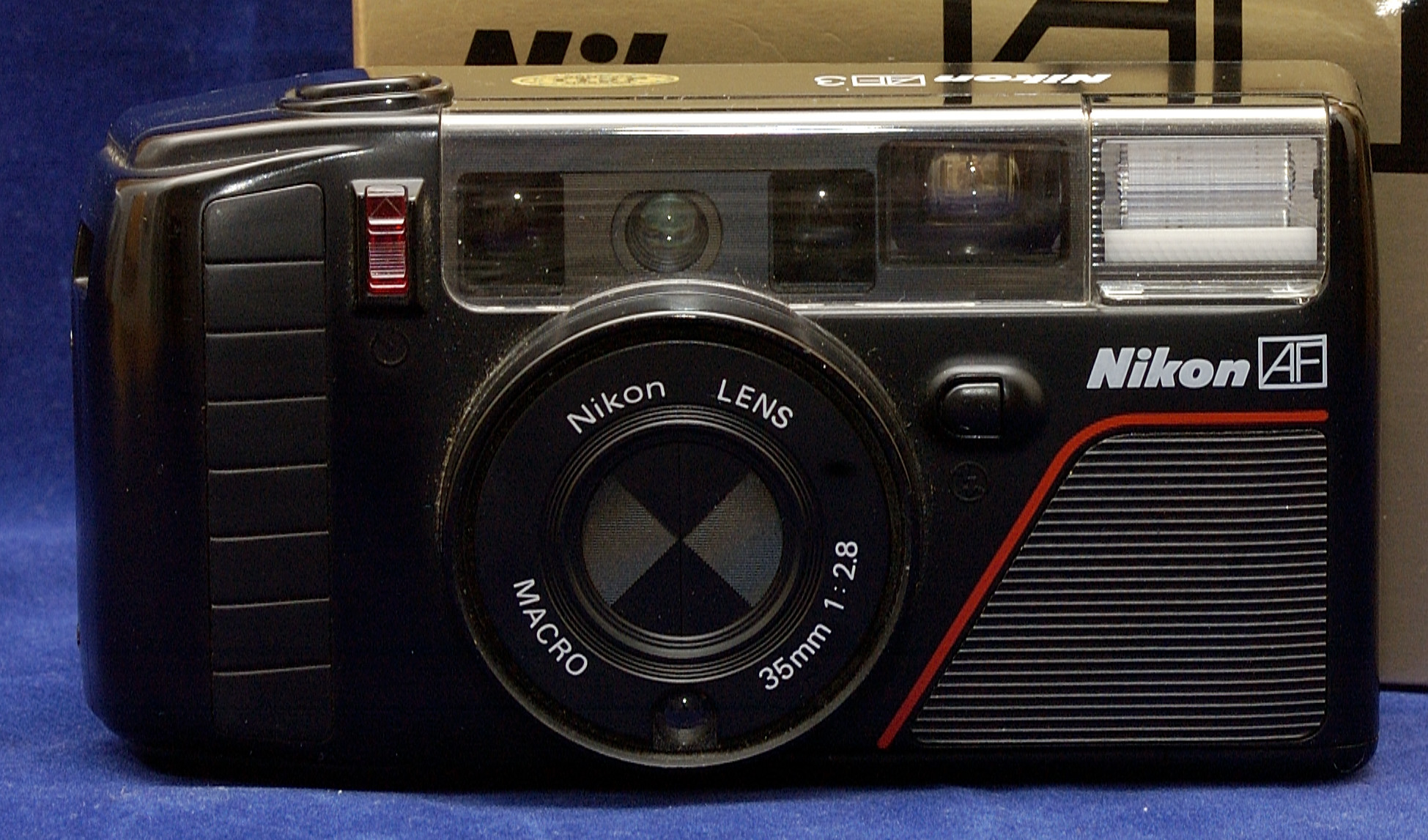
In 1987 Nikon introduces a new and redesigned range of compact cameras. The AF-3 has the famous 2.8/35mm. lens, an improved auto focus, flash correction for close-ups, DX-reader, automatic lens cover and various LED´s in the viewfinder. The data back version is named Nikon AD-3 Data, the cheaper version Nikon-RF with a 3.5/35mm. lens. The latter camera has also a data back variant (RD). Both versions are succeeded by the Nikon RF-2 resp. Nikon RD-2 in 1988.
Nikon TW2
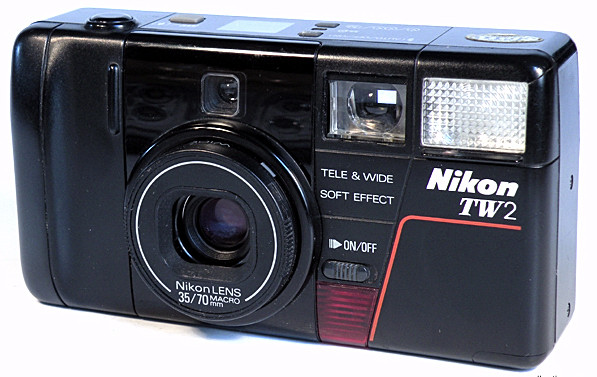
Nikon claims - at the introduction 1988 - that this camera is the thinnest camera in the world. Again this camera is fitted with a bi-focal lens: 3.5/35mm. and 6.8/70mm. A novelty are a softener (for soft portraits) and a switch for taking a continuous series of pictures. This camera has a data back version (TW2D), too. Also known as Tele•Touch Deluxe !!
Nikon TW20
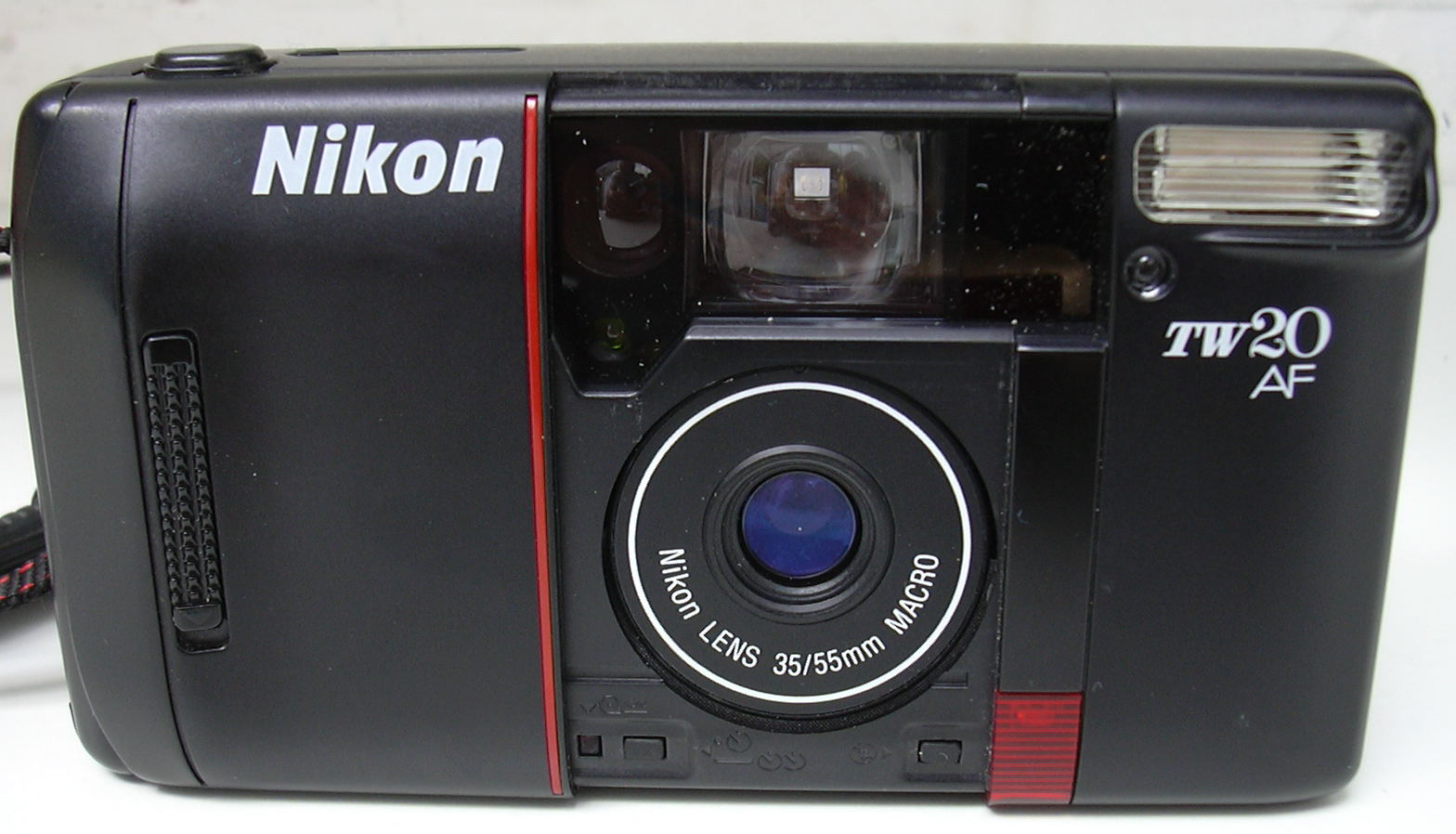
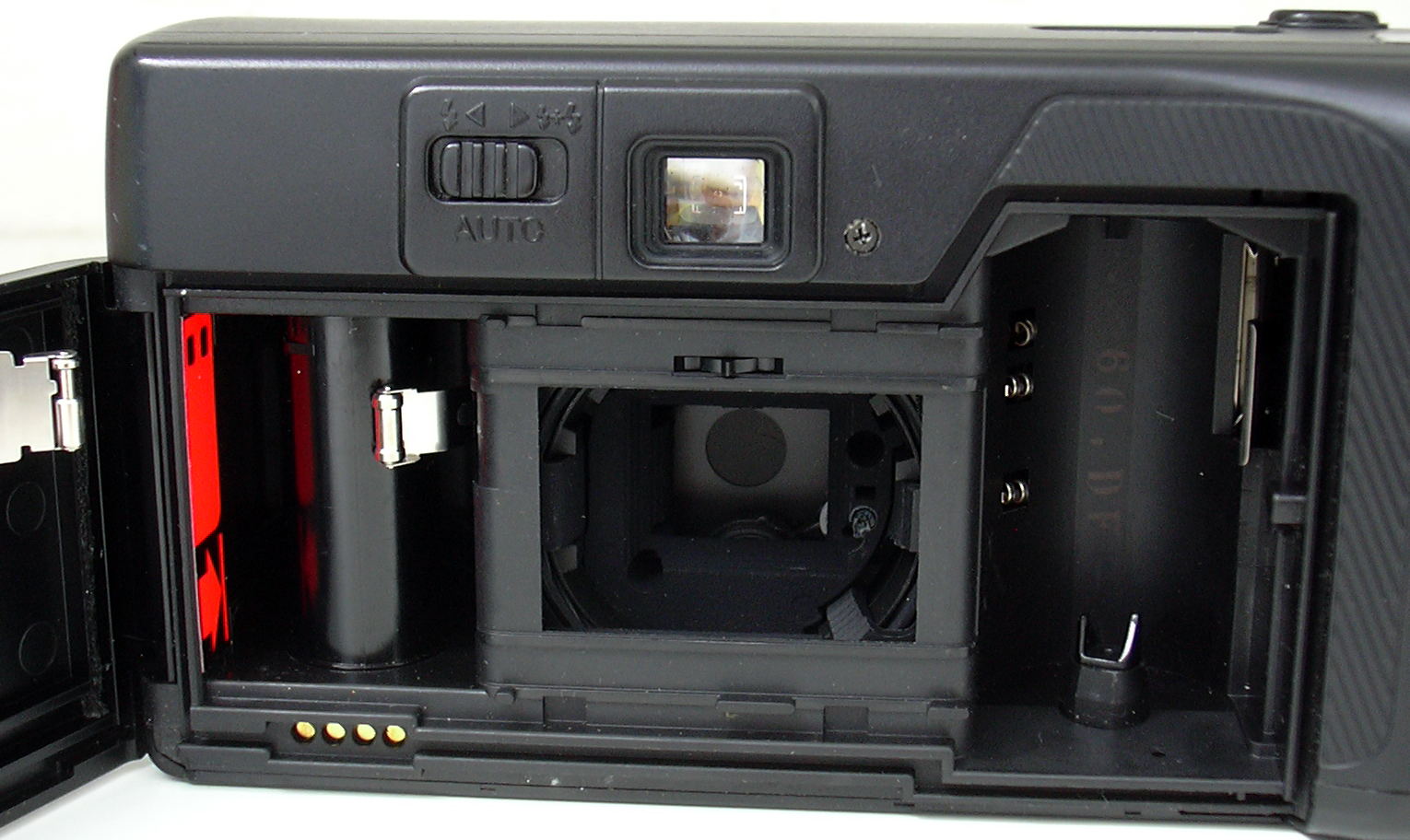
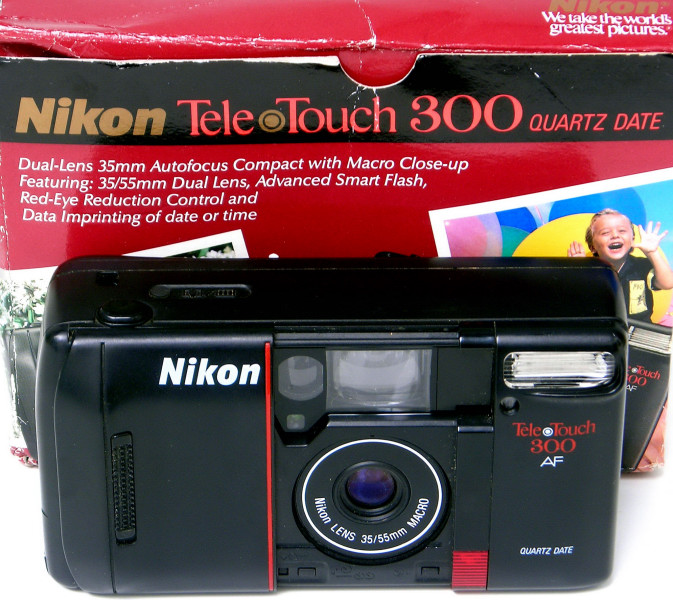
The TW2 is succeeded in 1989 by a similar camera, the Nikon TW20, also equipped with a bi-focal lens: 3.8/35mm. and 5.7/55mm. This camera is the first Nikon compact camera with a red-eye-reduction switch as well as a self timer, close-up button and sliding door. Unfortunately it uses (relatively expensive) 6Volt Lithium batteries.
Funny detail is the film advance system: the film cassette has to be put in on the right side and will be transported by a little (sprocket) wheel on top of the film chamber onto a take-up spool on the left. Will that mean all pictures are upside-down? In the left corner the four electronic contacts of the data back.
The TW20, of which also a data back version (TW20-QD) exists, is called Tele•Touch 300 on the American market. Don't ask why!
Nikon TW Zoom
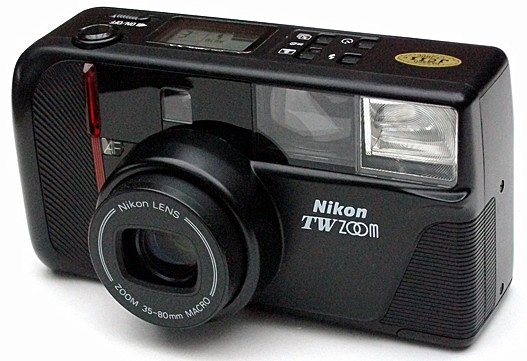
1988! The first Nikon compact camera with a zoom lens - see its name. The 7.8/35-80mm. focuses down to 71 cm. at all focal lengths. It is packed with various exposure-, flash- and focus programs; a data back version, the Nikon TW Zoom Quartz Date - in the USA called Nikon Zoom•Touch 500 (!?) - is even more sophisticated. The viewfinder is zooming, too! After 1990 many versions of Nikon compact cameras, introduced and available on the European market, received names like TW Zoom, sometimes with the addition of or referring to the fitted lens (35-70 or 35-80) or longest focal length (85 or 105), or a number.......... given by an overstrained technician just before dinner break? The data back versions have an additional QD in the name.
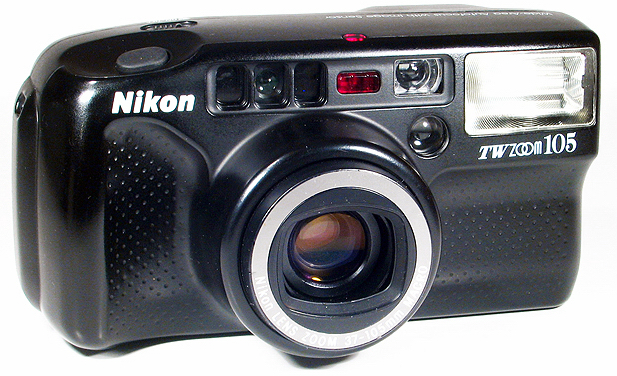
Nikon TW Zoom 35-70 & TW Zoom 35-80 & TW Zoom 37-105
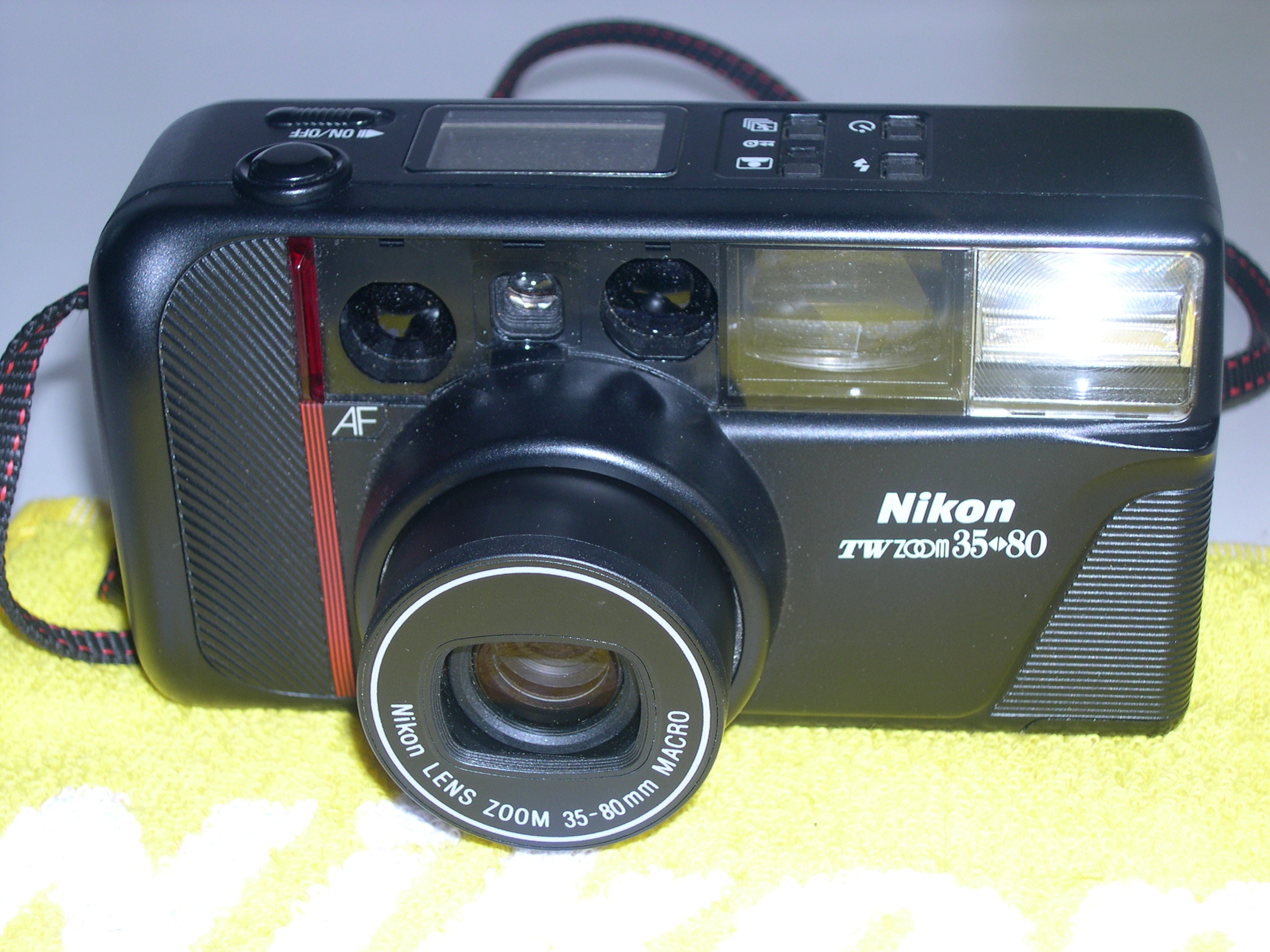
In 1990 Nikon introduces a very special camera. Special is its multiple auto focus system (including a spot auto focus!), fit for horizontal or vertical use/position of the camera. It has a zoom-nikkor 4/30mm - 7.6/70mm. and a data back variant. One year later a version with a Zoom-Nikkor 3.5/35mm.-7.8/80mm. (see above & below) is introduced.
A novelty here is the dioptre adjustment of the viewfinder. The lens is zooming in 5 steps, which is shown in the top screen. Again one year later the camera is fitted with a zoom-Nikkor 3.7/37mm.-9.9/105mm. Of both versions data back variants are available, called Quartz Date and 37-105 World Time!
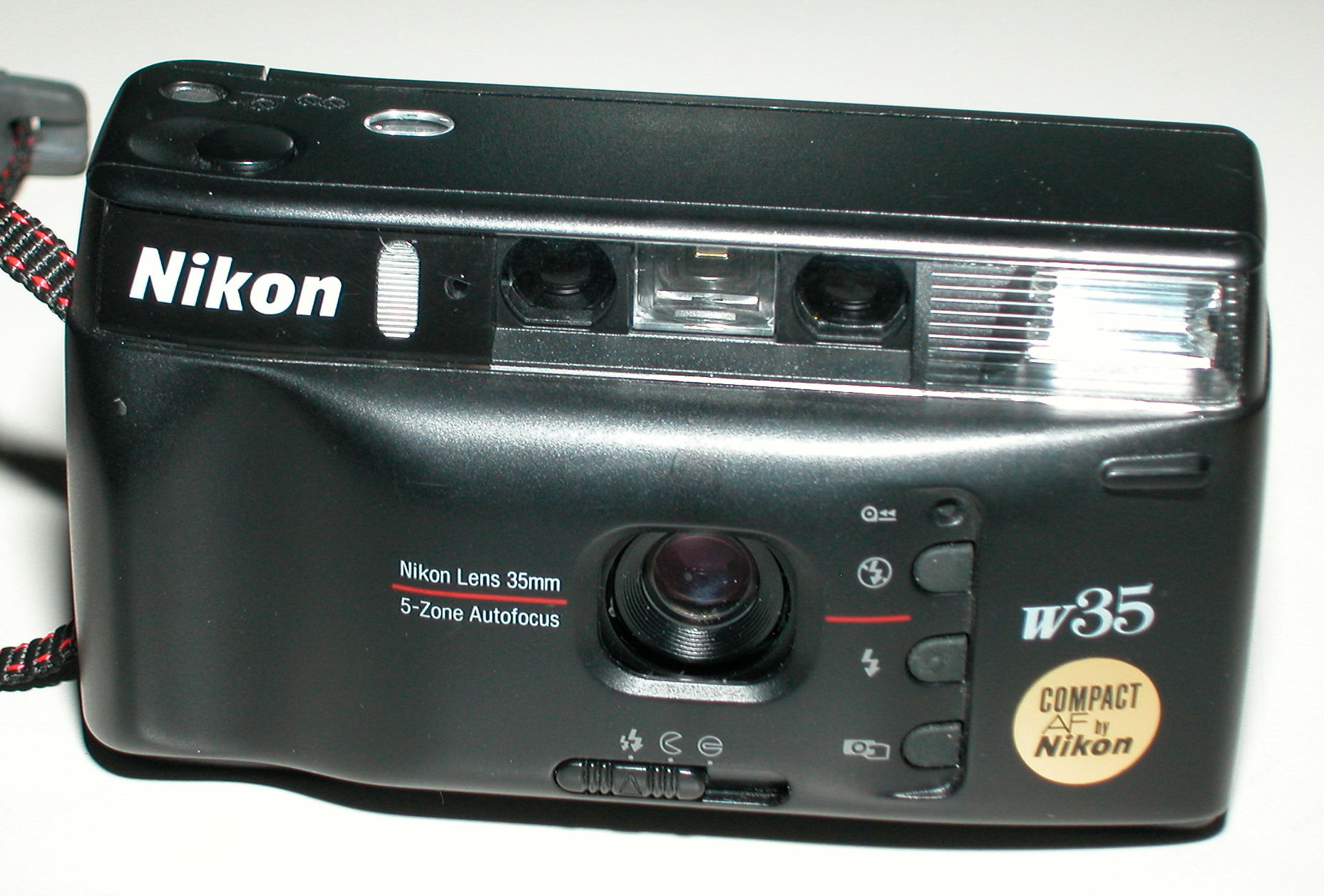
Nikon W35
For a non-sophisticated change Nikon introduces in 1991 a very cheap camera with a 3.5/35mm. lens with 5-zone auto focus. It has a data back variant, too.
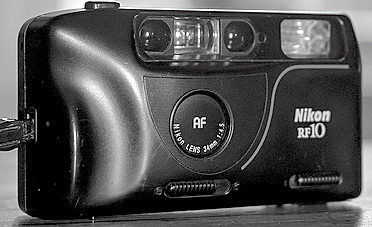
Nikon RF10
Even cheaper is this (export) camera, sold from 1992 in the USA as ´Smile Taker´ (!), with a 4.5/34mm. lens.
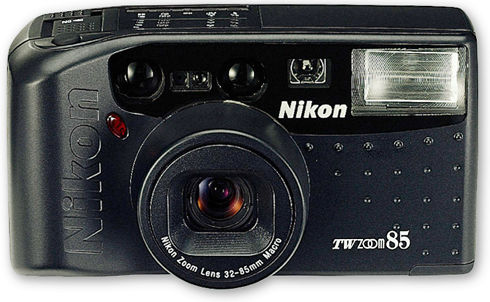
Nikon TW Zoom 85
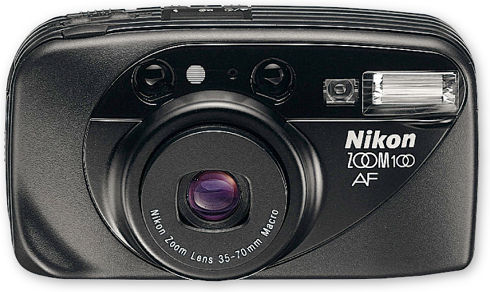
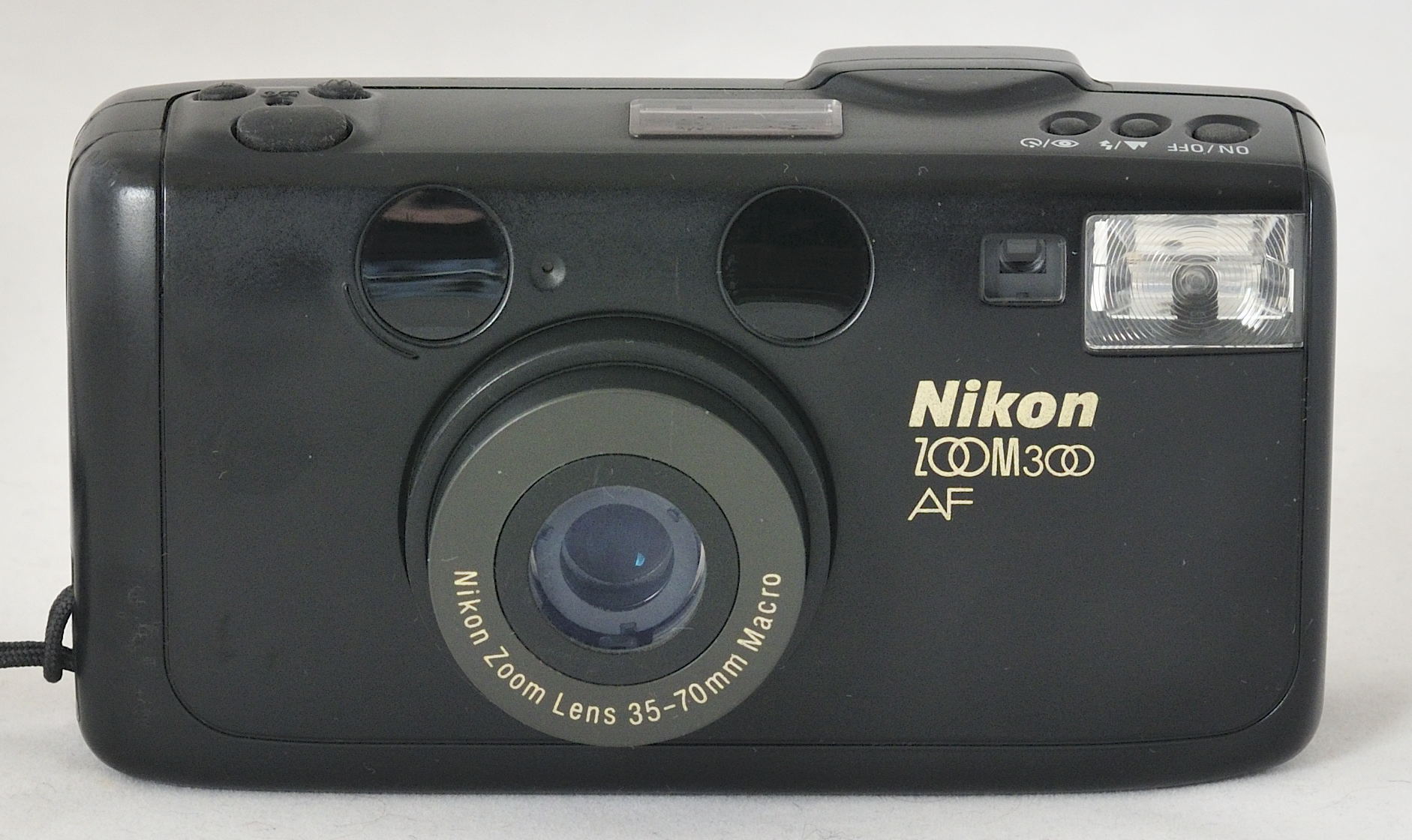
Nikon Zoom 100 = Zoom 300 = Zoom 310
Again Nikon changes in 1993 the design: this time cameras look as they have an oval body. It is a nice design but the buttons on its top are difficult to read and use. This version has a zoom lens 4/35mm.-7.6/70mm. and many programs for fully automatic (foolproof) photography, including a data back. In 1994 the lightest and thinnest compact camera enters our world! It has a 3.5/35mm.-6.5/70mm. and a data back variant. One year later its successor, the Zoom 310 with exactly (!) the same lens and features, is presented.
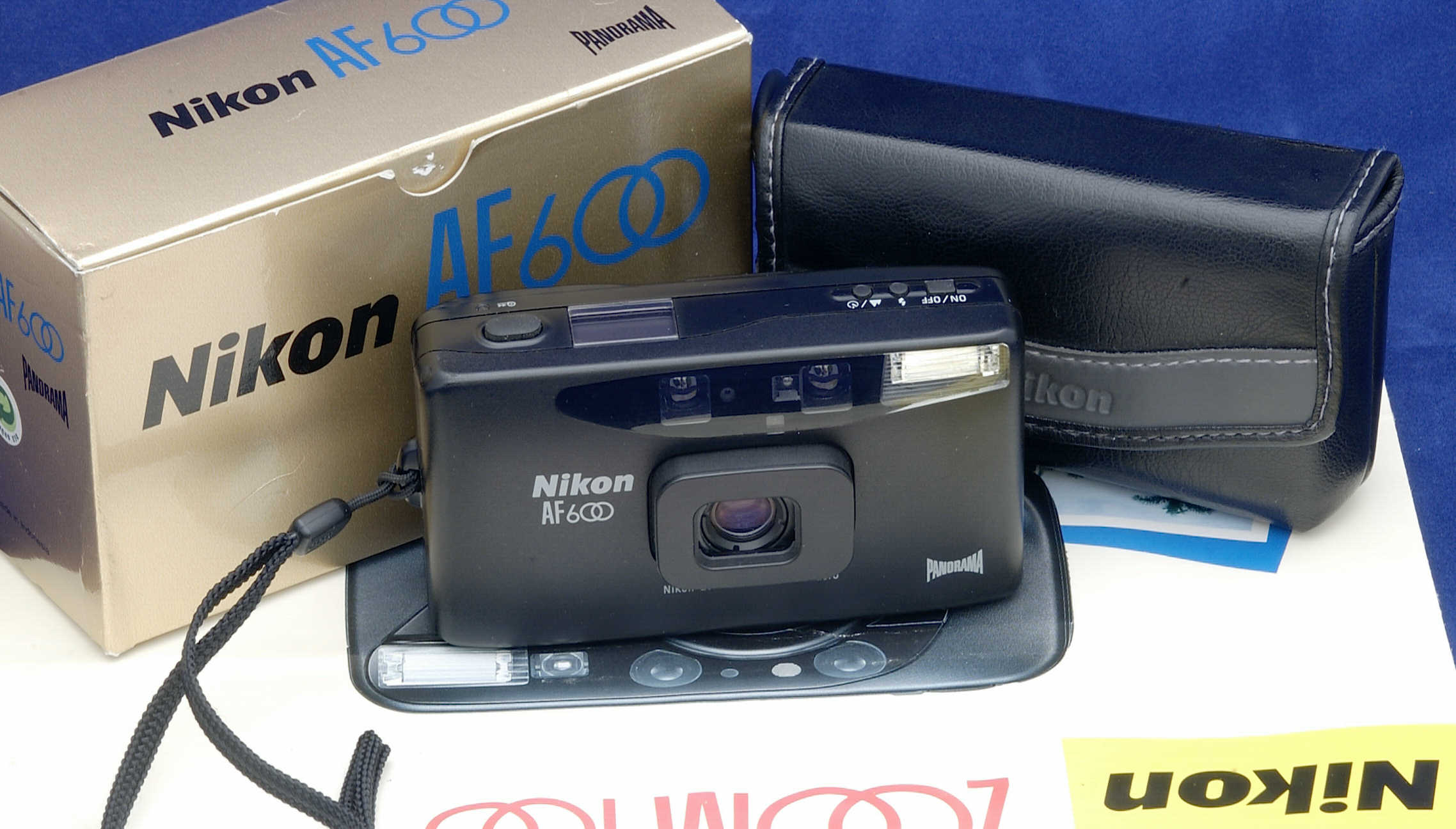
Nikon AF600
Nikon breaks a record again: the world´s smallest ever (1993) compact camera with a 3.5/28mm. wide-angle lens. This camera (with a panorama & data back variant) is the first with a wide-angle lens as all predecessors seem to stick to around 35mm. focal length. The camera does fit in any pocket and the performance of the lens is outstanding.
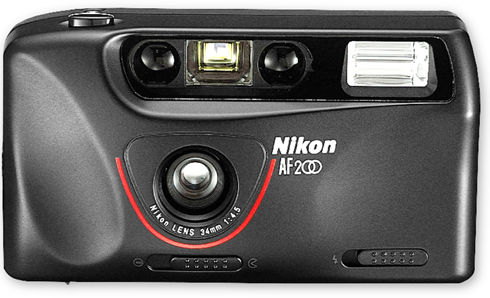
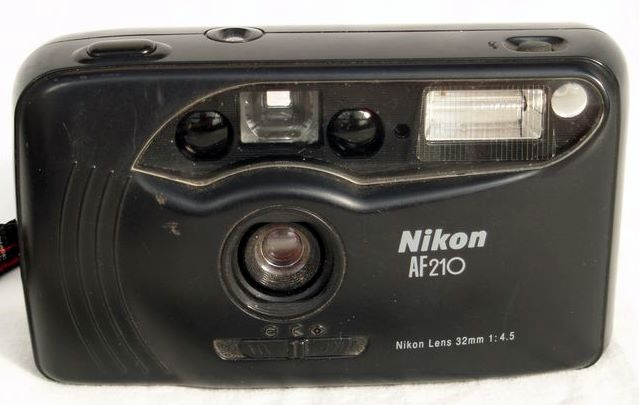
Nikon AF200 - EF 100 - AF210
In 1993 two very simple (just one button!) and cheap cameras are introduced; both with a simple 4.5/34mm. The AF200 has auto focus, the EF100 a fix focus lens. The AF210, introduced in 1994 has a 4.5/32mm. lens. None of these cameras are available in a data back variant.
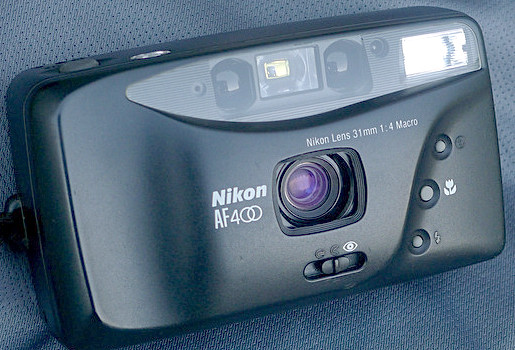
Nikon AF400
Early 1994 this camera, with a 4/31mm. lens, focusing down to 45cm. is introduced. The data back variant has a panorama-switch as well.
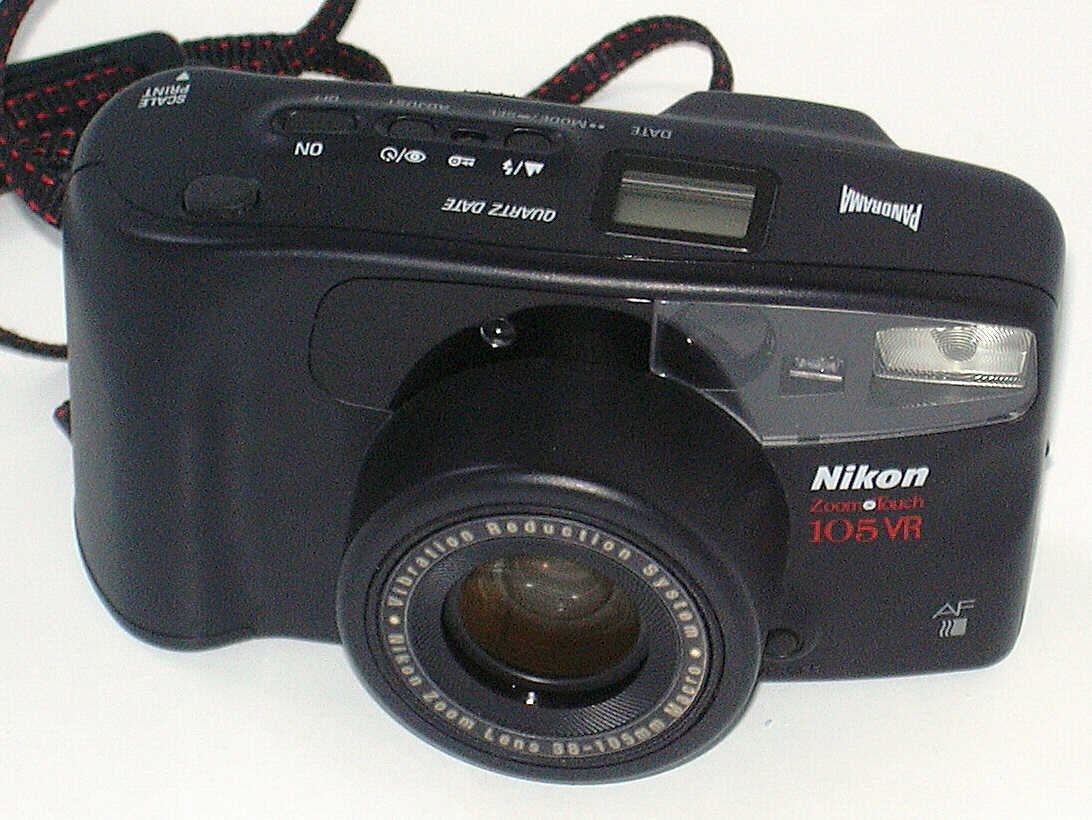
Nikon Zoom 700 (105) VR - Zoom 500 / QD
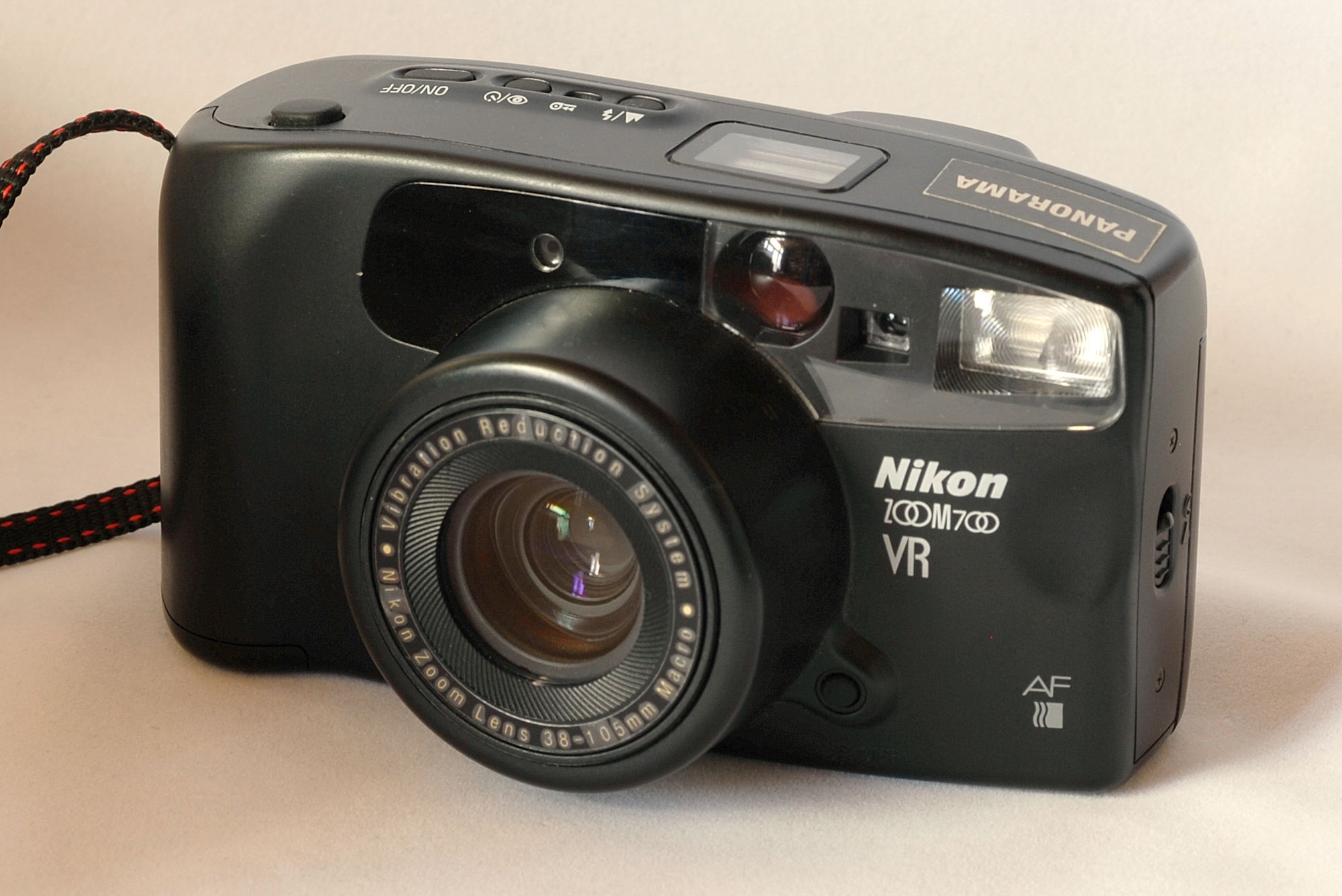
This is a very special and was a very expensive camera, presented in 1994. It is the first Nikon camera with a Zoom-Nikkor 4/38mm.-7.8/105mm. with Vibration Reduction! This very nice camera, available with data back, including a panorama-switch and the possibility to capture a measuring ´rod´ in each picture, has one disadvantage: it ´crams´ relatively expensive (2 x CR123A - 3V) batteries. And it was listed at a price, higher than some contemporary Nikon SLR cameras! Due to its high price the camera wasn´t a success and disappeared rather quickly. An identical camera, without Vibration Reduction feature (Nikon Zoom 500), but with data back and panorama-switch tried (in vain) to boost sales. In some markets the camera was introduced as Nikon ZoomTouch 105VR (see above) and elsewhere as Nikon Zoom700VR (see below)! Only the QD(= data back)-versions of both cameras have the panorama-switch and measuring rod! Serial numbers of this rare camera started with 4xxxxxx (105VR) and 5xxxxxx (700VR).
Nikon Zoom 60s
For consumers in poor regions of our globe Nikon produced (from 1995) this simple and cheap camera with a 35-60mm. zoom lens.
Nikon Zoom 200AF - EF 200 - AF220
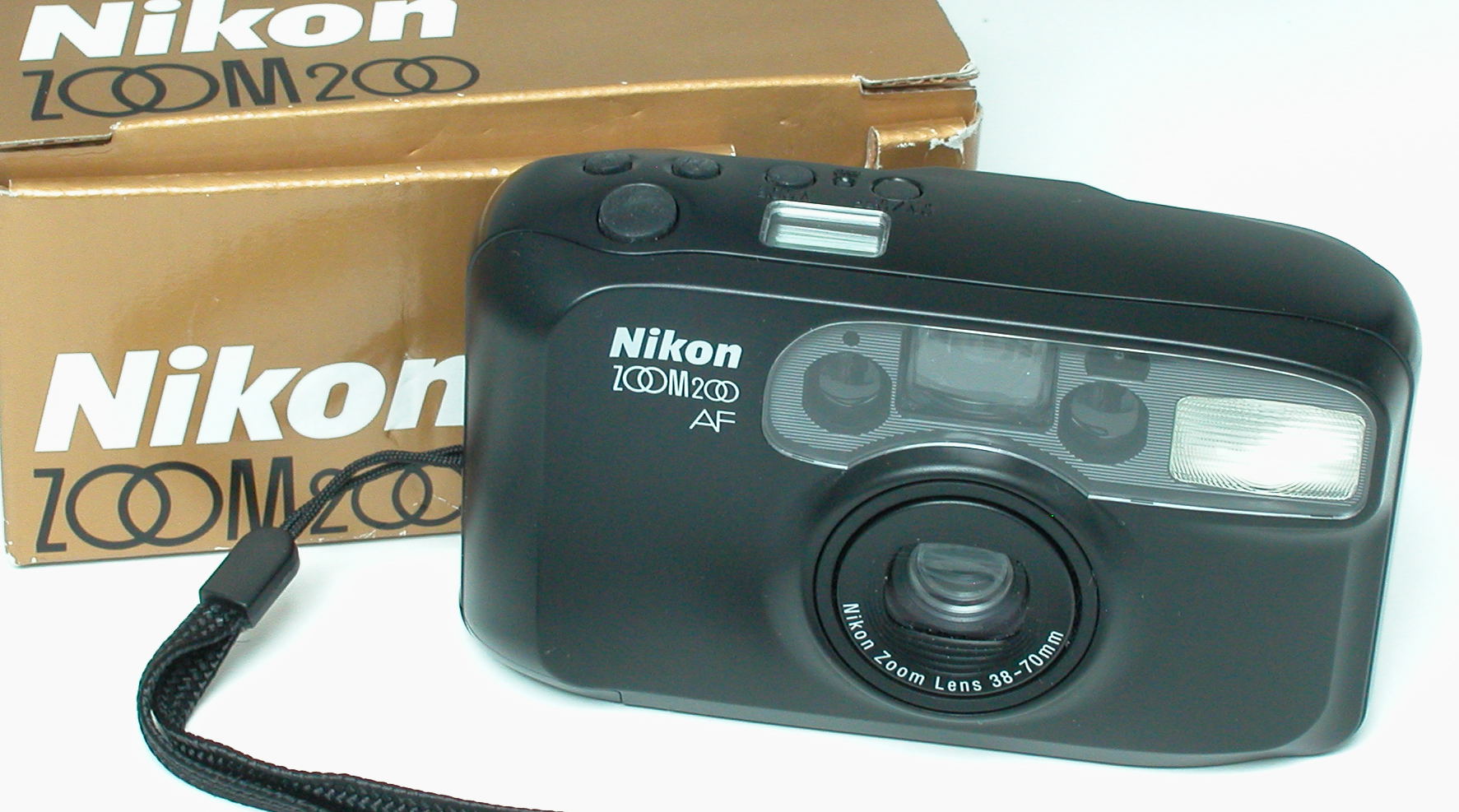
1995 this very nice and relatively cheap camera (Nikon Zoom 200AF and its data back variant) with a 4.7/38mm.-8/70mm. lens is introduced (see above). The same year a very simple and cheap model (EF 200) with a fix focus 5.6/31mm. lens and a compact (AF220) with wide-angle 4.5/29mm. lens are introduced. The latter being the last Nikon compact camera in black! At the Photokina 1996 Camera Fair in Germany Nikon is finished with black compact cameras. It introduces a range of new and redesigned compact cameras with a rather light and colorful look. Many cameras can be covered with either advertisements or promotions. Even pop stars and Formula-One pilot Michael Schumacher have been spotted on the new series. The following cameras are listed by its ´European´ name. It is unfeasible to give all names used on other markets.
Nikon AF230 = EF300
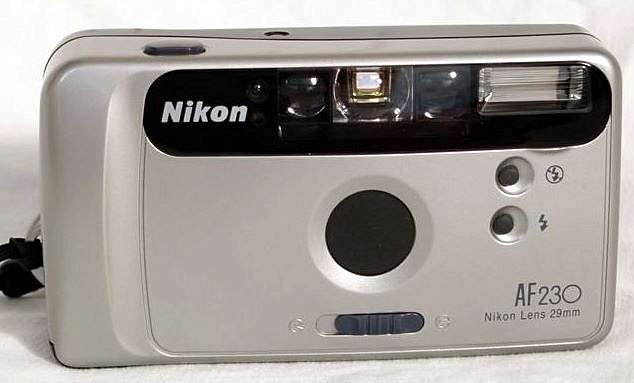
The first light colored compact shown at the Photokina 1996 is this successor of the Nikon AF220. It has the same auto focus lens. The cheap and simple EF300 too, but in a fix focus version. Both cameras are used - for promotion purposes - by super markets and many other shops, advertising agencies etc. with a great variety of stickers and packed in all kind of gift-wrappings.
Nikon Zoom 210
The successor, available in 1997, of the earlier mentioned Nikon AF220 has a 4.7/38mm.-8/70mm. zoom lens; it´s also available with a data back.
Nikon BF-100/QD This cheap and light (190 gram) camera - introduced in December 1997 - has a 'focus free' 4.5/34 mm. lens, a bright viewfinder and even a data back version.
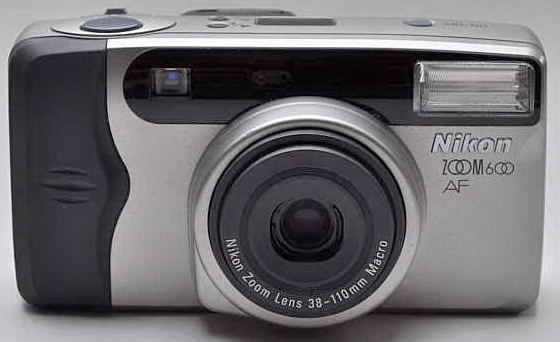
Nikon Zoom 400 - Zoom 600 - Zoom 800
These sophisticated models (introduced in 1998) have a dioptre adjustment in the viewfinder, a more powerful flash and a 5/38mm.-9.6/80 mm. (Zoom 400), a 4/38mm.-10.8/110mm. (Zoom 600) or a 4.5/38 mm.- 9.5/130 mm. (Zoom 800) zoom lens. All cameras were available in a data back variant. In 1999 Nikon, again, changes the design of all compact cameras. Most cameras are in metallic colors, some also in colors like creamy white and beige with, here and there, a golden stripe, probably to attract female clients. The body layout is identical: in the middle a lens, above the lens a rangefinder and at the left front a flash; the cheap versions have a fix focus lens with almost no buttons, the more expensive versions have a zoom lens and a small LCD screen. The first re-designed models are the
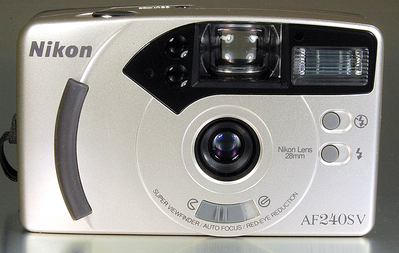
Nikon AF240SV and the Nikon EF400SV
The first has a wide-angle 5.6/28mm. lens and a relatively large viewfinder. The cheaper version (EF400SV) has a fix focus lens (identical specifications). Both versions are available in a data back variant; the latter additionally equipped with a self timer. From the year 2000 Nikon stops with the different names for different markets. From now on the cameras are named ´Lite Touch´ with a number referring to the focal length of the lens in use. Most cameras are fitted with collapsible flashes, some with collapsible and/or covered lenses, more colored/golden stripes and even the name ´Nikon´ in gold. Very special is the use of aspherical lenses and lenses made of special glass (ED, etc.). All versions are available in data back (QD) variant, including panorama-switch. The first new model, the
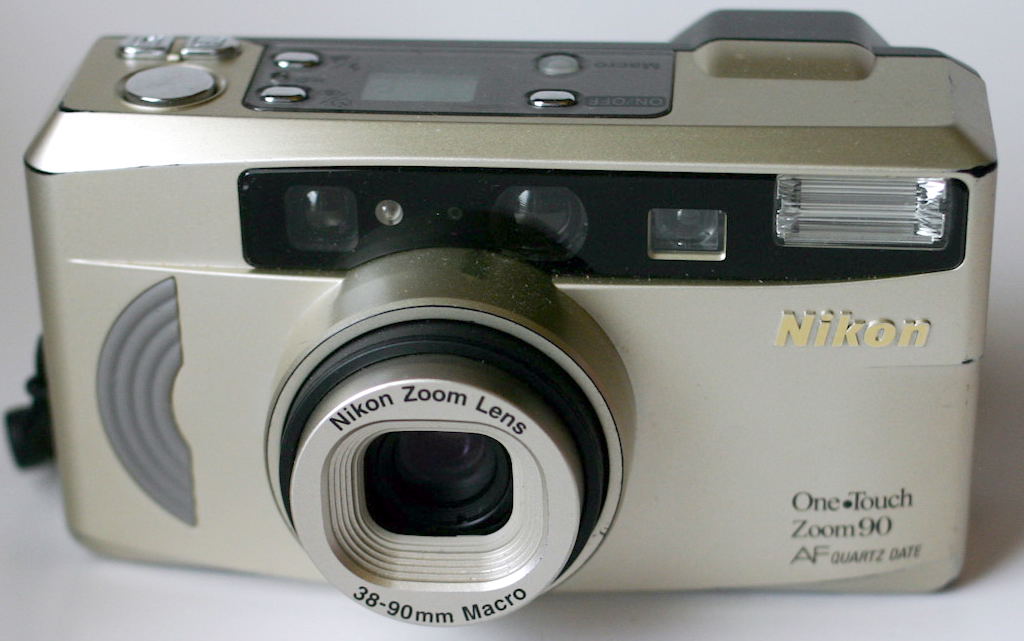
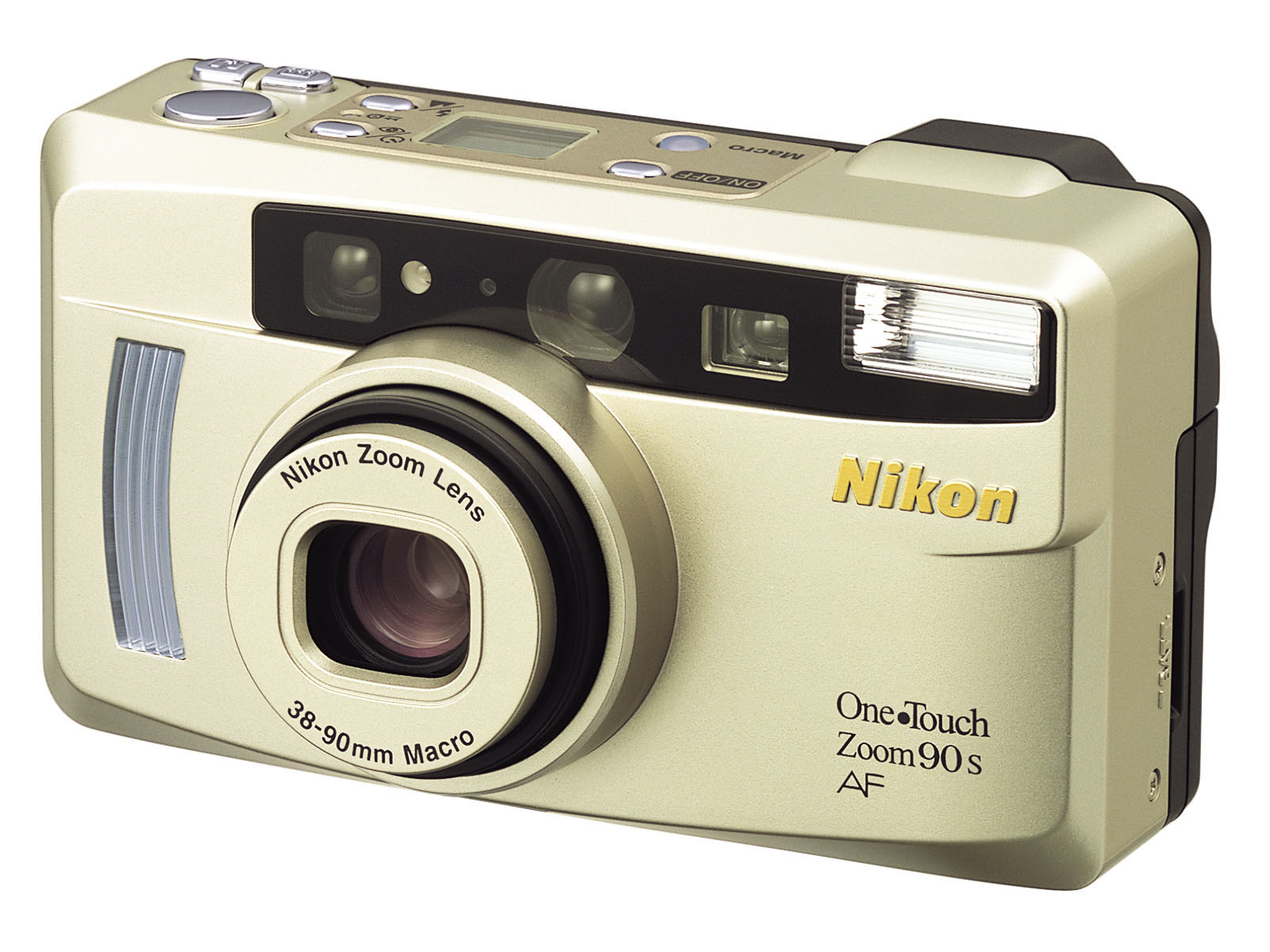
Nikon Zoom 90 QD
is the exception which proves the rules: it´s only for sale in the USA and has a 4.8/38mm.-10.5/90mm. zoom lens. A somehow more modest version, the
Nikon Zoom 90s, has the same lens, but with a minimum focus distance of 30 cm.(!) and is available worldwide.
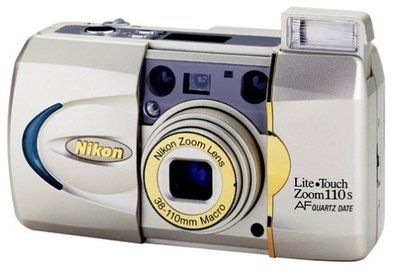
Nikon Zoom 110s
This version - anno 2001 - has a zoom-Nikkor 4.5/38mm.-11.9/110mm.
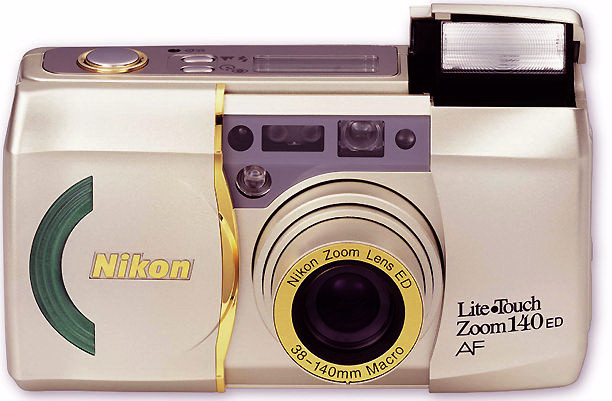
Nikon Zoom 120ED - 140ED
The first mentioned camera has a relatively large zoom range: 5.3/38mm.-10.5/120mm. Its lens has several ED-glass elements, a great advantage for tele-photography. The second model has even a larger zoom range: a 5.3/38mm.-10.5/140mm. lens with aspherical lens and ED-glass elements. A novelty too on this camera is a wireless remote control connector!
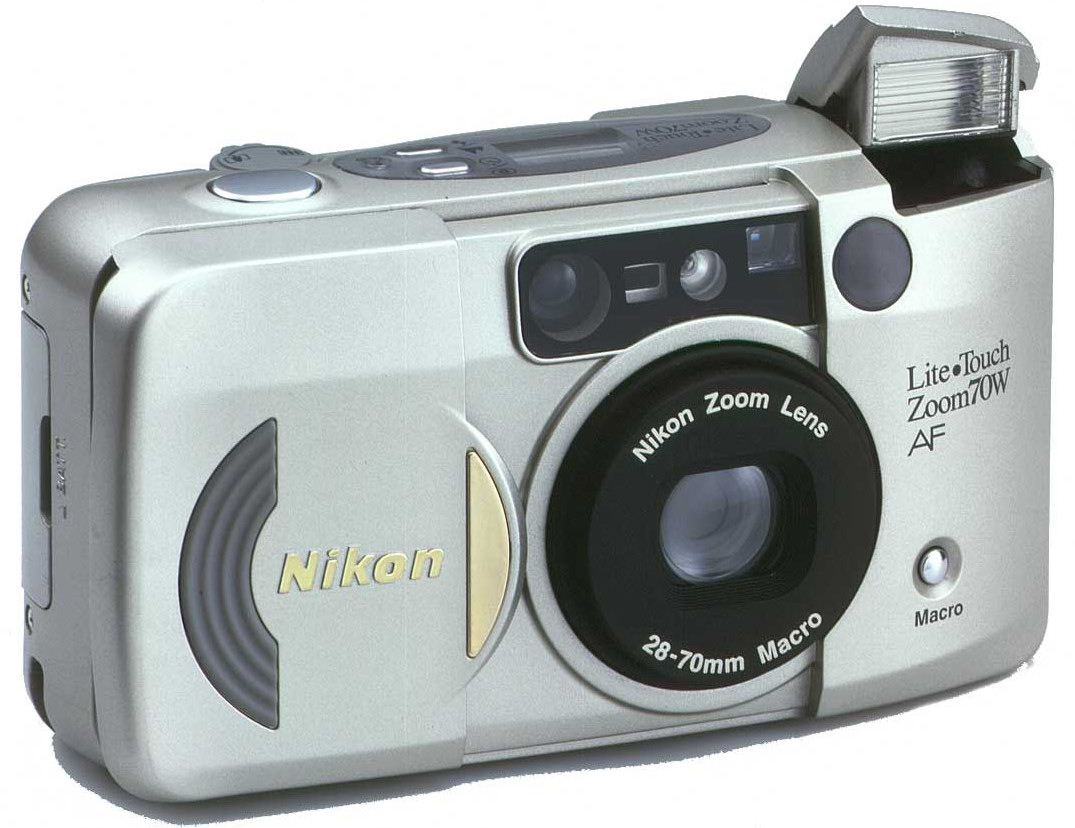
Nikon Zoom 70W
In 2000 this camera, with in its name ´W´ which stands for ´wide´, has a unique zoom-Nikkor: 5.6/28mm.-10/70mm. In all focal lengths it is possible to focus down to 60 cm.(macro).
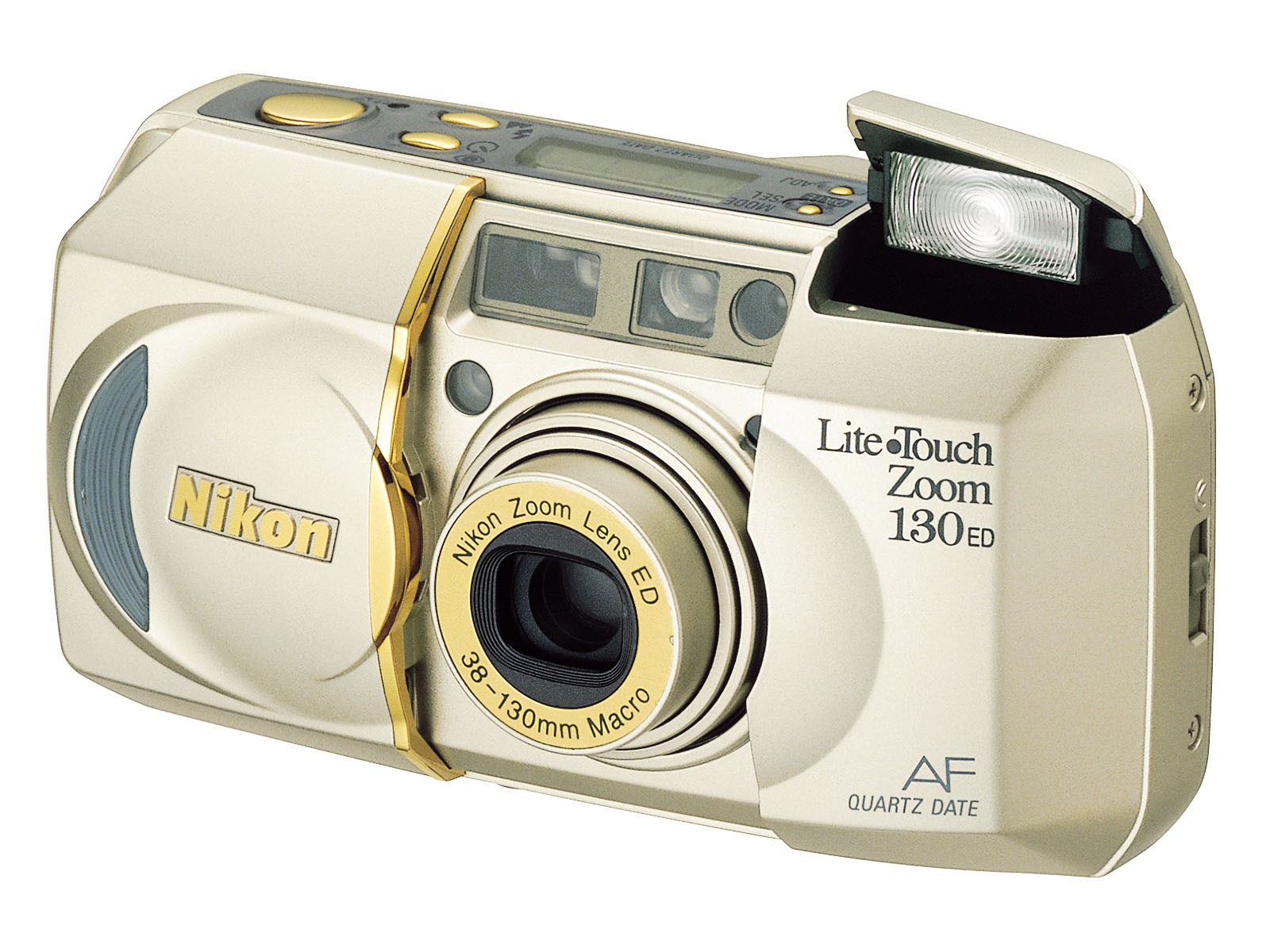
Nikon 130ED - 150 ED
These two sophisticated models were introduced in 2002. Both have a large zoom range: 5.3/38mm.-10.5/130mm. resp. 5.3/38mm.-10.5/150mm. with lenses with ED-glass.
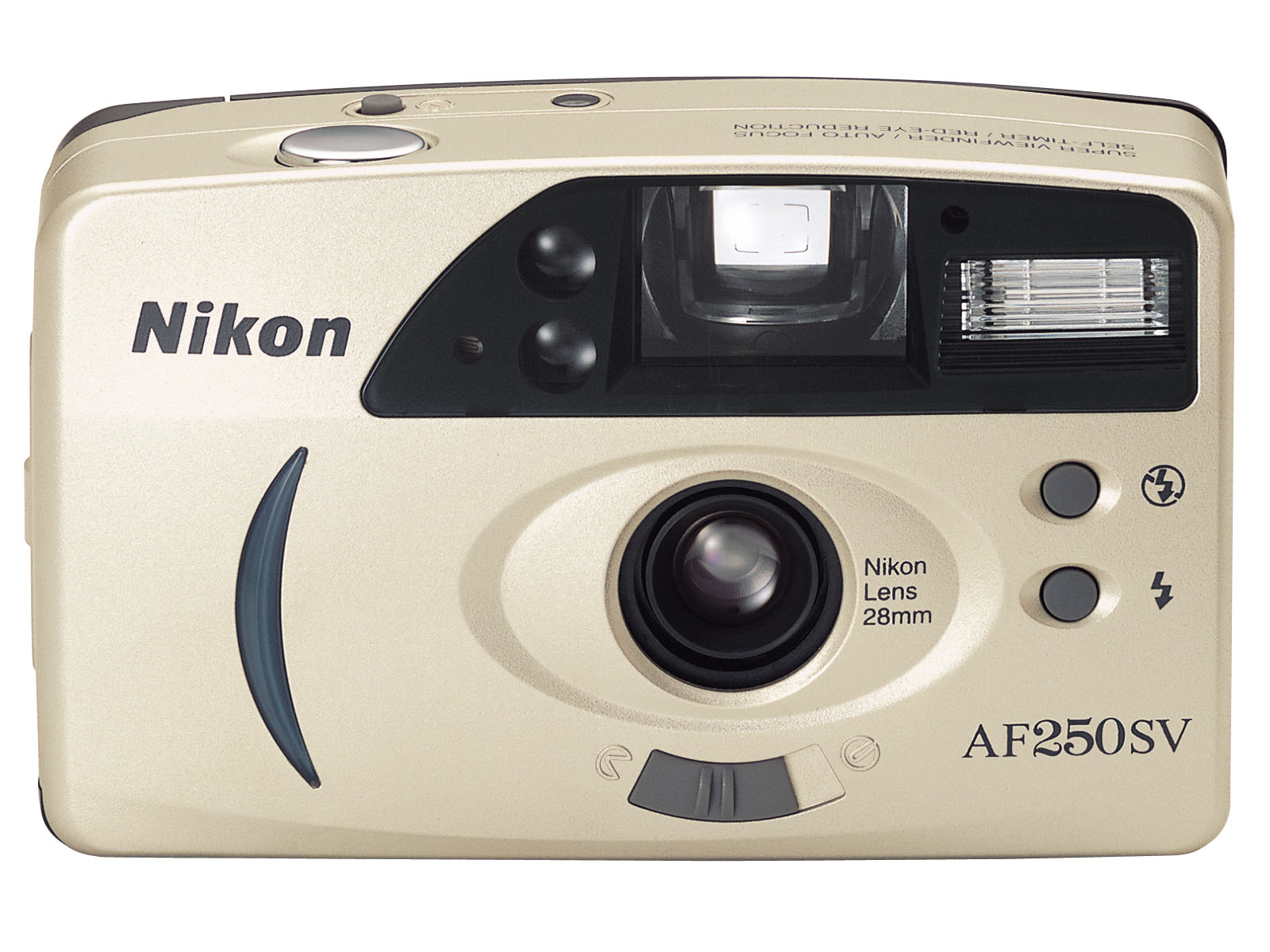
Nikon AF 250SV - Nikon EF500SV
Both cameras - also available in black (!) - have identical features, although the AF has a AF-Nikkor 5.6-28mm., while the EF has the same lens in fix focus.
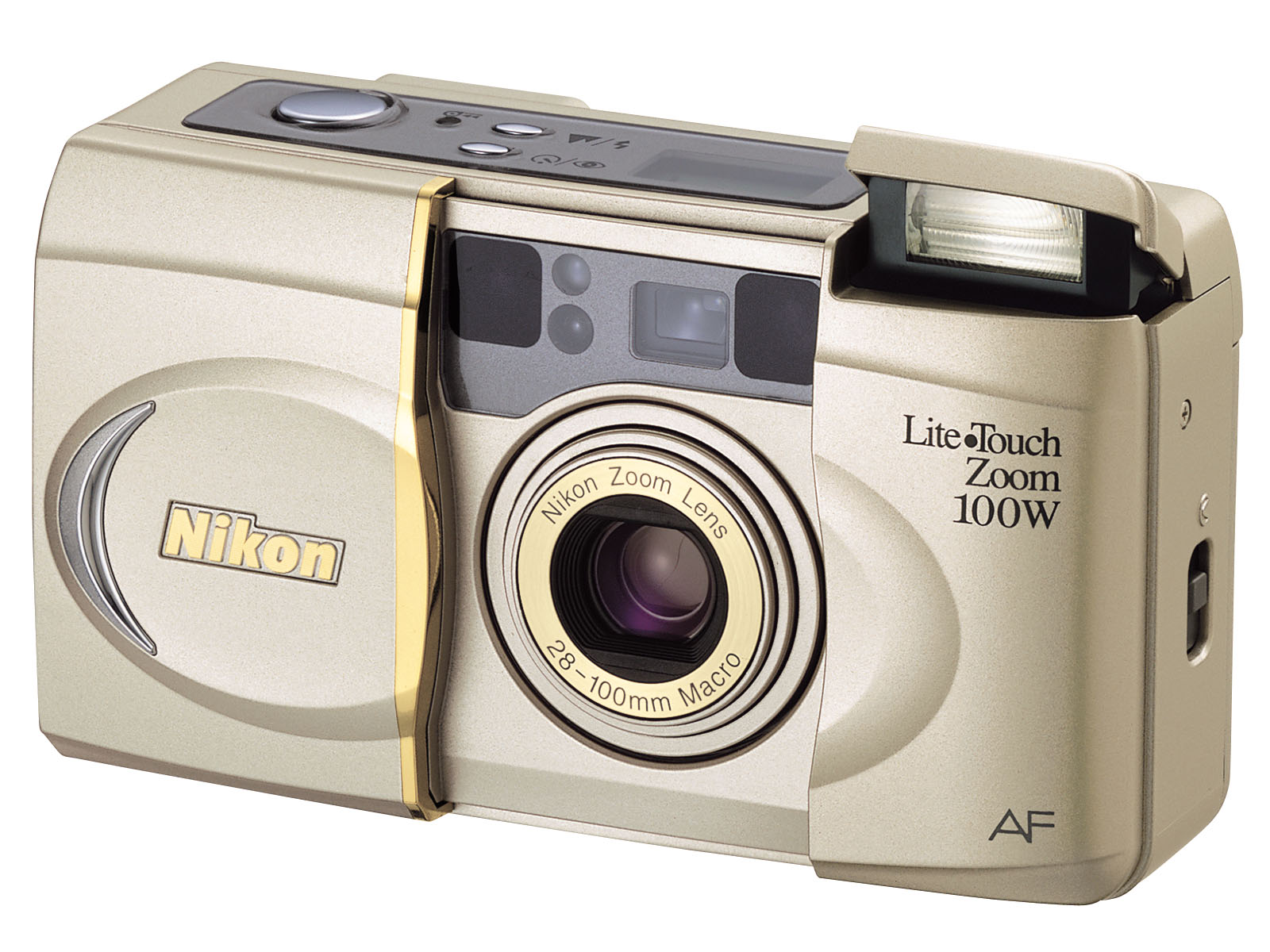
Nikon 100W
Regardless the advent of the digital compact cameras (Coolpix-series) Nikon introduced early 2003 this sophisticated model with a zoom-Nikkor 5.8/28mm.-10.5/100mm. with aspherical elements. This zoom range is the most ideal range for snap shot, holiday reports and portraits. This camera will be known, in camera history, as Nikon´s very last compact film camera! Mid 2003 Nikon decided to stop the production of compact film cameras. Many digital compact cameras have become so popular and cheap, films are becoming rare in some countries, so sales of film cameras dropped dramatically.
Collectibles It will not be easy to collect all cameras as not all cameras were sold worldwide. From a financial point of view, however, it will not be a costly exercise to collect these cameras as prices on secondhand market come - for certain models - close to nothing. The first models (L35AF) are interesting as being the first Nikon compacts. Special versions like the underwater model (L35AW-AF) and the relatively expensive compact camera with vibration reduction (Zoom 700VR-QD aka Zoom-Touch 105VR-QD) were sold in relatively low numbers, so might become rare. Many manufacturers - other than Nikon - were supplying accessories, like close-up, tele- and wide-angle lenses, etc. for the earlier models. As stated above some cameras were marketed by advertisement or promotion agencies with special prints, stickers and/or features, which might make collecting either more difficult or more exciting. A matrix of all cameras mentioned above you may find here.
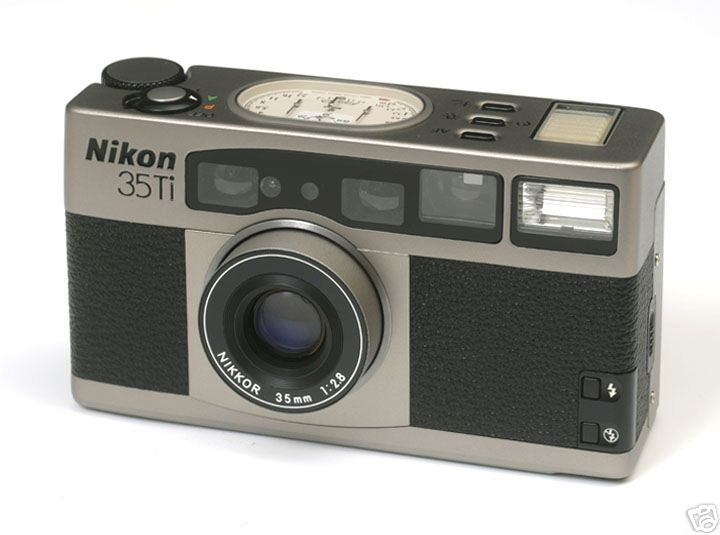
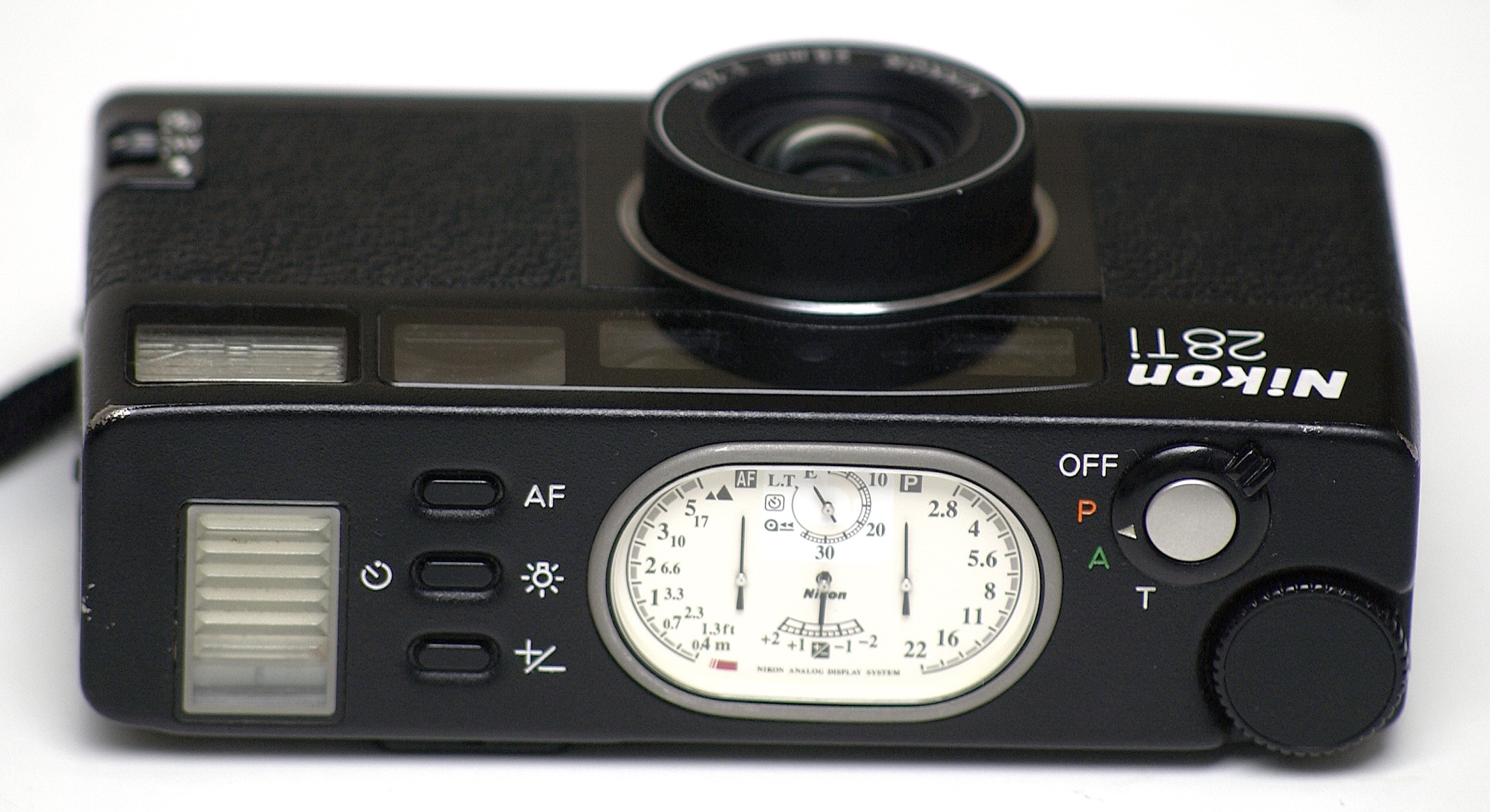
See for digital compact cameras and compact cameras using an APS film relevant chapter. Nikon surprised in 1993 the world with a very nice compact camera with a retro-classic look, the Nikon 35Ti, followed one year later by its sister the Nikon 28Ti. Both cameras have an identical design, with most body panels made of titanium and at the top plate very nice but vulnerable windows, showing some needles (like a clock) that indicate distance, shutter time and aperture. The Nikon 35Ti (in chrome) has a Nikkor 2.8/35mm.(with ED-glass), the Nikon 28Ti (in black) has a Nikkor 2.8/28mm. Both cameras have a aperture priority, full automatic exposure program, exposure compensation, auto focus (+ manual override), built-in flash, central shutter, 3D light measuring system (as in Nikon F90: center-weighted and matrix), panorama-image-switch and a metal lens cover.
Nikon 35Ti in chrome
Nikon 28Ti in black Both cameras have a serial number range starting at 5000001, which would suggest that many could be sold. The relatively high price, fragile top plate and rather poor performance of the 35mm.-lens didn´t boost sales. Taking pictures with these relatively slow cameras takes time, readability of the viewfinders isn´t the top of the line and the rather expensive batteries are run out quickly. A pity for these pretty cameras. On the secondhand market often cameras New-In-Box can be found as many cameras were bought new because of their design; prices remain high, however.
|