Nikkor auto focus wide-angle lenses
Most of the lenses reviewed below have manual focus versions as well. Details about their construction and performance can be found in the relevant chapter on this web site. All lenses mentioned in this chapter can be used on nearly all Nikon SLR cameras, no matter what the size of the film or sensor format is. Using these lenses on a APS reflex camera or a digital reflex camera with a DX sensor a crop factor of ± 1.5 has to be respected. The wide-angle effect of lenses with a short focal length will be lost; on the other hand: lenses with a focal length of 24 - 35 mm. can be used as a standard lens or/and for snapshots on any DX-camera. Most lenses have the famous F-mount, thus having an aperture ring with the aperture data visible in the viewfinders of the older manual Nikon SLR cameras. The modern lenses with the G-mount can be used on a limited number of older cameras. Although all lenses are featuring auto focus, all (F and G-) lenses have a relatively wide focusing ring for easy manual focusing. Finally, all lenses mentioned here have the (´D´) distance data transfer, which makes them usable with all sophisticated Nikon flash programs.
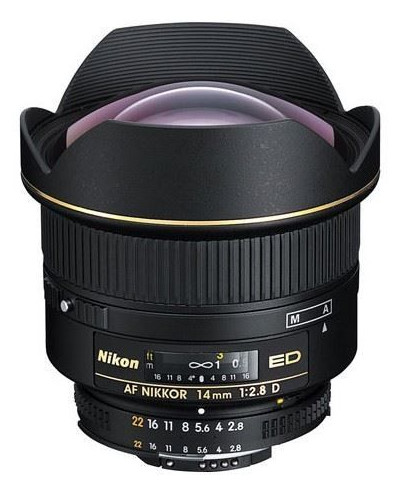
AF-Nikkor 2.8/14 mm. ED
This beautiful lens was introduced early 2000. It is a very strong (nearly all metal) and relatively heavy (670 gram) lens with an optical construction of 14 elements in 12 groups. 2 elements are so called hybrid aspheric elements and one element is made of ED-glass. The lens features ´rear focusing´, super integrated coating, distance data transfer and has a 27mm.-filter ring at the back. The 35mm.-equivalent of this 114° lens on a Nikon DX-camera is 21 mm. (= 92°); still a wide-angle. Needless to say that this lovely lens produces needle-sharp images at all apertures down to as close as 20 cm.
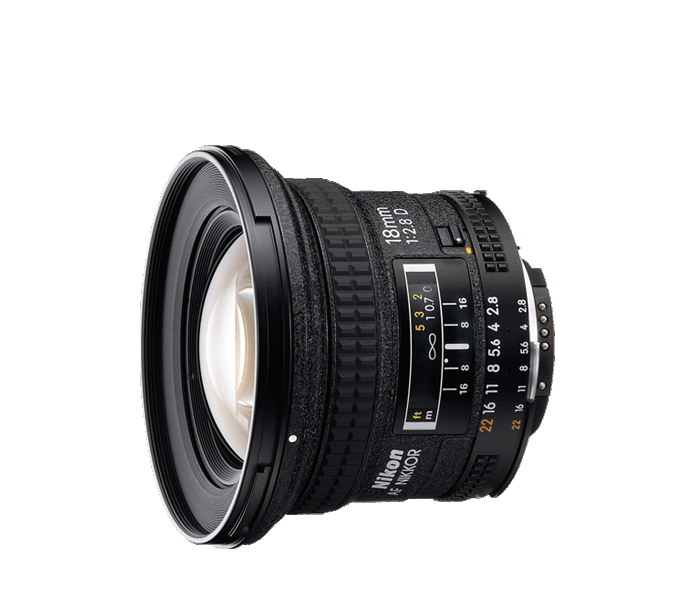
AF-Nikkor 2.8/18 mm.
Another beautiful ultra-wide-angle lens with a viewing angle of 100° (72° on DX), introduced back in 1993 as the fastest 18mm.-lens of its era. It has an optical construction of 13 elements (one is a molded aspheric lens) in 10 groups. This lens also features rear focusing and distance data transfer. It has a 77mm. filter ring and comes with the HB-8 hood. This all round wide-angle lens weights in at 380 gram.
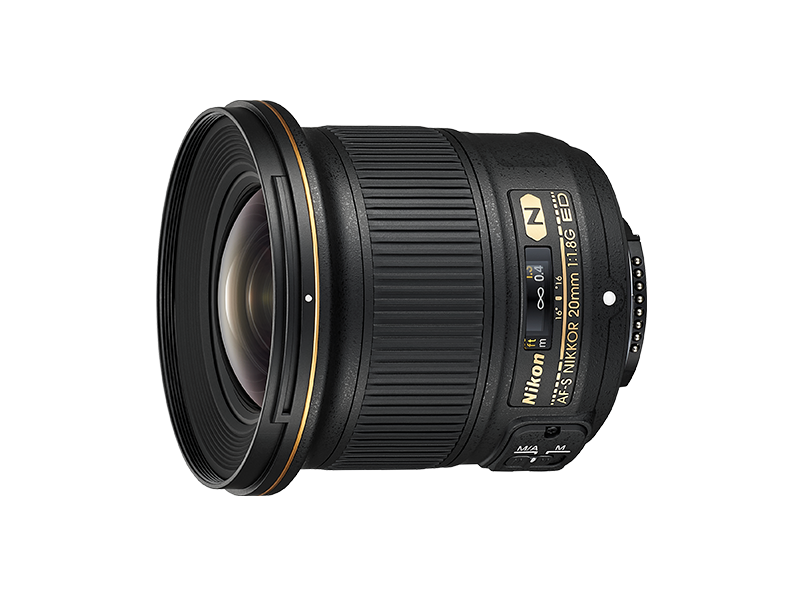
AF-Nikkor 1.8/20 mm. G ED
Mid-September 2014 Nikon introduced this relatively fast wide-angle lens. It has a complex optical formula, consisting of 13 elements in 11 groups. 2 elements (from front no. 3 and no. 9) are made of ED glass and 2 elements (from front no. 2 and no. 12) are aspherical and received Nano Crystal coating. The viewing angle on a FX camera is 90°; on a DX camera 74°. Minimum focus distance is 20 cm. The lens has 7 rounded diaphragm blades, takes 77 mm. filters, a HB-72 bayonet hood and weights in at 355 gram.
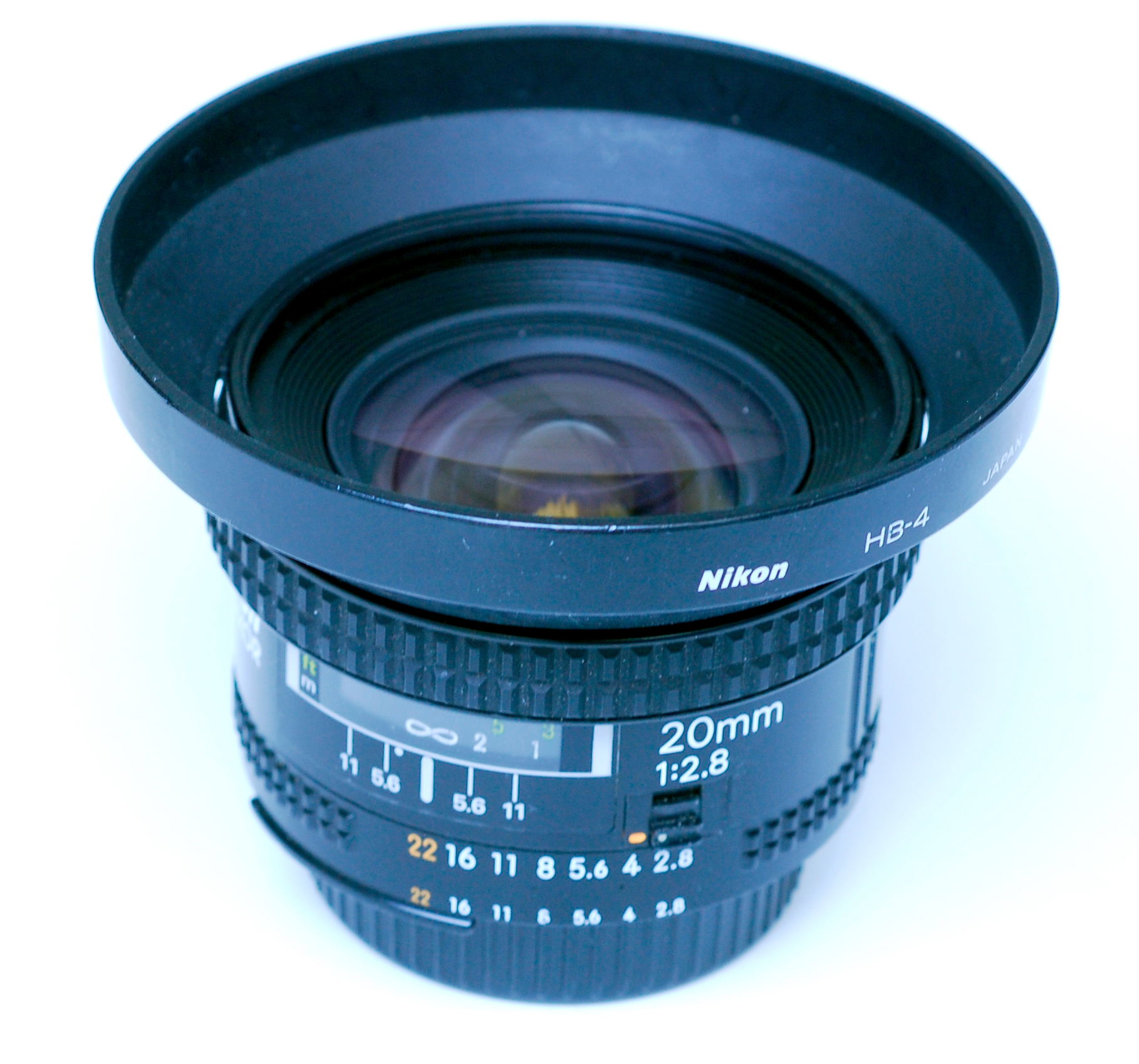
AF-Nikkor 2.8/20 mm.
This lens inherited the reputation of its manual focus ´brother´, which was introduced in late 1984. The auto focus version - presented in March 1994 - has the unchanged optical design of 12 elements in 9 groups. To produce crisp images down to its shortest focusing distance of 25 cm. this lens features close range correction (CRC): a system where some lenses are moving separately from the rest. The lens has a viewing angle of 94° (± 70° on DX), a filter ring of 62 mm, is weighting in at 270 gram and may need the HB-4 hood.
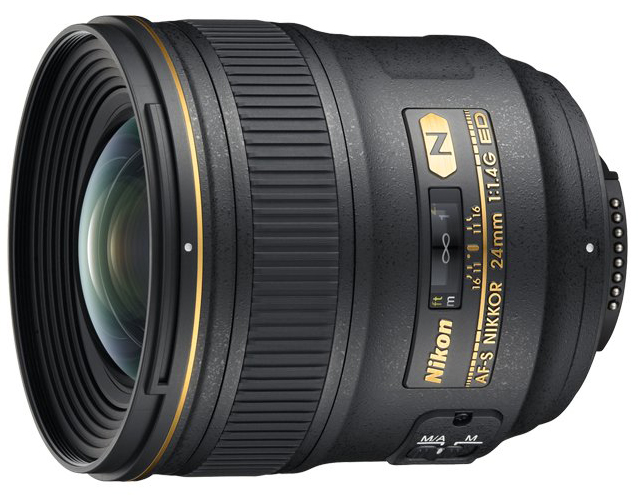
AF-S Nikkor 1.4/24 mm. G ED
Early February 2010 Nikon surprises us with this very fast wide-angle lens. It has a highly sophisticated optical formula, consisting of 12 elements in 10 groups; two elements are made of ED-glass and two others are aspherical elements. On top of that some lens surfaces have nano-crystal coating. This very nice reporter's lens - tack sharp at all apertures - can be focused down to 25 cm. Its filter thread is 77 mm. and the lens is weighting in at 620 gram.
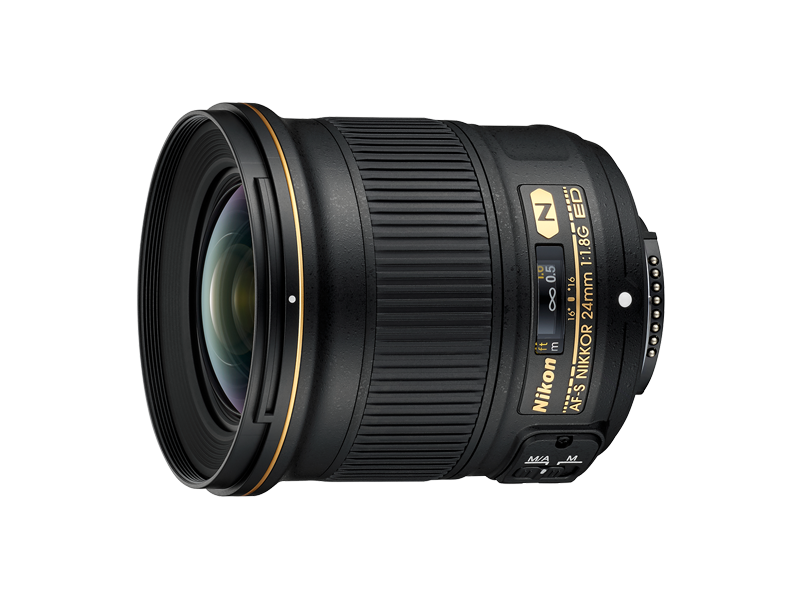
AF-Nikkor 1.8/24 mmG ED
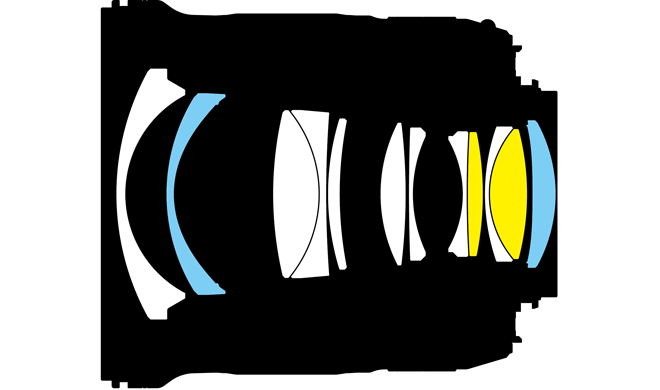
Early August 2015 Nikon extended the 24 mm. wide-anlge lens line with this sophisticated FX-format lens. It offers 12 elements in 9 groups, of which 2 elements (yellow) are made of ED-glass and 2 elements (blue) have an aspherical surface. Some elements also have the Nano Crystal Coating. The lens has 7 aperture blades, can be focused down to 23 cm., takes 72 mm. filters and weights in at 355 gram. Unfortunately the lens has a G-mount, so can't be used on older cameras.
AF-Nikkor 2.8/24 mm. This lens is a slightly modified auto focus version of the manual focus version that was introduced back in 1967. The manual focus version had an optical construction of 9 elements in 7 groups, this AF version - presented in 1988 - has 9 individual elements and the close range correction system in order to produce sharp images down to 30 cm. This light (270 gram) all round lens has a viewing angle of 84° (± 64° on DX)
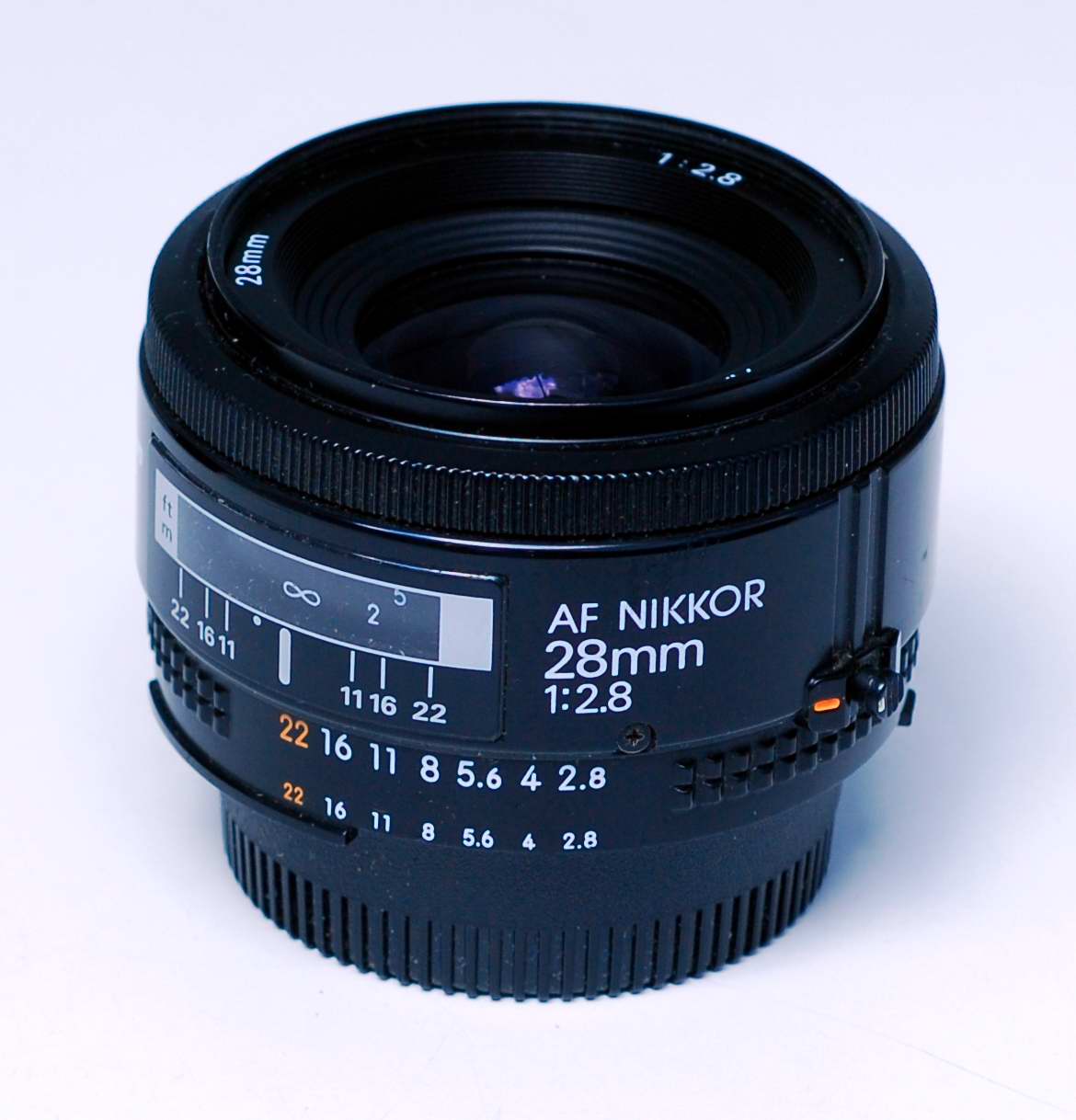
AF-Nikkor 2.8/28 mm.
Another wide-angle lens once born as a manual focus lens (anno 1974). The manual focus version is rated as one of the best 28mm.-lenses ever build; the auto focus version may earn the same reputation, although the lens barrel isn´t as sturdy as the all metal body of its ancestors. The manual focus lens has an optical construction of 7 individual elements, while the first auto focus version - introduced in July 1986 - has a redesigned construction of 5 individual lenses. In September 1994 the present auto focus version came on the market, which has a renewed design with 6 individual elements. Its 74° wide-angle (±54° on DX) makes it a very nice reporter´s lens. It weights in at 205 gram, uses the well known 52 mm filters and the HN-2 hood.
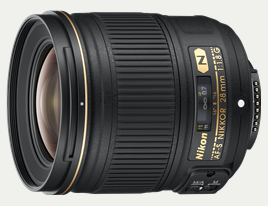
AF-S Nikkor 1.8/28 mm. G
Mid April 2012 Nikon Corporation announced this fast wide-angle Nikkor for FX format, accompanied by the promise to introduce more fast prime lenses for the FX format. This fast lens has an optical design of 11 elements (of which 2 are aspherical and one has nano coating) in 9 groups, plus 7 aperture blades. The lens can be focused down to 25 cm., has a 67 mm. filter thread and weights in at 330 gram. The best hood is HB-64.
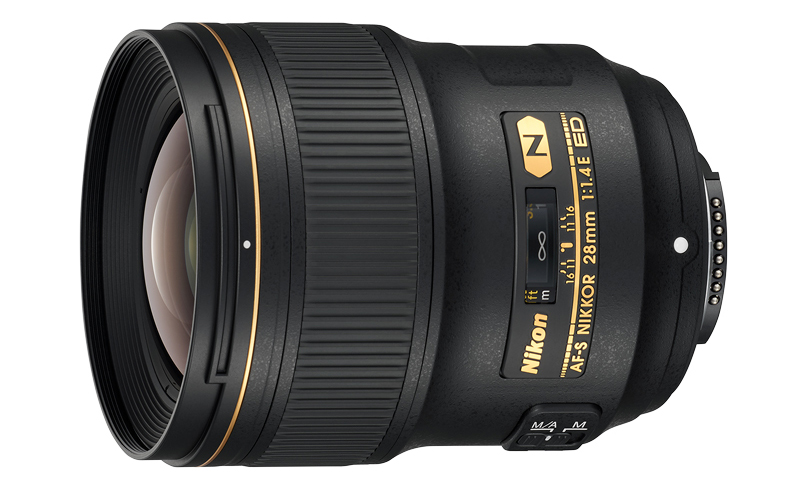
AF-Nikkor 1.4/28 mm. In 1993 Nikon surprised the world with this relatively fast wide-angle beauty. In those days it was the fastest 28 mm.-lens ever! It has an optical construction of 11 elements (one is a precision ground aspheric lens) in 8 groups, close range correction + rear focusing. For its size it is not too heavy (520 gram). The HK-7 hood has to be bought separately. An odd policy of Nikon for this relatively expensive lens. Shooting with wide open aperture is no problem: incredibly sharp images!
In May 2017 Nikon introduced a very nice successor to the above mentioned lens: AF-S Nikkor 1.4/28mm E ED featuring a Silent Wave Motor for fast (Rear Focus) focusing (down to 28 cm.) and fluorine coating. Its optical construction consists of 14 elements (of which 2 are made of ED-glass and 3 are aspherically shaped) in 11 groups. Filters of 77 mm can be mounted. Viewing angle on a Nikon FX camera is 75°, on a Nikon DX camera it is 53°. The best hood is the Nikon HB-83.
AF-Nikkor 2/35 mm. The last lens in this line is an auto focus version of a well known and popular reporter´s lens, which was born as manual focus lens in 1962 and underwent several optical changes. The auto focus version was put on the market in 1989. It has an optical construction of 6 elements in 5 groups and a viewing angle of 62° (±45° on DX). It has a minimum focusing distance of 25 cm., takes 52 mm. filters and the HN-3 hood. A very nice all round lens with (and that´s a pity) a plastic body, which isn´t as sturdy as the manual version.
AF-S DX Nikkor 1.8/35 mm. G
Early February 2009 Nikon introduced a fast wide-angle lens, especially for the use on DX-mount digital SLR cameras. This new lens will have a viewing angle equal to that of a standard lens with a focal length of approx. 52 mm. The optical construction consists of 8 elements in 6 groups, it has 7 aperture blades and a built-in silent wave motor for fast focusing. The filter mount is 52 mm., the lens weights in at 200 gram and will take hood HB-46. The lens has a G-mount, which limits its use to the latest camera bodies.
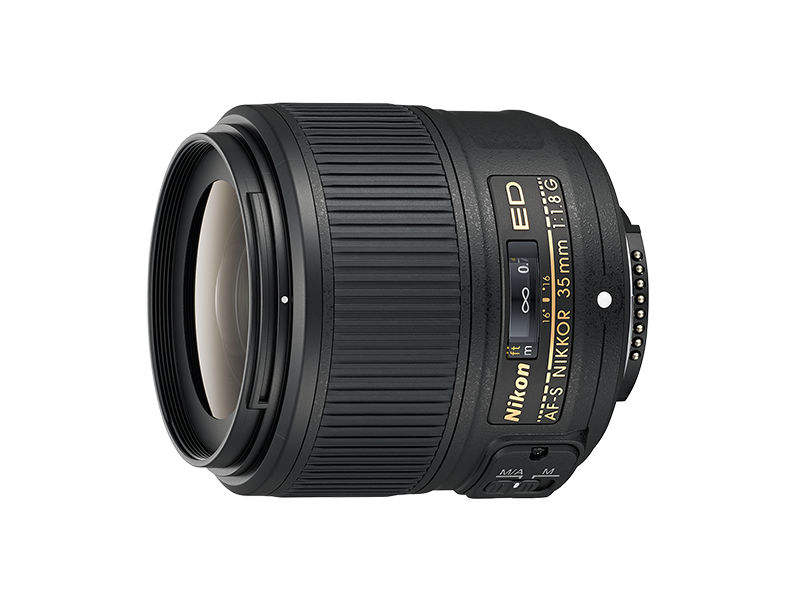
AF-S Nikkor 1.8/35 mm. G ED
To meet the needs of those photographers that are using a Nikon D-SLR with full-frame sensor Nikon introduced early January 2014 this FX-lens with - unfortunately - a G-mount. It features auto focus (via fast SWM rear focus) with manual override down to 25 cm. and has an optical formula of 11 elements in 8 groups. The rear element is an aspherical element, so be careful with cleaning!! One element in the middle of the lens is made of ED-glass. The lens takes 58 mm filters and the HB-70 hood. This lens weights in at 305 gr.
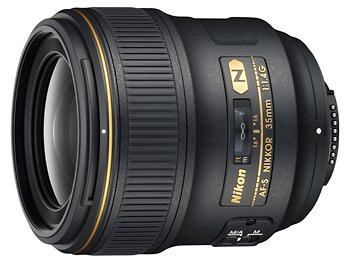
AF-S Nikkor 1.4/35 mm.G.
Mid September 2010 Nikon introduced this relatively fast wide-angle lens. It can be used on FX- and DX cameras. On both cameras this fast lens is a very nice standard lens (in DX-format the focal length equals 54 mm.). The optical formula consists of 10 elements (of which one is aspherical) in 7 groups. Some elements have the famous Nano Crystal Coating. The lens can be focused down to 30 cm., takes 67 mm filters and weights in at 600 gr. The original hood is the HB-59.
|